Centre for the Social History of Health & HealthcareOur seminar series

The Centre runs a series of lectures throughout term time.  They will take place from 4pm to 5.30pm. The seminars are open to anyone who is interested: students, fellow academics and the wider public - all welcome.

Further information is available from Hannah Elizabeth.

Places can be booked by emailing cshhh-admin@strath.ac.uk

Please sign up for our mailing list if you want to receive updates about seminars and other CSHHH events by emailing cshhh-admin@strath.ac.uk, or follow us on Twitter: @CSHHH_Glasgow

Seminar Series 2025/26

22nd January 2026 4pm-5.30pm with Ann-Katrine Schmidt Nielson

Location: Strathclyde Business School, Cathedral Wing, CW406a

Biography

Ann-Katrine Schmidt Nielsen, PhD, is assistant professor at the School of Communication and Culture, Aarhus University. She is affiliated with the research project Genetic Hauntings (2023-2026, IRFD), which investigates user experiences and narratives of direct-to-consumer genetic testing for health management purposes. Her research interests are illness narratives, hauntology, conflict and culture studies. She has published on these and related topics in volumes from the University of Minnesota Press and Institute of Network Cultures as well as in Popular Communication (forthcoming), Narrative Inquiry (forthcoming), and SomaTechnics (2025). She is also the co-author of DIY Genetics: Exploring User Engagements with Direct-to-Consumer Genetic Tests (with professor Carsten Stage, Cambridge Elements series, forthcoming).

Abstract: Living with risk assessments. How direct-to-consumer genetic testing changes narratives of illness and health

Direct-to-consumer genetic testing (DTC GT) is a relatively novel health and lifestyle technology. With a commercial testing kit, users can test for various genetic diseases, conditions, and traits at home without the assistance of medical staff or institutions. The DIY test has fundamentally reshaped the accessibility of genetic information that has previously been the property of genetics and science proper. Since the biotechnology was introduced to the mainstream market in 2007, DTC genetic testing has been a highly controversial and volatile topic. Not least, health care professionals have called for caution following the general interest in DTC GT across social and mainstream media alike. While testing companies argue that they help democratize genetics in a fun, empowering, and informative way (Kragh-Furbo & Tutton, 2017; Turrini, 2018), professionals warn about several problems related to the lack of scientific validity, data control, overmedicalization, illness anxiety, and market regulation (Gerdes et al., 2020).

This talk approaches direct-to-consumer genetic testing as a technology that begets new forms of illness narratives. When potential illness arrives before the event of falling ill – in the form of a genetic risk assessment that simultaneously reveals information about familial heritage, individual bodies, and their possible futures – it raises questions concerning, for example, autonomy, temporality, prognoses, and family relations. These tests often leave users with genetic revelations not only about themselves but also, potentially, about familial others, and without professional medical guidance on how to navigate these affectively and ethically complex situations. The talk draws on 20 qualitative surveys, 5 in-depth interviews, and 56 media texts to investigate the dilemmatic narratives of direct-to-consumer genetic testing. It discusses how this form of genetic knowledge produces new types of illness narratives in which the canonical ‘wounded storyteller’ (Frank, 1995) is replaced by an entangled at-risk subject navigating often-conflicting claims for care (Bellacasa, 2017; Tronto, 1993).


3rd February 2026 4pm-5.30pm with Francesca Lewis

Location: Strathclyde Business School, Cathedral Wing, CW408

Abstract: Unstable Knowledges: A kaleidoscopic encounter with borderline iridescence

The history of BPD is a history of making no sense, of not fitting into binary dualisms, and of being uncategorisable. To be uncategorisable is also to be unstable; it is very difficult to pin something down when it keeps moving. Like a kaleidoscope or the shimmering surface of iridescence, borderline experience is defined by constant shifting flux.

The trait of instability, encoded as BPD’s “essential feature” in the DSM III, was explicitly and implicitly present from the very beginning, with Irving Rosse’s 1890 definition of “borderland insanity” relying on it heavily. Incoherent and unstable, the borderline as a category arose from a need to categorise the uncategorisable and pathologise the indeterminate.

Yet in new materialist philosophy, these very traits take on a totally different valence. For the new materialists, life (on all scales – from planet to person to earthworm to amoeba to electron) is a flow of intensities and phenomena, with fluid boundaries, without fixed properties or identities, operating in a rhizomatic (non-linear, unpredictable) manner. These are the very same qualities that the psychoanalytic work on borderline conditions considered pathological: fluidity, instability, flux.

In this paper I trace and analyse the psychoanalytic work about the borderline, from the early development of the borderline concept in the late 19th century to the codifying of BPD in 1980’s DSM III. I highlight the reliance of these discourses on enlightenment and positivist binaries like neurosis/psychosis, stable/unstable, and real/unreal. Ultimately, this is a neuroqueering of borderline experience in new materialist terms, transforming a list of pathological symptoms into a list of capacities and possibilities.


10th March 2026 4pm-5.30pm with Naomi Samake-Bäckert

Location: Strathclyde Business School, Cathedral Wing, CW408

Biography

Naomi Samake-Bäckert is completing her PhD at the Graduate Institute of International and Development Studies (Institut de hautes études internationales et du développement, IHEID) in Geneva, Switzerland. She is an affiliated researcher to the Gender Centre and works on the SNSF-funded research project entitled Race and Ethnicity: Sexual Health and Reproductive Experiences (RE:SHaRE) with Dr. Caroline Rusterholz and Dr. George Severs. During the Spring term, Naomi is a visiting doctoral student at the University of Cambridge.

Abstract

In 1979, women of African, Caribbean, and South Asian descent joined together and took the streets of Hyde Park (London) to demonstrate against virginity testing practices that were taking place at Heathrow Airport. When immigration officials subjected women to invasive gynecological examinations to "verify" marital status, Black women's groups recognized these practices not as isolated incidents but as symptoms of systemic racial and gender-based violence embedded within state institutions. Drawing on campaign materials, newsletters, publications, medical reports, and governmental correspondences, this paper traces how Black women's groups in the 1970s and early 1980s navigated different avenues of influence to spread awareness around patterns of discrimination that connected immigration control, medical authority, and sexual and reproductive policing.

This history offers lessons for contemporary struggles over bodily autonomy. It demonstrates how marginalized communities have historically identified systemic violence, built coalitions across difference, and achieved meaningful institutional change—while also illuminating the enduring continuities between historical practices of reproductive surveillance and present-day concerns about medical racism, immigration enforcement, and state control over bodies.


21st April 2026, 4pm-5.30pm with Lynsey Cullen

Location: Strathclyde Business School, Stenhouse Wing, SW104

Biography

Lynsey Cullen is a Wellcome Trust Early Career Fellow at the University of Warwick with her project, 'Almoners, patients, and the formation of medicine social work in Britain, 1895-1948' (2024-2027). Prior to this, Lynsey was a Daphne Jackson Trust Fellow at the University of York, where she undertook the project: 'Patient Data and the Media, 1860s to Present: Using historical scandals to explain current distrust surrounding access to medical data' (sponsored by the University of York, the AHRC and ESRC). Lynsey’s PhD (Oxford Brookes University; funded by the Wellcome Trust) examined patient case records of the Royal Free Hospital, London, during the early twentieth century. Her research interests more broadly include the history of hospitals, medical women, welfare, and mental healthcare.

Abstract: Almoners, patients, and medical social work in London, 1895-1948

Almoners were first appointed to charitable hospitals at the end of the nineteenth century to means-test patients and determine if they should be made to contribute toward their treatment, and, when necessary, refer them to charitable aftercare beyond the hospital. The first almoner in Britain, Mary Stewart, was appointed at the Royal Free Hospital, London, in 1895 and the high demand on the office quickly led her to train additional almoners at hospitals across London. Gradually, almoners were appointed across the country and became a staple of the hospital framework pre-NHS.

This paper delves into the work of these incredible women, who were working at a time when female professional roles were limited and demonstrates how they shaped modern social work via case work, interviews, home-visits, means-tests, and crucially, community care beyond the hospital. Almoners became gatekeepers to a wide network of medical and non-medical charity and used that network to actively construct a service of care in the community after a patient was discharged by arranging everything from convalescent treatment, food, shelter, employment, and places in special schools, to helping with national insurance and emigration forms.

The period 1895-1948 was one of intense upheaval, witnessing a devastating pandemic, global economic depression, and two world wars. This was accompanied by constantly changing demands on medical care, charitable provision, and on almoners who acted as gatekeepers between the two. This paper will explore how almoners helped to provide ongoing charitable aftercare to patients after they left the hospital and, in so doing, shaped the profession of modern social work. 


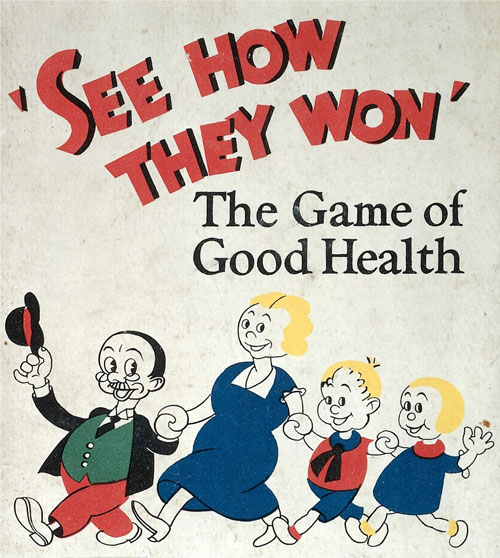
Centre for the Social History of Health & Healthcare - See How They Won