

LLM/PgDip/PgCert Human Rights Law
ApplyKey facts
- Start date: September
- Study mode and duration: LLM: 12 months full-time; 24 months part-time
PgDip: 9 months full-time; 18 months part-time
PgCert: 8 months part-time Scholarships: EU Engagement Scholarships worth £10,000 available to applicants from EU countries
Study with us
- engage with an eminent and inclusive team of leading academics, policy and legal practitioners at the forefront of human rights leadership in Scotland and globally
- focus on how human rights law shapes, and is shaped by, real-life contexts
- learn at one of the world’s top universities contributing to achievement of UN Sustainable Development Goals (Times Higher Education Impact Rankings 2024) which are founded in international human rights law
- study with students from a range of academic disciplines and professional backgrounds to build expertise in human rights law at UK, European and international levels
- develop expertise both through academic work and by participating in activities within the University and the Scottish human rights community
- benefit from flexible options for your end-of-year project: an enhanced research proposal, professional internship, a professional project or a traditional dissertation.
The Place of Useful Learning
UK University of the Year
Daily Mail University of the Year Awards 2026
Scottish University of the Year
The Sunday Times' Good University Guide 2026
Why this course?
For those who have a professional and/or academic interest in our evolving human rights culture, Strathclyde’s long-standing, esteemed human rights programme provides an opportunity to develop deep knowledge and skills alongside an approachable team of academics, legal practitioners and policy experts.
Law is at the heart of human rights frameworks and approaches. In this course, graduates in law and other disciplines, or those with relevant professional qualifications, will be supported to develop a detailed understanding of how human rights law operates at UK, European and international levels, and to explore the far-reaching impact of human rights law on society.
Previous students have been active in our human rights community. They have organised activities including film screenings, organised seminars with invited speakers on topics from human rights in the media to international crimes, volunteered at local civil society conferences, attended human rights careers events, conducted research for and with Strathclyde Law School staff, conducted research as part of university-wide collaborations and with students from Strathclyde’s renowned Law Clinic.
There are three potential exit points from the course: Postgraduate Certificate, Postgraduate Diploma and Masters. Assuming satisfactory performance, it's possible to change between these exit points. For example, a student who initially registers for the Certificate may opt to continue studying to the Diploma or Masters qualification; likewise, a student originally registered for the Masters can transfer to the Certificate or Diploma.
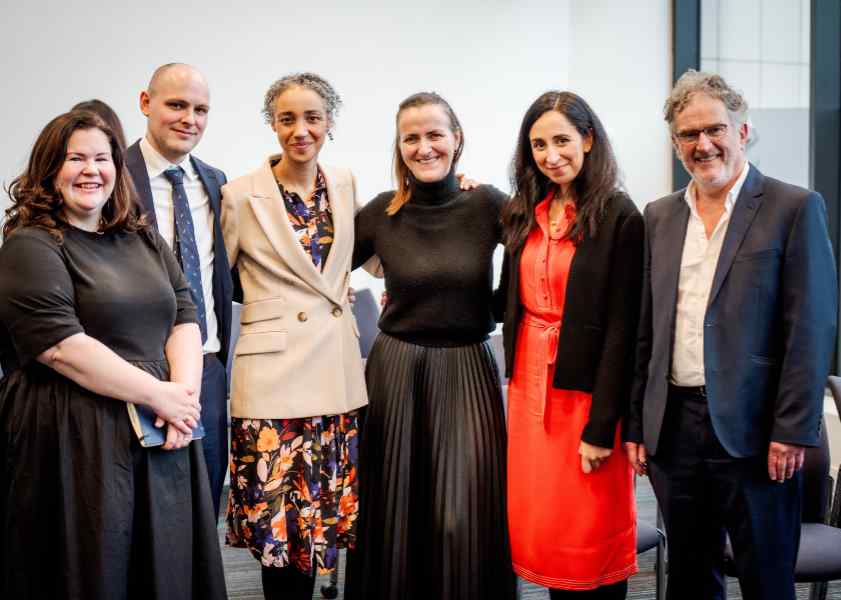

Interested in postgraduate study?
At the Faculty of Humanities and Social Sciences, our friendly and knowledgeable team will be available to provide you with all the information you need to kick-start your postgraduate journey at the University of Strathclyde. Register for upcoming events below:
What you’ll study
The LLM or Postgraduate Diploma may be completed or over one year (full-time) or over two years (part-time). The Postgraduate Certificate is completed over one-year (part-time).
Successful completion of six modules and an end-of-year summer project will qualify you for the award of LLM. The summer project takes the form of a dissertation or enhanced research project, or there will also be an opportunity to apply for a competitive professional project or professional internship. Successful completion of six modules will qualify you for the award of Postgraduate Diploma (PgDip). Successful completion of three modules will qualify you for the award of Postgraduate Certificate (PgCert).
Law Postgraduate Community Bursary
The Faculty of Humanities & Social Sciences is offering a £700 fee reduction for ten applicants to the LLM Criminal Justice & Penal Change, LLM Human Rights Law and LLM Mediation & Conflict Resolution degree programmes who are working at any third sector/NGO organisation in the field of criminal justice and penal change, human rights or conflict resolution.
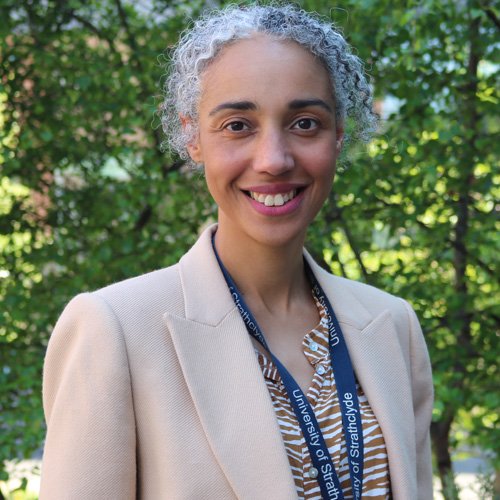
At Strathclyde, we’ve been teaching human rights at postgraduate level for over 20 years. It’s a privilege to be part of such a large, diverse, passionate and influential community of colleagues and alumni.
Programme Leader
Hear from our student, Brian Migowe
Brian Migowe decided to come to Strathclyde to study Human Rights Law after working in a law firm back home in Kenya. Discover his Strathclyde Story!
LLM Human Rights Law Dissertation prize
Since 2014, a prize has been awarded for the highest graded dissertation by a student on the LLM in Human Rights Law, generously sponsored by Balfour + Manson.
Balfour+Manson is a leading, medium-sized law firm based in Edinburgh and Aberdeen, delivering legal services in the areas of dispute resolution, commercial and charities, and private client and property work. Balfour+Manson is regarded as one of the leading firms in Scotland in relation to public law, judicial review and human rights. Consistently, they are ranked highly by legal directories, and were the only law firm ranked Band 1 for Civil Liberties and Human Rights in Scotland by Chambers and Partners 2020.
The prize is awarded at Strathclyde Law School’s annual prize-giving event.
Facilities
Our library has a wide range of law reports, legislation, serials and monographs. It also has duplicate sets of key law report series, houses extensive collections in government publications and other related areas.
You'll have access to a wide range of electronic information sources which can be accessed from anywhere, including all the major legal databases.
How to become a lawyer
There are different routes to a career in law. The choices you make now can affect the steps you would need to take to achieve your desired career in law. Here we explore the process of becoming a lawyer in Scotland and look at the different roles available within the law profession.

Students choose six modules from a list including:
European Human Rights Law
The European Convention on Human Rights is the most influential regional human rights treaty. This module looks at interpretation and enforcement of the Convention. It examines the institutions within the Council of Europe, analyses case-law on substantive guarantees in areas such as protection of life, freedom from inhuman and degrading treatment, privacy and freedom of expression, considers thematic issues, and explores challenges facing the ECHR system.
International Human Rights Law
Human rights protection is a global concern. This module examines civil and political rights along with economic, social and cultural rights, and assesses the range of international monitoring and supervision regimes. Topics covered include the major international treaties and bodies. It also looks at the challenges to human rights in transitional societies as well as the right to self-determination.
Human Rights Protection in the UK
The Human Rights Act 1998 was a major constitutional development in the UK. This module examine the ongoing transformation in UK legal cultures by exploring the commitment to human rights protection in the UK, and the resulting impact on constitutional principles and institutions. The module explores current human rights issues, drawing on a range of case-law, legal and theoretical literature, governmental reports and NGO accounts.
International Migration Law
International migration is a global phenomenon that raises multiple complex issues. This module examines the international legal framework governing international migration. Topics include protection of migrant workers, international refugee protection, the EU asylum policy, and internal displacement.
Business and Human Rights
This module examines the role of business entities as global actors and the identification of the legal challenges that business presents for the international legal system. Gross human rights abuses have been clearly documented by various NGOs around the world and range from murder to the violation of socio-economic rights and environmental damage. The quest for corporate accountability for human rights violations has been the focal point for the ‘business and human rights’ movement, which gives rise to crucial questions about what business responsibility to protect human rights consists of, who should monitor conduct, and how rights holders can access justice.
Human Rights & Digital Technologies
A shift towards automated decision-making and algorithmic regulation generates significant concerns for the protection of human rights. At the same time, there is a pressing need to study these technologies’ beneficent effects on human rights. This module aims to assess the suitability and relevance of existing human rights law in the digital age, and to evaluate conceptual, cross-disciplinary frameworks, which analyse how digital technologies shape developments in human rights law.
Compulsory 60-credit module
Students will have the opportunity to take one of the below modules:
Dissertation
This is an extended project of enquiry into an area of your own choice. You'll create knowledge in answer to a question which really intrigues you.
While you'll be very much in the driving seat, your work is nurtured and guided by a member of our academic staff team. You'll be guided by some of the world’s foremost experts.
Or
Enhanced Research Proposal
60 credits
This module supports students writing an enhanced research proposal, with a view to supporting their transition into PGR study (PhD/MPhil studies) and creating an early research supervision relationship with a prospective supervisor.
Or
Professional Internship
60 credits
This module gives students the opportunity to apply to pursue an internship in a national or international organisation relevant to their course. The internship allows students to be placed in a relevant host organisation for a specified number of hours agreed with the Strathclyde tutor. The student will be responsible for producing an internship report which will include an account of the knowledge and skills attained applying theoretical concepts and with reference to discipline specific literature as well as an in-context self-reflective analysis of the experience, the organisation and the work undertaken enabling broader critical reflections on the student’s place in the professional world.
Please note that enrolment in the Professional Project and Professional Internship modules is by application and is not guaranteed.
Or
Professional Project
60 credits
This module gives students to apply to do independent work in the final semester of their LLM/MSc. Students will be required to identify and co-design the project supported by their Strathclyde mentor. The project report includes the response to the research question co-designed with a relevant host organisation as well as an in-context self-reflective analysis of the project, the organisation and the student’s experience in executing the work enabling broader critical reflections on the student’s place in the professional world.
Students may replace up to two modules from the compulsory module list with modules from other Masters programme, which may include (subject to change):
International Climate Change Law
This course will explore the evolving nature and distinctive components of the international legal framework on climate change.
Environmental Treaties: Fragmentation and Regime Interactions
In the past half-century, the scope of international law has increased dramatically. From a tool dedicated to the regulation of formal diplomacy, international law has expanded to deal with the most varied kinds of international activity, from trade to environmental protection, and from human rights to scientific and technological cooperation. Most of this expansion has taken place through international treaties and institutions. International environmental treaties provide a case in point, both in terms of their relationship with other fields of international law (e.g. international trade law) and in terms of the relationship between its constituent parts (i.e. the various geographically and functionally limited regimes that make up its corpus).
This module will provide an overview of global and regional environmental treaty regimes. It will explore the causes, manifestations, and implications of this deficit, and the ways in which policy coherence, mutual supportiveness, and synergies in implementation can be promoted.
Ocean Governance and International Law
This course will explore the main legal regimes related to the oceans and seas, with an in-depth focus on recent developments in marine governance in the context of sustainable development.
International Criminal Justice
This module offers students the opportunity to engage critically with the philosophy and history of international criminal justice, as well as the legal frameworks, enforcement mechanisms, and contemporary developments in the arena of the prosecution of international crimes (genocide, war crimes, crimes against humanity, aggression, and torture). It explores some of the major developments that have taken place in the arena of international criminal justice over the last quarter of a century, their historical antecedents and contemporary implications.
Punishment and Processes of Penal Change
The western world’s “penal crisis” has, over the past thirty years, posed specific challenges to the reform tradition. In this module we explore the nature, dimensions and national permutations of that crisis, putative solutions to it and likely obstacles to their realisation. We draw on theoretical developments in the study of justice and punishment and explore their potential to illuminate and inform processes of progressive penal change.
The module examines contemporary changes, international evidence and policy transfer, and technological challenges and considers reform across the globe. The module draws on insights and perspectives including law, the sociology of punishment, history and the social sciences.
Learning is conducted through a range of innovative methods such as debates and media representations. The module is supplemented by visits to key institutions' prisons, women’s justice centres, as well as conferences with key practitioners and policy makers.
Childhood and Crime
Youth justice attracts interest across society, politically, socially and legally. Some issues – from the murder of two year old James Bulger in 1993 by two 10 year old children to the riots in 2011 in England – spark moral panic and demonstrate the extent to which such matters cut across disciplinary boundaries and influence legal and societal responses to children who offend.
Youth justice generates its own philosophical approaches eg in the welfare / justice debate. It also provides a context within which to examine broader issues affecting criminal justice as a whole such as the need to balance the rights of the accused against the public interest.
This class will provide an opportunity for you to critically examine some key aspects of youth justice law, policy and philosophy from a number of perspectives. Your learning will be supplemented by visits to custodial and innovative community settings, as well as a visit to and a simulation of Scotland’s unique system of ‘Children’s Hearings’ (a decision-making system based on the best needs of the child).
The World Trading System: Law and Policy
This class will provide you with an advanced instruction in the law of the World Trade Organisation (WTO). You’ll explore the core rules of non-discrimination and most-favoured nation treatment which underpin many of the legal agreements comprising the WTO. You’ll also look in detail at the operation of the WTO dispute settlement system. The analysis will then move on to certain of the more specialised WTO agreements as well as the operation of numerous regional trade agreements.
Our students

Aidan Fisher
With support from the Strathclyde Law School, I was able to attend the Nelson Mandela World Human Rights Moot in Geneva. Seeing so many legal practitioners dedicated to doing good in the world convinced me that I could as well. It gave me an insight into other career paths beyond becoming a solicitor and beyond our domestic jurisdiction.

Brian Dan
Strathclyde’s human rights programme provides an opportunity to develop deep knowledge and skills alongside an approachable team of academics, stellar legal practitioners, and policy experts.

Robyn Conlan
The main challenge for me was the jump between undergraduate and post-graduate workload. However, I believe if you remain organised from the beginning, the workload is completely manageable. Also, when you are studying an area of law you are interested in, it is half the battle!

Helen Vaupel-Schwittay
Looking back now at the opportunities I've had and the work experience I've gained by networking with lecturers and being open to opportunities, I would have never imagined myself here when I first started the course a year ago!

Sayali Walavalkar
While studying at Strathclyde for my LLM, I had more opportunities than I would have expected as a student.
Learning & teaching
The course is taught through 2 hour long, face-to-face seminars. The face-to-face seminars will normally be held during daytime hours, up to 6pm.
Full-time students normally take three modules per semester, and part-time students normally take three modules over two semesters. Alternative patterns can be discussed with the Programme Leader during Induction Week.
Although coordinated by a module leader, the seminars will be student-led and interactive.
Assessment
Modules will be assessed by a mixture of written exams, presentations and coursework comprising, for example, legal briefing papers, research essays and literature reviews.
Our experts
Strathclyde Law School is renowned for its research and policy expertise across a wide range of human rights areas. These include national human rights incorporation, the concept of human dignity in rights interpretation, human rights and social justice, human rights dimensions of international public law, international and regional migration law, and UK and Scottish constitutional law, children’s human rights, women’s human rights, human rights and technology, and human rights and environmental governance.
Visiting Professor in Human Rights Law, Kavita Chetty
Ms Chetty is a foremost human rights practitioner in Scotland with extensive national and international experience. From 2015-2022, she was Head of Strategy and Legal at the Scottish Human Rights Commission, and since 2022 is Deputy Director Human Rights at the Scottish Government.
Our university has a collective mission of making a socially progressive and positive impact on society and this is a truly wonderful appointment. We are privileged that Professor Chetty has joined us and we’re excited to work together in the coming years. - Dr Elaine Webster, Programme Leader

Entry requirements
| Academic requirements | First-class or Second-class Honours degree, or international equivalent, in any discipline (some law content is recommended). Entry may be possible with other qualifications, especially where the applicant has relevant work experience. |
|---|---|
| English Language Requirements | Please check our English requirements before making your application. |
Pre-Masters preparation course
The Pre-Masters Programme is a preparation course held at the University of Strathclyde International Study Centre, for international students (non-UK/Ireland) who do not meet the academic entry requirements for a Masters degree at University of Strathclyde.
Upon successful completion, you'll be able to progress to this degree course at the University of Strathclyde.
Chat to a student ambassador
If you want to know more about what it’s like to be a Humanities & Social Sciences student at the University of Strathclyde, a selection of our current students are here to help!
Our Unibuddy ambassadors can answer all the questions you might have about courses and studying at Strathclyde, along with offering insight into their experiences of life in Glasgow and Scotland.
International students
We've a thriving international community with students coming here to study from over 140 countries across the world. Find out all you need to know about studying in Glasgow at Strathclyde and hear from students about their experiences.

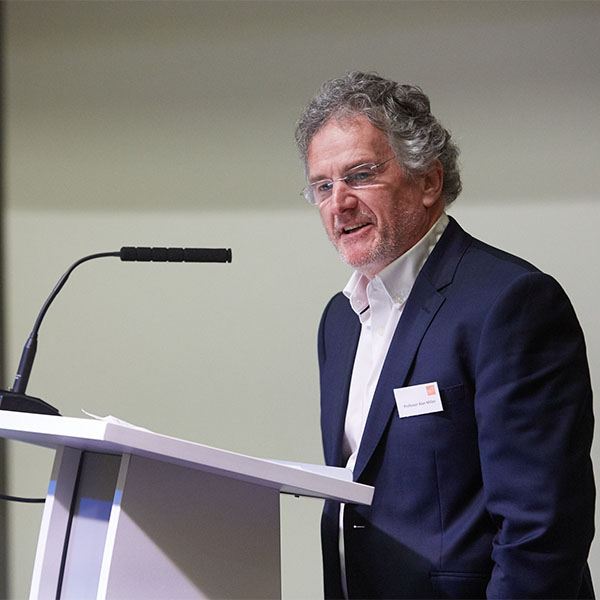
Our recommendations are challenging, ambitious and will need continued bold leadership to implement. It would be by far the biggest step taken in Scotland’s human rights journey.
Fees & funding
All fees quoted are for full-time courses and per academic year unless stated otherwise.
Fee payable in year 1 only for 15-month programme.
Fees may be subject to updates to maintain accuracy. Tuition fees will be notified in your offer letter.
All fees are in £ sterling, unless otherwise stated, and may be subject to revision.
Annual revision of fees
Students on programmes of study of more than one year (or studying standalone modules) should be aware that the majority of fees will increase annually.
The University will take a range of factors into account, including, but not limited to, UK inflation, changes in delivery costs and changes in Scottish and/or UK Government funding. Changes in fees will be published on the University website in October each year for the following year of study and any annual increase will be capped at a maximum of 10% per year. This cap will apply to fees from 2026/27 onwards, which will not increase by more than 10% from the previous year for continuing students.
| Republic of Ireland |
If you are an Irish citizen and have been ordinary resident in the Republic of Ireland for the three years prior to the relevant date, and will be coming to Scotland for Educational purposes only, you will meet the criteria of England, Wales & Northern Ireland fee status. For more information and advice on tuition fee status, you can visit the UKCISA - International student advice and guidance - Scotland: fee status webpage. Find out more about the University of Strathclyde's fee assessments process. |
|---|---|
| Scotland, England, Wales & Northern Ireland | LLM:
PgDip: £8,333 PgCert: £4,167 |
| International | LLM: £26,000 PgDip: £17,333 |
| Additional costs | International students may have associated visa and immigration costs. Please see student visa guidance for more information. |
| Available scholarships | Take a look at our scholarships search for funding opportunities. |
Please note: the fees shown are annual and may be subject to an increase each year. Find out more about fees.
How can I fund my course?
Scottish postgraduate students
Scottish postgraduate students may be able to apply for support from the Student Awards Agency Scotland (SAAS). The support is in the form of a tuition fee loan and for eligible students, a living cost loan. Find out more about the support and how to apply.
Don’t forget to check our scholarship search for more help with fees and funding.
Students coming from England
Students ordinarily resident in England may be to apply for postgraduate support from Student Finance England. The support is a loan of up to £10,280 which can be used for both tuition fees and living costs. Find out more about the support and how to apply.
Don’t forget to check our scholarship search for more help with fees and funding.
Students coming from Wales
Students ordinarily resident in Wales may be to apply for postgraduate support from Student Finance Wales. The support is a loan of up to £10,280 which can be used for both tuition fees and living costs. Find out more about the support and how to apply.
Don’t forget to check our scholarship search for more help with fees and funding.
Students coming from Northern Ireland
Postgraduate students who are ordinarily resident in Northern Ireland may be able to apply for support from Student Finance Northern Ireland. The support is a tuition fee loan of up to £5,500. Find out more about the support and how to apply.
Don’t forget to check our scholarship search for more help with fees and funding.
International students
We've a large range of scholarships available to help you fund your studies. Check our scholarship search for more help with fees and funding.
Faculty of Humanities & Social Sciences Scholarships
EU Engagement Scholarships are available to EU applicants who would have previously been eligible for Home (Scottish/EU) fee status.
Glasgow is Scotland's biggest & most cosmopolitan city
Our campus is based right in the very heart of Glasgow. We're in the city centre, next to the Merchant City, both of which are great locations for sightseeing, shopping and socialising alongside your studies.
Careers
We work closely with the University's Careers Service. They offer advice and guidance on career planning and looking for and applying for jobs. In addition, they administer and publicise graduate and work experience opportunities.
Our graduates can, and have progressed to research studies such as MPhil and PhD in Human Rights Law leading to an academic career.
Students may also go on to work with international non-governmental organisations in the area of human rights advocacy, practice and promotion.
The qualification is also relevant to careers in international human rights organisations, like UN agencies for example.
After graduating, you will have the opportunity to join a LinkedIn group with other former students of the programme.
Where are they now?
Job titles include:
- solicitor
- researcher
- policy officer
- advocacy officer
- outreach officer
- judicial assistant
Employers include:
- law firms
- law centres
- national human rights institutions
- international non-governmental organisations
- Scottish and UK advocacy organisations
Apply
Start date: Sep 2026
Human Rights Law
Start date: Sep 2026
Human Rights Law
Start date: Sep 2026
Human Rights Law
Start date: Sep 2026
Human Rights Law
Start date: Sep 2026
Human Rights Law
Contact us
Prospective student enquiries
Contact a member of our team on LiveChat between 10am and 4pm (GMT)
Telephone: +44 (0) 141 444 8600
Have you considered?
We've a range of postgraduate taught and Masters courses similar to this one which may also be of interest.