PhysicsAraceli Venegas-Gomez
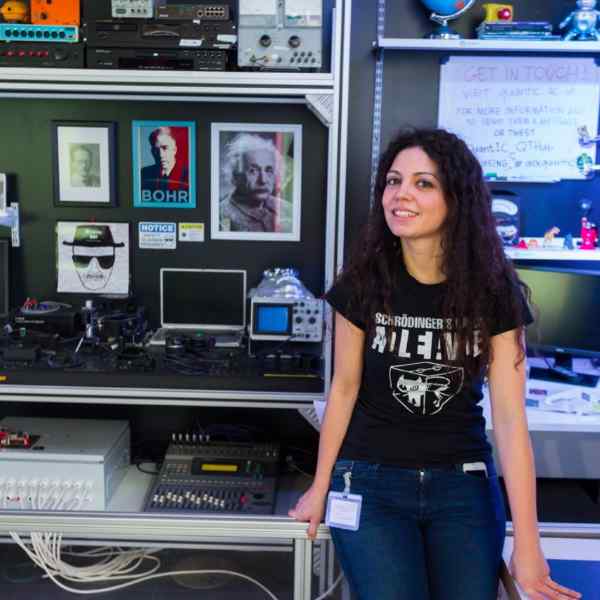
My name is Araceli Venegas-Gomez, and I completed an MRes and PhD in quantum physics at the University of Strathclyde in Glasgow. During my time there, I combined research in quantum technologies with outreach and community-building activities, including work with the student chapter SCOPE, under the supervision of Professor Thorsten Ackemann.
What were your reasons for taking on a postgraduate degree?
I decided to pursue a postgraduate degree because I wanted to move from aerospace engineering into quantum technologies and build a strong foundation in fundamental and applied quantum physics. A research-focused degree offered the depth and independence I needed to make that transition, without the commitment of a PhD as first experience in academia.
How did you make the decision to study at Strathclyde?
I didn't chose Strathclyde but Strathclyde chose me!
It was the connection with whom would become my supervisor that brought me there. Prof. Andrew Daley was moving from the US to Glasgow to start a new research group. Furthermore, Strathclyde has a strong reputation in quantum optics and its collaborative environment with both academic and industrial partners. The opportunity to work in an active research group and connect with the wider UK quantum community was also a decisive factor.
What do you like about your course and Strathclyde?
What I liked most about my course was the balance between rigorous theory, hands on research, and opportunities to work in interdisciplinary teams, as well as the access to public engagement opportunities. At Strathclyde I appreciated the supportive supervision, access to excellent facilities, and the friendly, international community on campus.
What specialist knowledge/professional skills have you developed whilst studying the course?
During my MRes and PhD I developed specialist knowledge in quantum simulation/quantum optics, numerical modelling, and experimental or theoretical methods relevant to quantum technologies. I also gained transferable skills such as scientific communication, teaching, and mentoring of students.
What are your ambitions for the future and how do you think your time at Strathclyde will help you achieve your goals?
My long term ambition is to help build a strong, inclusive quantum workforce and to bridge the gap between research, industry, and society. The experience at Strathclyde—conducting research, supervising students, and engaging in outreach—gave me both the technical credibility and the confidence to found QURECA and work internationally in quantum education and workforce development.
How have you found your time living in Glasgow and what's your favourite thing about the city?
Living in Glasgow was a very positive experience. I enjoyed the city’s cultural life, music, and museums, as well as the friendliness of people. My favourite thing about the city is the combination of a vibrant urban environment with easy access to beautiful nature just a short train ride away. And not to forget the incredible opportunity to go to the concerts of all my favourite bands!
Has anything surprised you about living/studying here?
I was pleasantly surprised by how approachable lecturers and researchers were, and how collaborative the environment felt. Another surprise was how quickly the weather could change in a single day—something I learned to plan for very fast!
What do you do to relax in your spare time? Are you part of any clubs with the Students' Association?
In my spare time I liked to meet with friends, go to concerts or talks, and participate in student society events. I was involved in outreach activities and initiatives like SCOPE, which allowed me to support other students and promote equality, diversity, and inclusion in physics and STEM more broadly.
Have you managed to explore anywhere outside of Glasgow?
Yes, I used the opportunity to travel around Scotland, visiting places like the Highlands, Loch Lomond, and Edinburgh. These trips were a great way to disconnect from research and appreciate the landscape and history of the country.
What would you say to anyone thinking of coming to study in Glasgow at Strathclyde?
To anyone thinking of coming to study at Strathclyde in Glasgow, I would say: be open, proactive, and take advantage of all the opportunities around you—academically, socially, and professionally. The university and the city can offer a lot, but you get the most out of it when you engage with people, join activities, and ask for support when you need it.
Is there anything else you’d like to say?
Studying at Strathclyde and living in Glasgow was a transformative period that shaped both my scientific career and my commitment to outreach and building communities in quantum technologies.
Find out more about Araceli's course