3rd International Summer School on IBR-dominated Power Systems
Date: 31 August to 4 September 2026 (5 days)
Location: Learning & Teaching building, University of Strathclyde, Glasgow, Scotland, UK
The global decarbonisation agenda is rapidly accelerating the transition from fossil fuel-based synchronous generation to renewable-powered inverter-based resources (IBRs). This shift is fundamentally changing power system behaviour and introduces unprecedented challenges across system modelling, planning, control, operation, monitoring, and protection.
The International Summer School on IBR-dominated Power Systems brings together world-leading experts to deliver advanced training for researchers and industry professionals, providing a holistic and technically rigorous perspective on the challenges across these areas in IBR-dominated power systems. This is the third edition of this event, which builds on the previous two highly successful and popular summer schools in Imperial College London (UK, 2024) and Tsinghua University (China, 2025).
By the end of the summer school, the participants of the summer school will have developed a comprehensive understanding of the behaviour and operational requirements of IBR-dominated systems, along with a solid foundation for future research and professional practice in this rapidly evolving field.
Core topics for IBR-dominated power systems
- Modelling and control of IBRs and IBR-dominated systems
- Stability of IBR-dominated systems and analysis methods
- IBRs fault ride through, their impacts on protection and the potential solutions
- Reliability, security and resilience of IBR-dominated systems
- Data-driven and AI technique applications in IBR systems
- IBR-dominated distribution networks
- Optimisation tools and economic analysis
How to apply
Application deadline: 30 April 2026
Capacity: 80 seats (competitive selection based on CV and research/professional background)
Early application is strongly recommended based on the high volume of applications received in previous years.
An extended application round will only be available subject to the number and quality of first round selections, and it is not guaranteed.
For enquiries relevant to application, please contact email:
Previous editions of the Summer School
2025
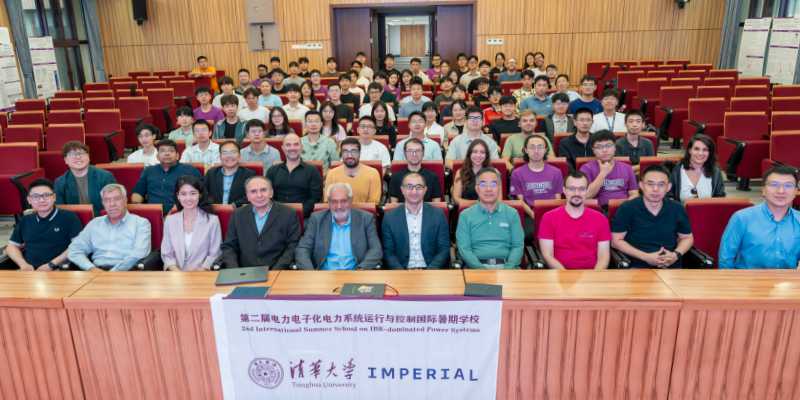
Tsinghua University, Beijing, China
- 80 participants from 10+ countries
- 30+ world-leading experts
2024
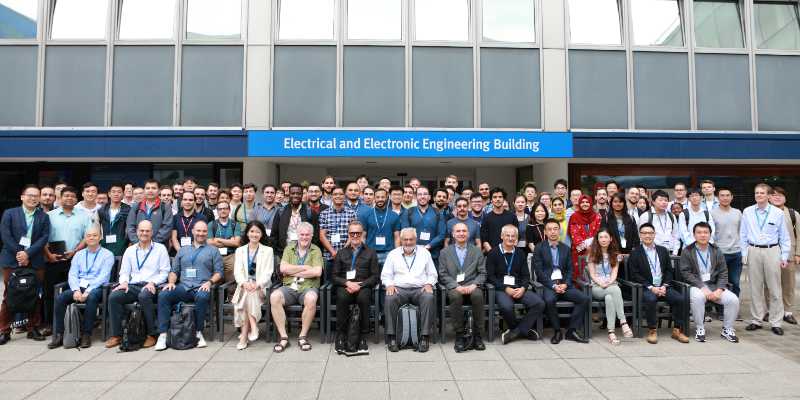
Imperial College London, London, United Kingdom
- 63 participants from 14 countries
- 28 world-leading experts
- PhD students in electrical engineering or related disciplines
- Postdoctoral researchers and academic staff
- Engineers, developers, and technical managers from industry
- Professionals working in R&D centres related to IBRs-dominated systems
World-class teaching team
Organised by the University of Strathclyde with support from Imperial College London and Tsinghua University, featuring 30+ distinguished experts from leading global institutions, including University of Cambridge, ETH Zurich, Nanyang Technological University, University of Edinburgh, Seoul National University, University of Melbourne, National Technical University of Athens and other top-tier universities.
Industry-academia integration
Bridge the gap between theory and practice with opportunities to have a direct dialogue with R&D leaders from major industrial companies.
Global networking
Connect with a global network of outstanding PhD researchers and industry professionals and establish future research partnerships.
Cultural & social experience
Enjoy a diverse social program including networking events and cultural tours and experience the unique heritage and hospitality of Scotland.
Academics & researchers (PhD students, postdocs & academic staff): £800
Industrial professionals*: £1,500
Fee includes:
- access to all sessions
- daily lunches
- coffee breaks
- social events
*Group registration available with discount, please get in touch for discussion.
- Interactive lectures with extended Q&A and in-session discussion
- Panel discussion and open-floor dialogue with academic and industry speakers
- Poster session (voluntary submission) for participants to showcase research Best Poster Awards
- Extensive networking opportunities to facilitate future collaborations
- Technical visits to relevant local companies and/or innovation centres
- Social events
- Please see the detailed agenda.
| Topic | Speakers |
|---|---|
| Overview of IBR-dominated Power Systems |
|
| Modelling & Control of Power Converters |
|
| System Stability Definition & Analysis Methods |
|
| IBRs Fault Ride Through, Protection impacts and solutions |
|
| Optimisation Tools & Economic Analysis |
|
| Data-Driven & AI Technique Applications in IBR Systems |
|
| IBR-dominated Distribution Networks & Loads |
|
| Reliability, Security & Resilience of IBR-Dominated Systems |
|
| Practical Tools Supporting IBR Integration |
|
| Industrial Perspectives |
|
The University of Strathclyde will provide a formal invitation letter to successful applicants for visa purposes.
The University is located in central Glasgow, with a range of accommodation options nearby. See the Visit Glasgow website for details.
The organising committee has explored on-campus accommodation, but due to its proximity to the start of the semester, this is not available.
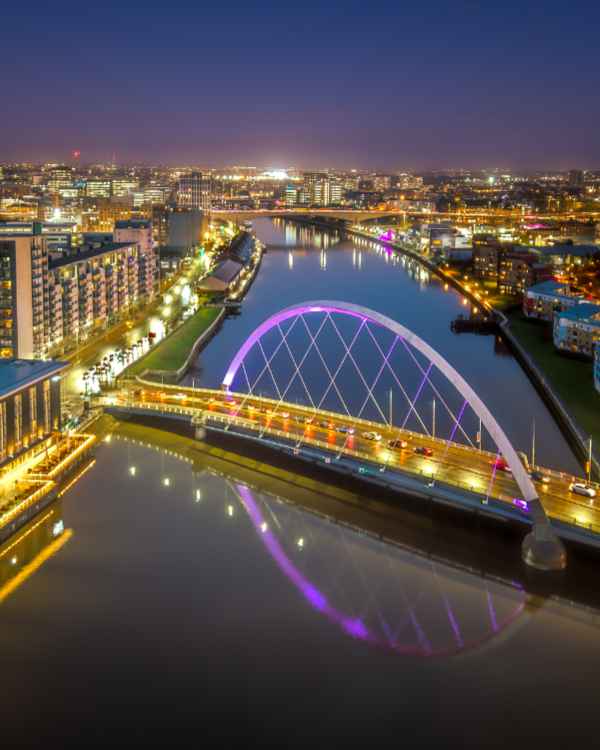
Glasgow - a hub for energy innovation
As Scotland’s largest city and the host city of COP26, Glasgow has evolved from a traditional engineering centre into a leading hub for sustainability and green technology.
With Scotland’s strong renewable resource base, particularly wind power, Glasgow is well placed at the heart of the UK’s energy transition. This makes Glasgow a compelling ‘living laboratory’ for IBR-dominated power systems, giving participants access to a well-established power engineering community across networks, generation, innovation, regulation and delivery.
Glasgow benefits from a strong concentration of organisations active across the electricity sector. Major utilities, network organisations and regulators such as Scottish Power, SSE, National Energy System Operator (NESO) and Ofgem all have a significant presence in the region.
The local landscape is complemented by innovation organisations such as Offshore Renewable Energy Catapult and the National HVDC Centre (UK’s national facility for HVDC de-risking), as well as university spin-outs such as Smarter Grid Solutions and Synaptec.
In addition, a range of leading engineering consultancies, including Mott MacDonald, WSP, AtkinsRéalis, and TNEI, work closely with industry and regulators to support the large-scale integration of IBRs.
Organisers
Professor Qiteng Hong, University of Strathclyde
The Department of Electronic & Electrical Engineering at University of Strathclyde is renowned for its strong alignment with industry and leadership in applied research for future energy systems, including smart grids, power electronics, protection and intelligent automation.
It hosts world-class experimental capability, notably the Power Networks Demonstration Centre and the Advanced Net Zero Innovation Centre.
Strategic partnerships with global leaders such as Rolls-Royce, ScottishPower and SSE underpin its impact, with 96% of research rated world-leading or internationally excellent.
Contact: q.hong@strath.ac.uk
Dr Fei Teng, Imperial College London
The Control and Power Research Group at Imperial College London is part of the Department of Electrical & Electronic Engineering.
Its programme spans control systems, power electronics and power systems, with a strong focus on the operation and integration of low-carbon and inverter-based technologies.
Contact: f.teng@imperial.ac.uk
Dr Ning Zhang, Tsinghua University
The Department of Electrical Engineering at Tsinghua University is a leading centre for power and energy research and education. It has over 100 full-time faculty and researchers, with strengths in smart grids, renewable integration, high-voltage transmission and power system automation.
Contact: ningzhang@tsinghua.edu.cn