.jpg "Photo of Law student Heather Burns")
Heather is a graduate from the MSc Law, Technology & Innovation programme at the University of Strathclyde
Tell us a little bit about your background...
I work at the intersection of technology politics and human rights. Over the years I’ve supported a range of employers and clients on a variety of regulatory matters in Westminster and in Brussels, and throughout all the battles inbetween. I am not a lawyer, nor do I seek to be one, which is why Strathclyde’s programme was perfect for me. They understand the politics of tech regulation – “how the sausage gets made”, as the song goes - as much as they do the legal processes which shape it.
What drew you towards undertaking this degree?
Technology regulation, as an academic and legal discipline, did not exist when I got my BA in the dialup internet era. My career in the field has been spent learning in the hot seat, so to speak. At a crucial time for the field and for human rights both online and offline, it was good to take some time to shore up the academic and legal foundations needed for the road ahead. The Strathclyde MSc reflected that perfectly.
Tell us about the format of the programme. What is a typical week like?
A typical week at Strathclyde would include two or three days of in-person classes, plus your weekly background homework reading and research time. In the MSc, there were no final exams, instead there were challenging and very clever written assignments like writing legal briefings and policy papers, which I found to be a far more practical application of the knowledge gained than answering questions on a test.
Although the MSc is a full-time course, I found it easy to balance the course load with my professional obligations. You need to be quite disciplined about your time, but that’s a crucial skill to develop.
Tell us a little bit about your dissertation topic...
When I was outlining my summer dissertation, I realised it was the start of a research project, not the end of my MSc studies. The Law School offers you the option to write your dissertation as an Enhanced Research Proposal with a view towards continuing your studies at Strathclyde, which I chose to do. So my MSc dissertation formed the backbone for my two-year part-time MPhil in technology regulation and human rights, which I’ve just commenced. As soon as I decided that this was I wanted to do, my professors guided me through all the processes needed for approval, so that the transition from MSc to MPhil has been seamless.
What is the academic support at Strathclyde like?
The academic support is fantastic. The professors are always accessible and keen to help; they take an interest in you as a person and acknowledge the experiences you bring to your education. They are not trying to squash you into a mould, they’re here for your whole journey.
What are the facilities at Strathclyde like?
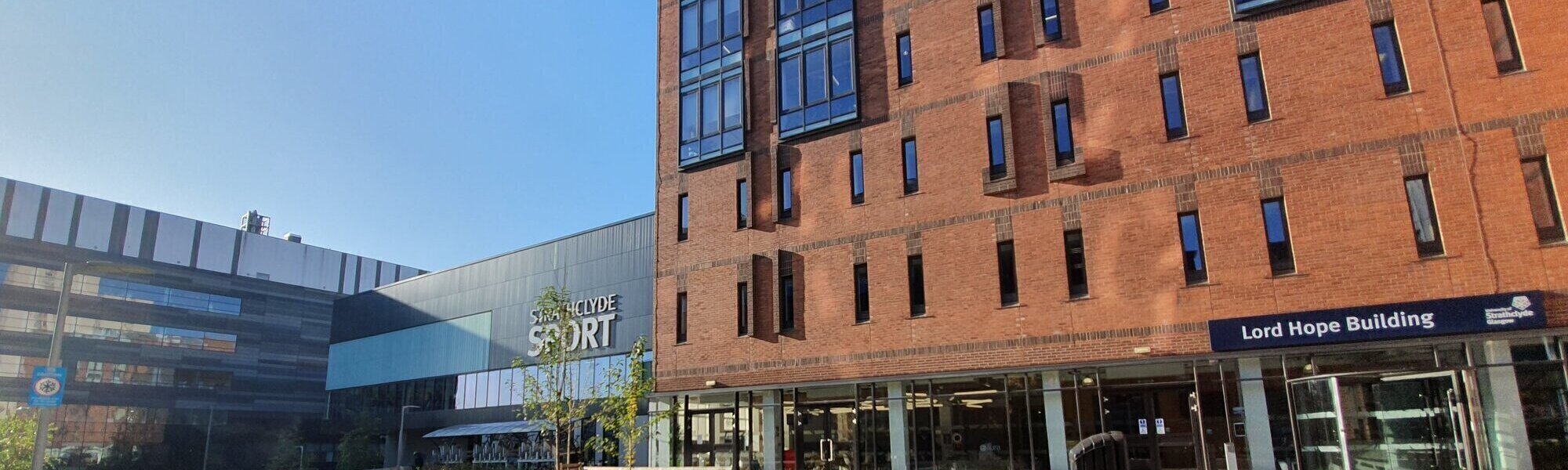
As a local, I was expecting to simply commute in and out of my classes, but I wasn’t expecting how much the campus really grew on me. It’s a great place to spend your days, even when you don’t have classes. You can always find a quiet place to work and focus, or a noisy place for some lively conversation. The library and the cafes are great, as are the staff who run them.
What are your hopes for the future?
We are living through some difficult times, and my MSc/Mphil reflect that. But I feel far more confident about my ability to tackle these challenges than I did before I took the course.
What advice would you give to someone considering applying for this course?
I would say go for it! Come to Strathclyde with an idea of what it is you want to achieve in your career, and the Law School will help you to create a pathway. And you’ll have a brilliant time too.