_(1).jpg "Photo of Law with a Modern Language student Tsara Mirza-Reina")
Tsara is a graduate from the LLB Law with Spanish programme and the Diploma in Professional Legal Practice at the University of Strathclyde
Tell us a little bit about your background...
I was born in Málaga, Spain to a Spanish mother and a Scottish-Pakistani father, so different languages and cultures have always been a constant for me. I was raised speaking Spanish and have been bilingual all of my life. My heritage is such an important part of my identity, and I wouldn’t be who I am today without languages. I started studying at Strathclyde in September 2018 until June 2023, completing both an undergraduate and postgraduate course. I also completed a year abroad in Madrid, Spain from 2021-2022 and studied at the Autonomous University of Madrid (Universidad Autónoma de Madrid).
Why did you choose to study at the University of Strathclyde?
I had applied to various universities, and I ended up narrowing my choices down to Glasgow and Strathclyde. Strathclyde stood out to me for a few reasons. One was that I had completed the Accelerated Law course at Strathclyde over summer when I was still in secondary school and I enjoyed the atmosphere and the people. Law was made fun, and everyone was so welcoming. Where Strathclyde really stood out for me was in the culture behind the university. I wanted to study somewhere that was forward thinking and innovative and that would allow me to be myself. Strathclyde ticked those boxes for me. Although I never put myself forward for a role in it, the Law Clinic was also enticing, having heard that this wasn’t something Glasgow offered. In terms of the undergraduate degree, I knew I wanted to incorporate Spanish into my studies, and the LLB with Spanish was the perfect way to go about it. The idea of a year abroad really stood out for me as I had heard amazing things about the Erasmus programme. The law subjects were nothing like any of the subjects I could have been prepared for throughout secondary school, aside from maybe English due to the essay work, or even Religious Education, because of the moral questions a lot of the classes in first year of university posed. I liked the idea of getting to grips with the law by looking at the philosophical side of things, which a few of the classes offered in first year.
Tell us about your experience on the year abroad...
The year abroad I spent in Madrid was one of the best years of my life. It was undoubtedly an experience that I wish I could relive, and although I would do some things differently if I were able to, the whole year was unforgettable. Even though I use Spanish day to day, living in a different city really does force you to deal with scenarios in a different way. There are distinct systems to navigate e.g. transport, medical, buying food, things that may seem really simple but when you are there – are completely new and take adjusting to. That in itself builds your language speaking skills, but if you add studying Spanish law to the mix, you really have an opportunity to branch out. The year is designed to test your skills, and practice what you have learned until then.
On a personal note, the experience allowed me to grow in a way that I wouldn’t have been able to if I had kept living in Glasgow. A year abroad shapes you as a person because everything is new – the environment, the people you surround yourself with, and of course the language. Madrid is an extremely diverse and interesting city and particularly after COVID, the opportunity to travel for a year was everything and more. I still have friendships from my year abroad that are so meaningful to me, and we still keep in touch. During my year abroad I had the opportunity to visit loads of new places that I wouldn’t have had the chance to visit had I not gone when I did.
What is the academic support at Strathclyde like?
I have always felt very comfortable with the tutors and lecturers at Strathclyde. Overall, staff are approachable and welcome any questions you might have. The languages departments are filled with staff that want to see you succeed and will encourage you every step of the way. They are kind, generous and welcoming people. My experience in my final year of the undergraduate degree was really shaped by my dissertation supervisor, Therese O’Donnell, who I will always be grateful for. She couldn’t have been more supportive and was a brilliant guide during a year that was particularly intense. My dissertation focused on the way in which international human rights law protects Indigenous women in Canada against gender-based violence, a very specific subject, and Therese was just fantastic at helping me break the topic down.
What are the facilities at Strathclyde like?
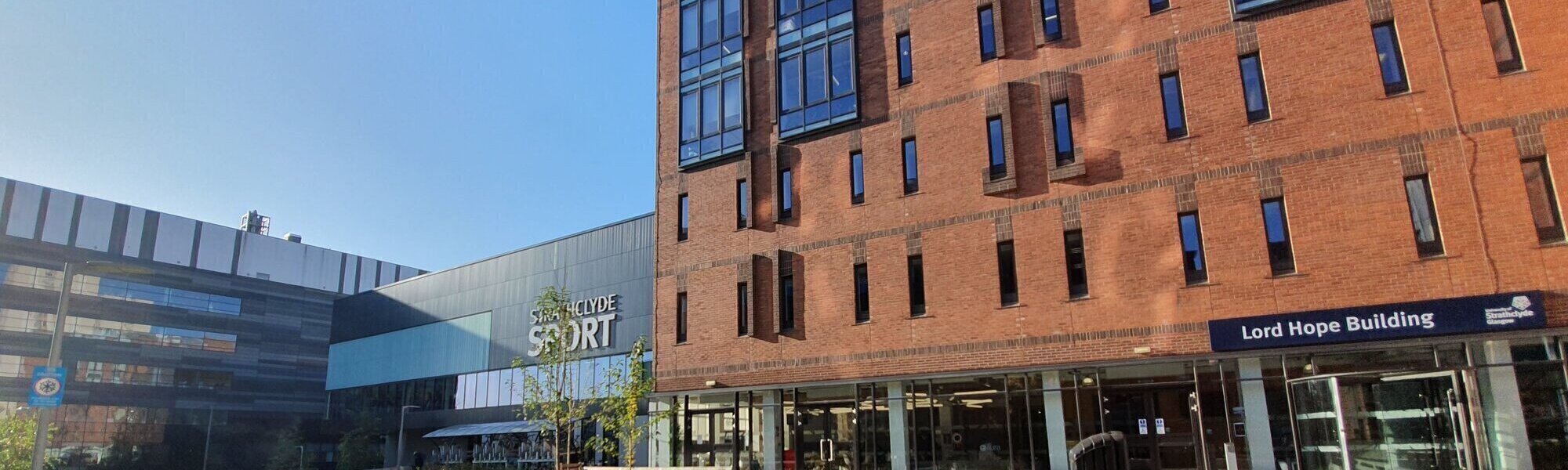
I have fond memories of 9am criminal law lectures in the Royal College building and the building in itself really is a testament to the institution. I can also appreciate that since I have graduated there has been a lot of progress in terms of the modernisation of a lot of buildings, including the Student Union, which I did spend a fair amount of time in throughout the Diploma. There’s always a buzz around Strathclyde, and sitting outside at Rottenrow Gardens nearing the warmer months is a core memory. The Technology and Innovation Building is also brilliant, I remember I attended an annual Human Rights Law conference on the top floor one year and it was quite the event.
What are you doing now and how has your degree helped towards this role?
I am a second-year Immigration Law Trainee Solicitor at Harper Macleod LLP, a Scottish based, full-service law firm. The firm has been honoured as Scotland’s Law Firm of the Year nine times, and has most recently been ranked as Scottish Firm of the Year at the Chambers UK Awards in 2025. I work with clients in both personal and business immigration matters, which means I work with many nationals of other countries. I also help run one our international desks within our global network, the Spanish desk, to connect and collaborate with law firms across Spain. I can safely say that studying Spanish has contributed hugely to the opportunities I have had in my life. The skills I have learned from studying and speaking a language have helped me develop a strong work ethic. Speaking a different language has also helped me build deeper connections with people from around the world by briding a gap in times of need. It’s a really rewarding part of my personal and professional life and I am grateful every day to speak another language.
What advice would you give to someone considering applying for this course?
If you want to be inspired, apply for this course, or a variation of it depending on what language draws you in. The course requires consistency and persistence, so it’s important to show why and how you have those qualities. Think of your achievements as well as your downfalls, and how you have picked yourself back up again in these times. Whilst the academic requirements are important, your personal statement is where you will stand out. When you are applying, be honest about what kind of future you see for yourself studying at Strathclyde, and after university, and make sure keep up to date with what is current in the legal profession and the Hispanic world. If you are passionate about making a change, exploring other cultures and breaking out of your comfort zone this is the course for you.