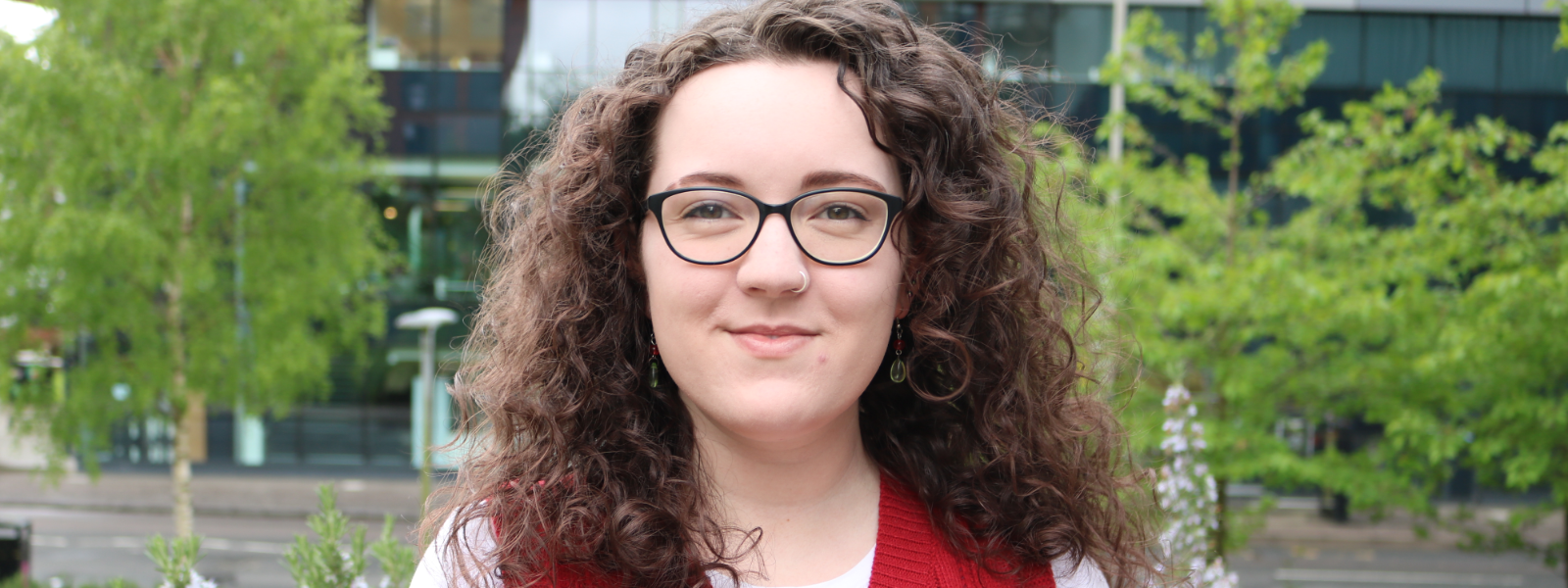
 Ayanna is a student on the MLitt Creative Writing course within the Department of Humanities
What was your overall experience like during your placement and how did it differ from your expectations going in?
My time with the Stirling Heritage Alliance was a very rewarding and enjoyable experience. I went into my placement with an open mind because my creative experience is on a rather niche subject, so I didn’t want to form any expectations before going in. I was given the choice of several projects to work on so I got to choose what interested me the most and what I thought would be the most beneficial to my folio. The work itself was very enjoyable and involved a lot of research into Stirling’s history and culture. I was treated like another colleague rather than someone who was only there temporarily which really helped to give me a feel for what it would be like to work in a professional environment.
Tell us about the projects you worked on?
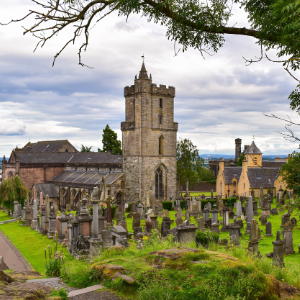
One of the projects I worked on was a pamphlet for the Church of the Holy Rude guiding visitors through the stained-glass windows. This was a project that the Heritage Alliance had wanted to do for a while but hadn’t had the people available to do it. I had a primary role in shaping the final content as the only pre-determined factor was the folder of information given to me that the tour guides used to give their tours of the church. It took several days of sifting through the information to condense it down into palatable paragraphs, then several more days of designing. I was given access to Canva so that once I had completed the writing aspects, I could design the pamphlet how I saw fit. I created the design based on several existing pamphlets that have been produced by the Stirling Heritage Alliance in order to keep the branding concise.
Many of the church’s features didn’t have complete historical records, how did you use your creative writing skills to build a sense of story or intrigue around these unknowns?
For one particular object, a medieval font, it was really hard to find any solid pieces of information on its origins. The only information I was able to find was small pieces in church guidebooks from the 1950s and a single Dundee Courier article from the 1930s. While I was unable to find an exact origin story for the font, I was able to gather pieces of history based off what information we had and used this to show what these facts would imply if we were able to prove they were accurate. This worked really well in helping to create an engaging narrative surrounding the font as I was able to frame it as a mystery waiting to be solved, providing the right research and crowdfunding. So, while I didn’t manage to find anything definitive, I was still able to create an engaging piece for the audience which draws them into the mystery of font and which historical figures may have interacted with it.
What was the most rewarding or standout moment during your placement, and why did it resonate with you?
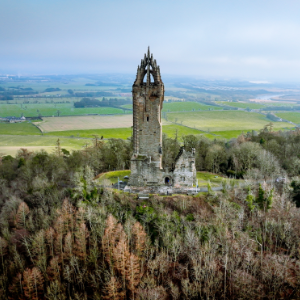
My most rewarding moment took place during my first project which was writing panels of information to go up outside the Legends café at the Wallace Monument. I was aware at the start of this project that my work would be made into physical boards, but it didn’t quite hit me what that meant until I was informed that my work had been sent off to the marketing department who would be working out the logistics of creating boards that would last for 10+ years. That is the moment when it properly hit me that not only was my work being produced, but that for the next 10 years, everyone who goes to the Legends café will be able to interact with something that I have worked on. It was a glowing moment of pride in myself and what I have achieved.
How has this placement influenced your studies or creative craft? Is there anything you gained from it you would like to continue to work on or develop?
Several of my university projects have benefited greatly from my time with the Stirling Heritage Alliance as it reignited my passion for Scottish history. I forgot how much I enjoy doing research into history and my university project on Scottish mythology is the result of this. I have gained a lot of experience writing in a historical and educational context which I didn’t realise I enjoyed until now. I would like to continue this work outside of university and strive to obtain a job within this field when I graduate. I have gained a deeper appreciation for the work that goes into making history educational and entertaining for the general public and will continue to develop my own understanding of Scotland’s mythology and vibrant history.