Protecting fish stocksCan we turn complex ecosystems into workable policy?
17 March 2026
From the Firth of Clyde to Lake Malawi, managing fish stocks is a global challenge shaped by ecology, economics and uncertainty. University of Strathclyde research shows how policies that appear protective can miss their mark – and why robust science is essential to designing measures that genuinely support recovery.
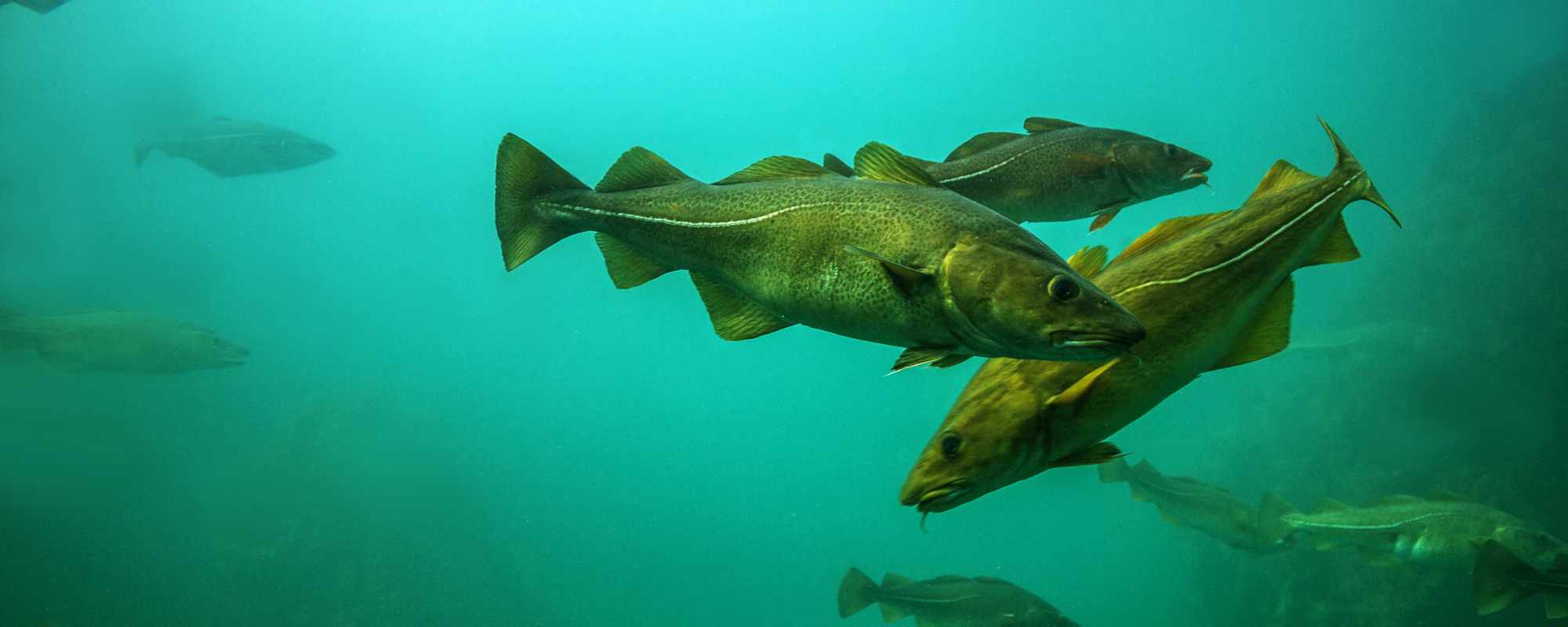
In February 2026, the Scottish Government lifted a 20-year-long ban on fishing for cod in the Firth of Clyde – a policy designed to protect and revitalise dwindling stocks of the species: not because it was a success, but because it wasn’t.
Despite the ban on targeting the fish during their annual spawning period – between 14 February and 30 April – cod stocks remain critically low. Why?
The logic was intuitive: reduce disturbance during reproduction and stocks should recover. Strathclyde research on fisheries disturbance, building on the findings of University of Strathclyde PhD thesis, helped to test that assumption, provide answers and inform the Parliament’s decision.
By combining survey data with stock-assessment models, researchers concluded that the spawning cod stock had declined by 96% since 1985, with only a slight recent increase; young fish were being caught before they reached spawning age; and, that prawn fishing was the most likely cause, killing the cod as bycatch. In other words, there were very few cod surviving to adulthood that could spawn during the prohibited period, so protecting them came too late in their lifecycle to have any impact.
“The cod stock is in very poor shape, and the analysis suggests that, if we want it to recover, we must reduce the residual fish mortality that is due to the remaining fishing activity,” Dr Robin Cook told the Rural Affairs and Islands Committee at an evidence session in January 2026. “If the objective is to recover the cod stock, we must reduce the bycatch somehow.”
Fishing – and balancing demand for food against protecting stocks – will always prompt strong debate between the fishing industry and conservationists. But this is where independent scientific research can inform the discussion and subsequent policies. For regulators, this kind of analysis is crucial as it helps distinguish between measures that look protective and those that are likely to be effective.
That expertise is well established: Strathclyde’s work on stock assessment modelling has previously led to changes in how cod stocks to the west of Scotland are assessed by the International Council for the Exploration of the Sea, directly influencing fisheries management decisions beyond the UK.

Overlooking the town of Gourock, which sits on the upper Firth of Clyde.
Trawling for information
Fish stocks are among the most closely managed natural resources in the world – and among the most difficult to protect. Declines can unfold slowly, hidden beneath the surface, only becoming apparent once recovery is difficult or impossible.
Yet the pressures on fish populations are intensifying. Climate change is altering growth rates and distribution, fishing practices affect species in different ways, and management decisions must balance ecological sustainability with economic livelihoods.
One of the fundamental challenges in fisheries management is that fish populations cannot be counted directly. Instead, scientists must infer stock size, growth and mortality from surveys, catch records and biological sampling – all of which contain uncertainty.
Strathclyde researchers have spent decades refining methods to detect long-term change in fish populations using survey data. By analysing bottom-trawl surveys from the west coast of Scotland, they have shown not only sharp declines in the abundance of large demersal fish such as cod, haddock and whiting, but also systematic reductions in average fish size.
These shifts matter. Smaller, younger fish produce fewer eggs and are less resilient to environmental change. For policymakers, this kind of evidence helps move the discussion beyond whether stocks are ‘up’ or ‘down’, towards deeper questions about population health and recovery potential.
Measurement, in this sense, is not just scientific bookkeeping, it is the foundation on which effective policy rests.
A global challenge
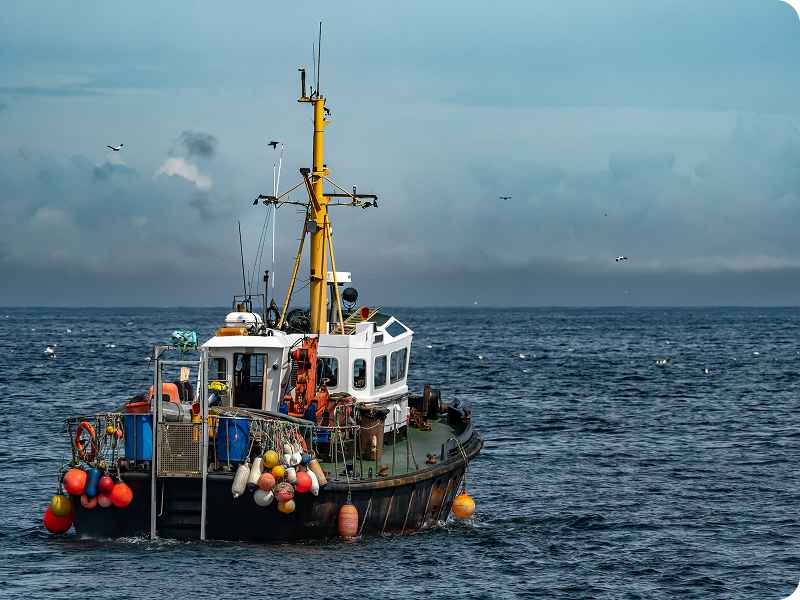
Far from being a problem confined to northern waters or industrial fleets, sustainable fisheries management is a challenge across the world’s diverse fishing systems. A recent study from researchers working in Lake Malawi found that traditional community-based management schemes were associated with better-condition fish stocks than government-managed areas.
This underscores that, alongside advanced stock assessment models and regulatory frameworks, effective stewardship often hinges on governance structures and local participation – insights that resonate from Lake Malawi to the North Sea.
It is not just humans that impact fish stocks – natural predators can also play a role. Research led by Dr Cook and colleagues examined the influence of grey seal predation on depleted cod stocks in Scottish waters.
By combining consumption estimates with empirical surveys, the study found that seal predation can significantly reduce the potential for stock recovery even when fishing pressure is reduced.
The research highlights an important lesson for policymakers: sustainable management must look beyond fishing mortality and consider key ecological drivers that influence how and whether stocks can rebound.
Interestingly, research has also suggested that the impact of overfishing on fish stocks is not simply a result of modern industrial fishing techniques. A study led by researchers including Dr Douglas Speirs reconstructed fish abundance in Scottish coastal fisheries using nineteenth-century landings records and fishermen’s testimonies.
By estimating catch per unit effort from early United Kingdom Fishery Board statistics alongside qualitative evidence, the research showed that commercially important stocks of whitefish such as cod were already in decline by around 1850.
Why science and policy don’t always align
Fisheries science rarely delivers simple answers. Researchers aim to understand mechanisms and quantify uncertainty; policymakers must act within legal, social and economic constraints.
Tension between evidence and regulation is therefore not a sign of failure, but a feature of evidence-based governance. The recent Clyde cod debate illustrates this clearly: scientific findings were scrutinised in parliamentary committees, weighed alongside socio-economic impacts, and contested in public.
From a research perspective, this is success. It shows science being used – challenged, tested and debated – in real decision-making contexts.