
Dr Claire Timmins
Senior Teaching Fellow
Speech and Language Therapy
Personal statement
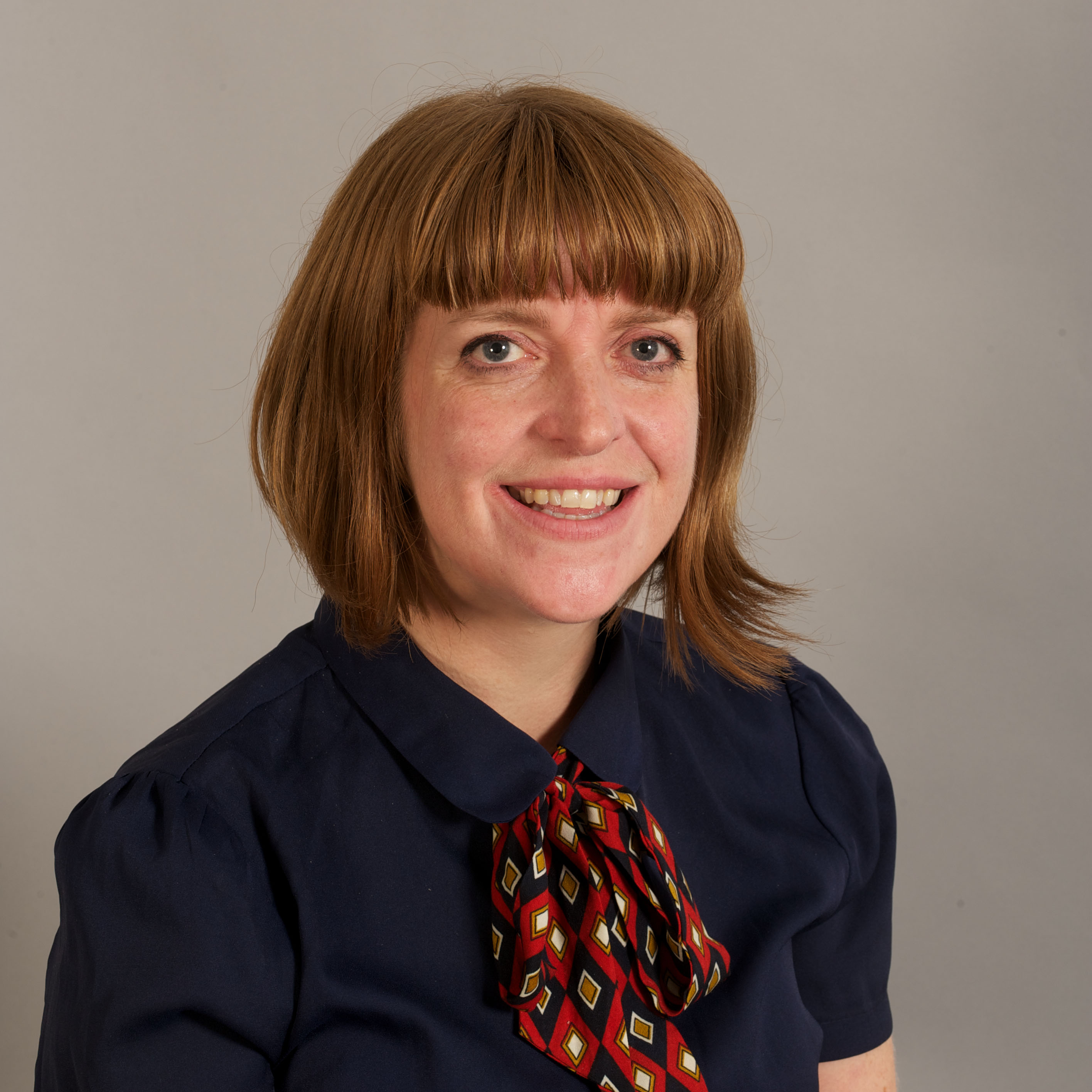
Dr Claire Timmins is a Senior Teaching Fellow within the Department of Psychological Sciences and Health within the University of Strathclyde, providing innovative teaching and assessment in the areas of clinical phonetics and sociolinguistics.
Her research and scholarship interests include active learning methods (online and in-person), creative pedagogies, sharing of good practice, and supporting the Programme Leader role within HE.
Claire is a Senior Fellow of the Higher Education Academy and a founding member of the Clinical Phonetics Teaching Network (UK and Ireland).
Prize And Awards
- Innovative Teaching Award (Winner)
- Recipient
- 19/5/2026
- Best Overall Teacher (Winner)
- Recipient
- 18/5/2023
- Digital Innovator (Winner)
- Recipient
- 13/5/2021
- Digital Innovator (Winner)
- Recipient
- 13/5/2020
- Most Innovative Teacher (Winner)
- Recipient
- 10/5/2019
- Senior Fellowship of the Higher Education Academy
- Recipient
- 18/10/2018
Publications
- Maximising student engagement in learning clinical phonetics and phonology using creative approaches
- Timmins Claire
- Clinical Linguistics & Phonetics (2026)
- https://doi.org/10.1080/02699206.2026.2688983
- "Wish you were here" : building a playful learning community
- Timmins Claire, Faulkner Suzanne, Grey Simon
- Playful Learning Conference (2025)
- Connect & Reflect: Playful Idea Sharing
- Timmins Claire, Faulkner Suzanne, Grey Simon
- Playful Learning Conference (2024)
- Using online Escape Rooms for summative assessment
- Timmins Claire
- Escape Rooms in Education Showcase 2.0 (2024)
- Working toward phonetics competencies : an investigation of the current provision and techniques for teaching clinical phonetics and phonology within UK and Ireland based HEIs
- Timmins Claire, Moreland Matthew, Bates Sally, Cornelius Pip, Knight Rachael-Anne, Titterington Jill, White Sarah L, Wright Aileen
- 2024 Colloquium of the British Association of Academic Phoneticians (2024)
- Adapting word games for teaching phonetics
- Timmins Claire
- (2023)
- https://doi.org/10.25416/NTR.24099525.v1
Teaching
I am module leader and lecturer for the following:
B6118 Clinical Phonetics and Phonology, B6119 Anatomy and Physiology for Speech and Language Pathology 2, B6117: Linguistics 1 Introduction to Language and Communication, B6340: Linguistics 3 Sociolinguistics, Multilingualism and Speech Acoustics, B6441 Advanced Study Options.
I also provide supervision for 4th year undergraduate dissertations.
Research Interests
My current research lies in the use of creative and playful learning in Higher Education. I am interested in how we can use technology and gaming to increase student engagement and successfully achieve learning outcomes.
I am also interested in how we can support and develop Programme Leaders in their role at Strathclyde.
Professional Activities
- Playful Learning Conference 2026
- Speaker
- 1/7/2026
- #LTHEchat (External organisation)
- Member
- 7/1/2026
- A Practical Guide for Designing a Programme Leader Induction Session
- Contributor
- 10/10/2025
- Innovations in Linguistics Education (Journal)
- Editorial board member
- 1/9/2025
- Language and Society in Scotland (External organisation)
- Member
- 22/8/2025
- Language in Society in Scotland (External organisation)
- Advisor
- 22/8/2025
Projects
- STAR-Gate: a user evaluation and co-production project for the Speech Therapy Animation and Imaging (STAR) web resource
- Timmins, Claire (Principal Investigator) Lawson, Eleanor (Co-investigator) Cleland, Joanne (Co-investigator)
- 01-Jan-2025 - 01-Jan-2025
- STAR-gate: a user evaluation and co-production project for the Speech Therapy Animation and imaging Resource (STAR) web resource.
- Lawson, Eleanor (Co-investigator) Cleland, Joanne (Co-investigator) Timmins, Claire (Principal Investigator)
- STAR-gate: a user evaluation and co-production project for the STAR web resources.
For over a decade, the project team have led several clinical studies using ultrasound tongue imaging (UTI), to evidence the effectiveness of this technique for improving speech errors in children with speech sound disorder (SSD). Papers published in both the previous and current REF period by our group have shown that this approach can be game changing, especially for SSDs which are difficult to treat through conventional therapy. However, ultrasound technology is not widely available to speech and language therapists (SLTs) and educators. To democratise access to visual representations speech production, we created two ESRC-funded Web-based resources:
Seeing Speech: STAR www.seeingspeech.ac.uk/speechstar/ for Speech Therapy training.
SpeechSTAR www.speechstar.ac.uk for use in clinic with children who have SSDs.
These sites contain video databases of (non)disordered child speech, imaged using UTI; magnetic resonance imaging (MRI) speech samples, and MRI-based vocal-tract animations.
Initial feedback gathered through site surveys has been excellent; however, many respondents are encountering the site for the first time and are not sure how to navigate the resources. Our proposed project (STAR-gate) will maximise the accessibility of STAR and SpeechSTAR by engaging key user groups (i) SLTs; (ii) clients/carers (iii) SLT students; (iv) Clinical-Phonetics lecturers. We will work with HEIs and SLTs across the British Isles, to evaluate STAR/SpeechSTAR, and co-create video-based content for these Web sites.
Objectives:
Before the next REF exercise, to gather evidence of how STAR has changed the practice of the user groups.
To develop written materials facilitating use of STAR for Clinical Phonetics teaching (publications/ working papers, co-created with Clinical Phonetics lecturers).
To gather evidence to support grant applications to further develop the STAR and SpeechSTAR websites, according to user needs.
To co-create video-based user guides, sharing how STAR and SpeechSTAR can be used in SLT teaching, training, CPD and in clinic. - 01-Jan-2025 - 01-Jan-2026
- Working toward Phonetics Competencies: An investigation of the current provision and techniques for teaching clinical phonetics and phonology within UK and Ireland based HEIs
- Timmins, Claire (Principal Investigator)
- This study aims to survey clinical phonetics lecturers across the UK and Ireland to access information on how clinical phonetic transcription and phonetic/phonological analysis skills are currently taught, assessed and maintained.
- 01-Jan-2023 - 01-Jan-2024
- STAR-gate: a user evaluation and co-production project for the Speech Therapy Animation and imaging Resource (STAR) web resource
- Timmins, Claire (Co-investigator)
- 01-Jan-2023 - 31-Jan-2028
- University students’ perceptions and experiences of using paper-crafting methods for learning anatomy
- Timmins, Claire (Principal Investigator)
- A qualitative investigation into the use of paper-crafts for the teaching and learning of anatomy for Speech and Language Therapy undergraduate study.
- 20-Jan-2023 - 01-Jan-2024
- Programme Leaders at Strathclyde – role definition and support needs
- Timmins, Claire (Co-investigator) Savage, Katy (Co-investigator)
- Working with staff from OSDU, this project aims to provide a network for support and development of Programme Leaders across Strathclyde. Aims include the production of a broad role descriptor, an interactive timeline and online resource, a peer mentoring programme and induction activities.
- 01-Jan-2021 - 31-Jan-2023
Contact
Dr
Claire
Timmins
Senior Teaching Fellow
Speech and Language Therapy
Email: claire.timmins@strath.ac.uk
Tel: Unlisted