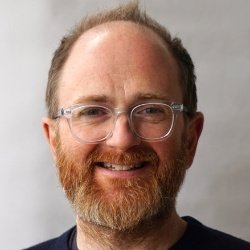
Professor Christopher White
Civil and Environmental Engineering
Personal statement
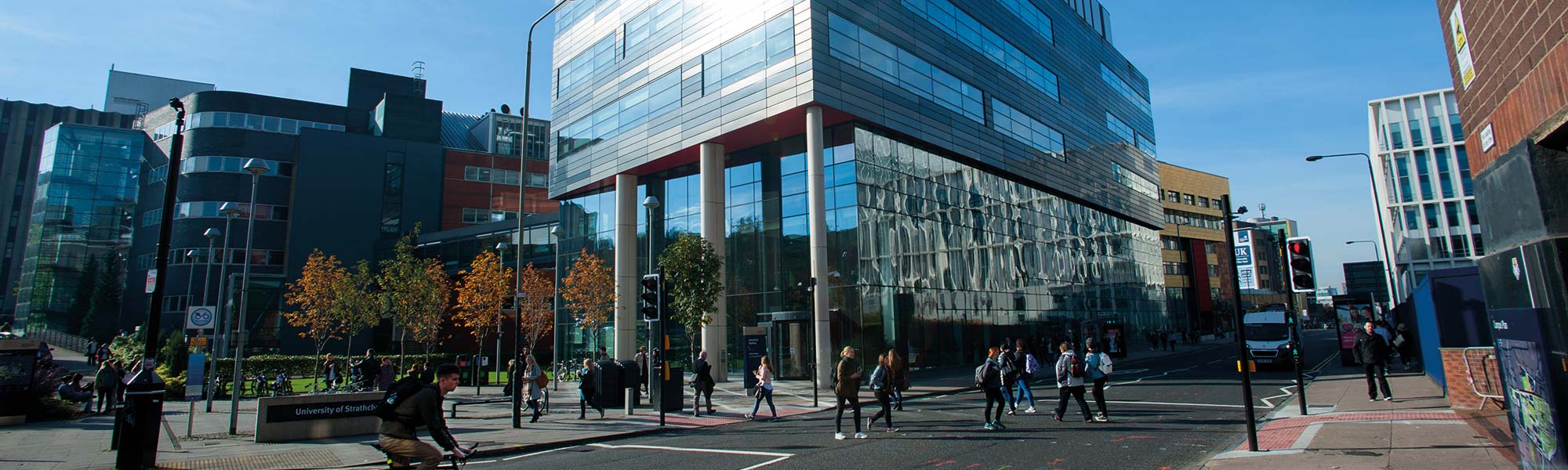
Professor Chris White is Head of the Centre for Water, Environment, Sustainability and Public Health at the University of Strathclyde in Glasgow. The Centre undertakes fundamental and applied research that provides novel solutions to some of the most pressing global environmental challenges, including net zero and the circular economy, renewable energy, water resources and waste management, environmental health, and climate resilience.
As a Professor in Climate Extremes and Resilience, his research quantifies and predicts complex cascading and interconnected multi-hazard risks across systems and critical infrastructure. His Engineering for Extremes research group focuses on hydrometeorological natural hazards (floods, droughts and wildfires), multi-hazard risks, predictions and early warnings, climate risk management and climate resilience. He works to help address the challenges posed by these complex climatic risks—from influencing international and national policy to supporting critical national infrastructure owners and operators in reducing impacts and increasing resilience.
Professor White work includes the modelling and prediction of extreme events on both the extended-range 'subseasonal-to-seasonal (S2S)' (weeks to months) and climatic timescales (up to the end of the century) using regional high-resolution and global climate projections focused on complex multi-hazard interactions, cross-sectoral cascading physical and societal impacts.
He leads several projects and activities including the new ANTICIPATE European COST Action network CA24144 on extended-range multi-hazard predictions and early warnings (2025-29). He leads multi-hazard interactions and cascading impacts work package of the MEDiate (Multi-hazard and risk-informed system for enhanced local and regional disaster risk management) project (2022-25) and is a partner in the forthcoming TOGETHER (Towards enhanced coordination of disaster risk management and governance through a holistic framework for multi-level interaction and communication) project (2025-28), both funded by the Horizon Europe programme of the European Commission. He was also previously co-lead of the applications sub-project of the World Meteorological Organization’s WWRP/WCRP S2S Prediction Project application sub-group.
| **NEWS** The Engineering for Extremes research group, led by Dr Chris White, was named as the joint-winner of the inaugural Strathclyde Strategic Themes R&KE Impact Awards 2025 !! |
Prize And Awards
- ICE Robert Alfred Carr Prize 2026
- Recipient
- 2/7/2026
- Research Team of the Year - Engineering for Extremes (E4E)
- Recipient
- 25/8/2025
- Resilient Australia Awards: State (Tasmania) 'Commendation' - Tasmanian State Natural Disaster Risk Assessment
- Recipient
- 2016
- Churchill Fellowship
- Recipient
- 2013
- Resilient Australia Awards: National 'Winner' - Climate Futures for Tasmania
- Recipient
- 2012
Publications
- Interdisciplinary perspectives on multi-risk anticipatory action
- de Boer Tesse A, Matanó Alessia, Easton-Calabria Evan, Alcayna Tilly, Budimir Mirianna, de Ruiter Marleen C, Ewbank Madeline, Fawwad Muhammad, Gonzalez Debora, Jaime Catalina, Jones Lindsey, Kristensen Kim, Lazarus Brenda, Mena Rodrigo, Parkinson Edward, Trogrlić Robert Šakić, Simons Beth, Tiggeloven Timothy, van den Homberg Marc JC, van Westen Cees J, Vogel Martha M, Wheatley Andy, White Christopher J, Kruczkiewicz Andrew
- iScience Vol 29 (2026)
- https://doi.org/10.1016/j.isci.2026.115618
- Compound weather and climate events in 2025
- Raymond Colin, García-Martínez Ivonne M, Rogers Cassandra DW, Chen Yang, Han Weiqing, Libonati Renata, Simpson Nicholas P, White Christopher J, Zscheischler Jokob
- Nature Reviews Earth & Environment Vol 7, pp. 340-342 (2026)
- https://doi.org/10.1038/s43017-026-00797-9
- Impactful weather and multi-hazard events : lived experiences from rural Scotland
- Brett Lou, Cha YoungHwa, White Christopher J
- Climate Resilience and Sustainability Vol 5 (2026)
- https://doi.org/10.1002/cli2.70035
- Climate change adaptation investment need across five sectors in Scotland
- Brett Louise, White Chris, England Kit, Calvillo Munoz Christian, Roberts Jen
- (2026)
- https://doi.org/10.7488/era/7087
- Understanding patterns and drivers of changing sectoral economic water use in Scotland
- Clemens Maria, McGrane Scott, White Christopher J
- Water Resources Management Vol 40 (2026)
- https://doi.org/10.1007/s11269-026-04574-7
- Assessing flash drought development and propagation across the contiguous United States using remote sensing
- Zeraati Masoud, Farahmand Alireza, Seager Richard, Fowler Hayley J, Madani Nima, Parazoo Nicholas, Manning Colin, White Christopher J, Wen Yixin, Mehran Ali, AghaKouchak Amir
- Earth's Future Vol 14 (2026)
- https://doi.org/10.1029/2025EF007037
Teaching
Modules taught:
- CL216 Hydraulics and Hydrology
- CL248 Environmental and Hydraulic Engineering (IJEP)
- CL420 Water Engineering 2
Research Interests
I specialise in understanding complex multi-hazards and cascading risks, incorporating both physical causative and impacts perspectives. My research focuses on hydrometeorological natural hazards (including floods and droughts), predictions and early warnings, climate risk management and climate resilience. This includes the modelling and prediction of extreme events on both the extended-range 'subseasonal-to-seasonal (S2S)' (weeks to months) and climatic timescales (up to the end of the century) using regional high-resolution and global climate projections.
Much of my research involves working with end-users to make climate, weather and natural hazards science and information more usable though the exploration of improved applications, communication and promotion of appropriate risk information in support of resource management, emergency management and disaster risk reduction activities.
I am always keen to talk to potential students, collaborators and industry partners about future projects and opportunities.
Professional Activities
- Local Zero Podcast 116: What happens when multiple climate change hazards collide?
- Interviewee
- 21/6/2026
- World Water Day 2025
- Speaker
- 24/3/2025
- ISPF-SFC funded Workshop
- Speaker
- 5/12/2024
- Strath Methods series of seminars
- Invited speaker
- 1/9/2022
- Strath Methods series of seminars
- Invited speaker
- 1/9/2022
- Developing a Subseasonal-to-Seasonal Forecasting System for Hydropower Reservoirs in Scotland
- Contributor
- 30/4/2021
Projects
- Multi-Antenna FMCW Radar for Enhanced Hydrodynamic Monitoring of the Upper River Tweed (FDRI SMALL GRANT)
- Tubaldi, Enrico (Principal Investigator) Bertram, Doug (Co-investigator) Clemente, Carmine (Co-investigator) White, Chris (Co-investigator)
- 01-Jan-2026 - 31-Jan-2027
- (3.9k) Refining the methodology for collecting data on the effects of climate change on sleep and mental health in care homes
- Crawford, Megan (Principal Investigator) Tse, Dwight (Principal Investigator) Witte, Kimia (Co-investigator) Dragojlovic-Oliveira, Sonja (Co-investigator) McGill, Grainne (Co-investigator) Quigley, John (Co-investigator) White, Chris (Co-investigator)
- 05-Jan-2026 - 31-Jan-2026
- Towards Enhanced Coordination Of Disaster Risk Management And Governance Through A Holistic Framework For Multi-Level And Cross-Sectoral Interaction And Communication (TOGETHER)
- White, Chris (Principal Investigator) Kamranzad, Bahareh (Co-investigator) Tubaldi, Enrico (Co-investigator)
- 01-Jan-2025 - 31-Jan-2028
- ANTICIPATE: extended-range multi-hazard predictions and early warnings (CA24144) - GP1
- White, Chris (Principal Investigator)
- 01-Jan-2025 - 31-Jan-2026
- Post-doctoral research opportunity: cost of climate change adaptation (CXC IQ14-2025)
- White, Chris (Principal Investigator) Calvillo Munoz, Christian (Co-investigator) Roberts, Jen (Co-investigator)
- 01-Jan-2025 - 31-Jan-2026
- Plausible multi-hazard scenarios for the assessment of interdependent cascading risks in critical infrastructure
- White, Chris (Principal Investigator) Ferguson, Neil (Co-investigator) Tubaldi, Enrico (Co-investigator)
- 01-Jan-2025 - 31-Jan-2025
Contact
Professor
Christopher
White
Civil and Environmental Engineering
Email: chris.white@strath.ac.uk
Tel: 548 4366