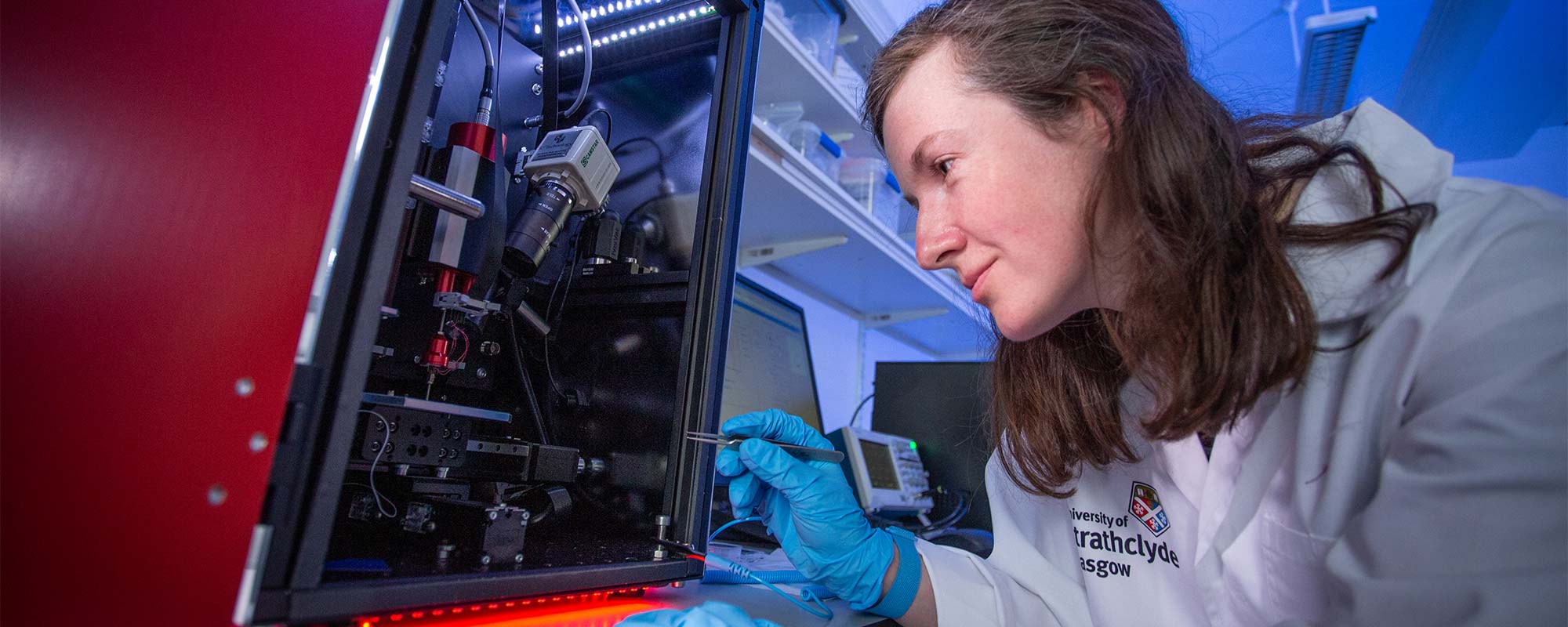
Postgraduate researchCentres for Doctoral Training

Centres for Doctoral Training (CDTs) bring PhD students from across disciplines together with industrial partners to address global challenges.

Combining the research and expertise of the partners and a cohort of researchers provides a rich learning environment where postgraduate researchers are trained and supported to reach their full potential.

Typically funded by the UK Government, through UK Research and Innovation, CDTs provide four-year fully funded studentships in a range of disciplines.

Working collaboratively as a cohort of researchers our doctoral students address challenges under specific research themes.

Your CDT experience

As a CDT student at Strathclyde, you can benefit from:

Duration: 3.5 years

The aim of this interdisciplinary Strathclyde CDT is to meet the needs of the fast-growing green construction industry to optimise building performance and deliver net-zero buildings whilst promoting occupant’s health and wellbeing.

Energy-efficient Indoor Climate Control for Optimised Health

 Duration: 4 years
 CDT: AQT

We have fully funded PhD positions spanning broad aspects of quantum technology, from technical underpinnings to applications. The core of each student’s doctoral training programme is a cutting-edge, original research project designed in collaboration between the primary academic supervisor, the student and, where applicable, the industrial partner. Work on the PhD project will continue throughout all four years, ensuring that students are embedded in a research environment from day one, while benefitting from cohort-based training in the foundations and applications of quantum technology, as well as skills training and engagement activities with leading industries and through outreach.

Apply to the Applied Quantum Technologies CDT

 Duration: 4 years
 CDT: Use-Inspired Photonic Sensing & Metrology - Applied Photonics 

The EPSRC Centre for Doctoral Training (CDT) in Use-Inspired Photonic Sensing & Metrology (Applied Photonics) offer both fully funded EngD and PhD opportunities. Students undertake two semesters of cohort based academic training before commencing their research full time with their partner company and university. In years 2 and 3, students undertake 3 business courses and professional skills training. 

The CDT is pleased to have been selected to participate in the UK Government’s TechExpert pilot scheme. As part of this initiative, students entering EngD and PhD programmes in 2026 who are eligible for home fee status will receive a generous stipend of £31,000. TechExpert funded students also engage in up to 10 days per year of enriching additional activities, such as outreach to inspire future talent and initiatives that support widening participation in technology careers. In addition to this, students have access to a conference budget of up to £4,000 and tuition fees paid for the for the duration of the programme.

Apply to the Use-Inspired Photonic Sensing & Metrology - Applied Photonics CDT

 Duration: 4 years
 CDT: Use-Inspired Photonic Sensing & Metrology - Applied Photonics 

The EPSRC Centre for Doctoral Training (CDT) in Use-Inspired Photonic Sensing & Metrology (Applied Photonics) offer both fully funded EngD and PhD opportunities. Students undertake two semesters of cohort based academic training before commencing their research full time with their partner company and university. In years 2 and 3, students undertake 3 business courses and professional skills training. 

This EngD offers the chance to explore how light itself can be used as a precision tool for materials engineering. You will investigate the combined use of femtosecond laser inscription and chemical etching to create three-dimensional structures from laser gain media; and demonstrate the construction of optical components and laser cavities that cannot be produced by conventional machining.

Apply to the Sculpting Light: Femtosecond Laser Inscription & Chemical Etching of Laser Gain Media CDT

 Duration: 4 years
 CDT: Use-Inspired Photonic Sensing & Metrology - Applied Photonics 

The EPSRC Centre for Doctoral Training (CDT) in Use-Inspired Photonic Sensing & Metrology (Applied Photonics) offer both fully funded EngD and PhD opportunities. Students undertake two semesters of cohort based academic training before commencing their research full time with their partner company and university. In years 2 and 3, students undertake 3 business courses and professional skills training. 

Join the next revolution in global communications, connecting the seabed to space through emerging 6G technologies. This EngD aims to develop advanced underwater optical wireless communication systems to tackle challenges of underwater turbulence and signal distortion by investigating cooperative, spatially distributed transceivers with advanced signal processing.

Apply to the Use-Inspired Photonic Sensing & Metrology - Applied Photonics CDT

 Duration: 4 years
 CDT: Use-Inspired Photonic Sensing & Metrology - Applied Photonics 

The EPSRC Centre for Doctoral Training (CDT) in Use-Inspired Photonic Sensing & Metrology (Applied Photonics) offer both fully funded EngD and PhD opportunities. Students undertake two semesters of cohort based academic training before commencing their research full time with their partner company and university. In years 2 and 3, students undertake 3 business courses and professional skills training. 

This project explores Fourier Ptychographic Microscopy (FPM) to overcome the throughput limits of current semiconductor inspection systems by enabling high-resolution, large-field-of-view imaging with lower-magnification optics. Using advanced LED illumination in SWIR and visible reflective modes, it aims to assess the performance, practicality, and industrial viability of FPM for fast, reliable defect detection.

Apply to Fourier Ptychographic Microscopy for High-Speed Semiconductor Wafer Inspection CDT

 Duration: 4 years
 CDT: Leverhulme Doctoral School in Nature Inspired Acoustics (NIA)

Individual projects in our interdisciplinary school will focus either on fundamental nature inspired studies in chemistry, materials, engineering, architecture, and psychology, or acoustic devices that exploit the fundamental knowledge gained to enhance detection of sounds and vibrations. The two strands of research will together enable sustainable architecture and energy management applications. A total of 21 studentships are offered across 3 cohorts.

Apply to the Leverhulme PhD programme

Apply to the Leverhulme MPhil & PhD programme

 Duration: 4 years
 CDT: Use-Inspired Photonic Sensing & Metrology - Applied Photonics

The EPSRC Centre for Doctoral Training (CDT) in Use-Inspired Photonic Sensing & Metrology (Applied Photonics) offer both fully funded EngD and PhD opportunities. Students undertake two semesters of cohort based academic training before commencing their research full time with their partner company and university. In years 2 and 3, students undertake 3 business courses and professional skills training. 

You will join Fraunhofer Centre for Applied Photonics (Fraunhofer CAP) — the UK’s leading applied photonics research organisation — and pursue development of next generation Quantum Raman Spectroscopy.

Raman spectroscopy provides unique molecular “fingerprints” for chemical and biological sensing, but its inherently weak signal limits sensitivity for trace gases and dilute samples. This EngD project aims to overcome these challenges by integrating quantum photonic technologies with advanced Raman instrumentation to create quantum-enhanced Raman spectrometers. 

Apply to Quantum-enhanced Raman spectroscopy for advanced molecular sensing

Our partners

We work with a number of academic institutions to deliver CDTs, either as the lead institution, or as a partner.


Heriot Watt University logo.
Imperial College London logo.
Loughborough University logo.
University of Bristol logo.
The University of Edinburgh logo.
University of Glasgow logo.
University of Lincoln logo.
University of Manchester logo.
University of Oxford logo.
University of Salford, Manchester logo.

World-class research with impact

Research is central to everything we do. It informs our teaching and helps us make a difference to business, industry, and society.

Almost 90% of research produced by the University of Strathclyde has been rated ‘world-leading’ or ‘internationally excellent

(Times Higher Education’s analysis of REF2021)
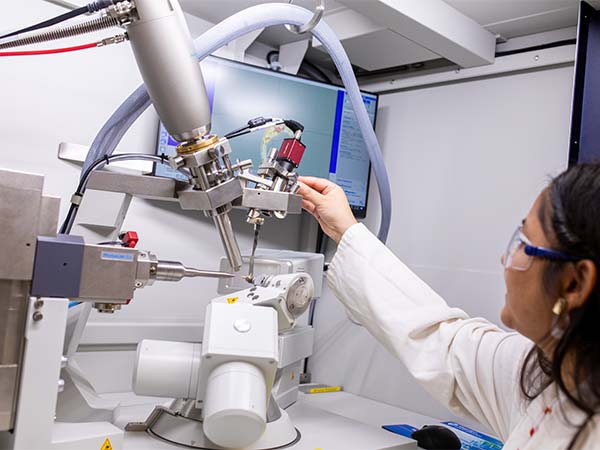
Cutting-edge facilities

We're transforming the way academics, business, industry and the public sector work in partnership.

National Manufacturing Institute Scotland

The National Manufacturing Institute Scotland (NMIS) is a group of industry-led manufacturing research and development facilities transforming skills, productivity and innovation, helping to make Scotland a global leader in advanced manufacturing.

Technology & Innovation Centre

At the Technology & Innovation Centre (TIC) we're transforming the way academics, business, industry and the public sector work in partnership.

We're working together to find solutions to challenges that matter in areas of economic importance including advanced manufacturing & materials, health & wellbeing, innovation & entrepreneurship, measurement science & enabling technologies and ocean, air & space.
Industry collaboration

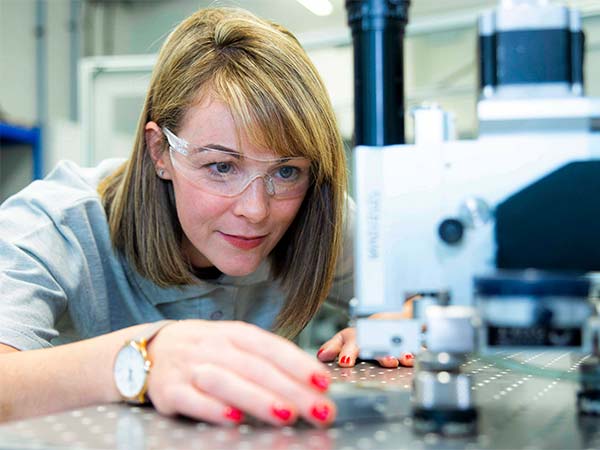
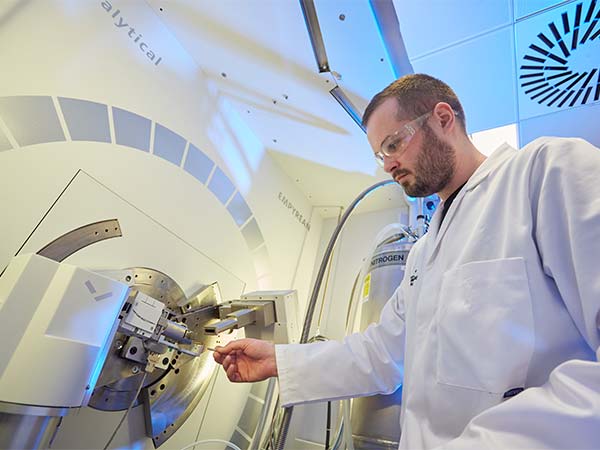
We work in partnership with businesses and organisations in several ways. Our staff work on shared projects in areas of mutual interest between Strathclyde and external organisations. These can be co-funded between the University, the organisation and/or research agencies.

Continuous Manufacturing & Crystallisation (CMAC)

The centre for Continuous Manufacturing & Crystallisation (CMAC), is example of this collaboration in practice.

Based in our Technology & Innovation Centre, we're working with companies such as GSK, Novartis and Astrazeneca to create an effective partnership with industry, academia and public bodies with the aim of:

  • accelerating the adoption of continuous manufacturing and crystallisation processes
  • developing systems and plants for the production of high-value chemical products
  • improving the quality of chemical products at lower costs, more quickly and sustainably

While CMAC is located within the University of Strathclyde, several other universities contribute to the team, including academics from:

  • University of Glasgow
  • Heriot-Watt University
  • University of Edinburgh
  • University of Cambridge
  • Loughborough University
  • University of Bath
CMAC PhD Opportunities

Opportunities for businesses

Find out more about how your business can collaborate on research projects with our academics.

Work with us

Strathclyde Doctoral School

Strathclyde Doctoral School provides a vibrant and comprehensive student-centred research and training environment in order to grow and support current and future research talent.

The School encompasses our four Faculties and is committed to enriching the student experience, intensifying research outputs and opportunities, and ensuring training is at the highest level. As a postgraduate researcher you'll automatically become a member of the Strathclyde Doctoral School.

Strathclyde Doctoral School