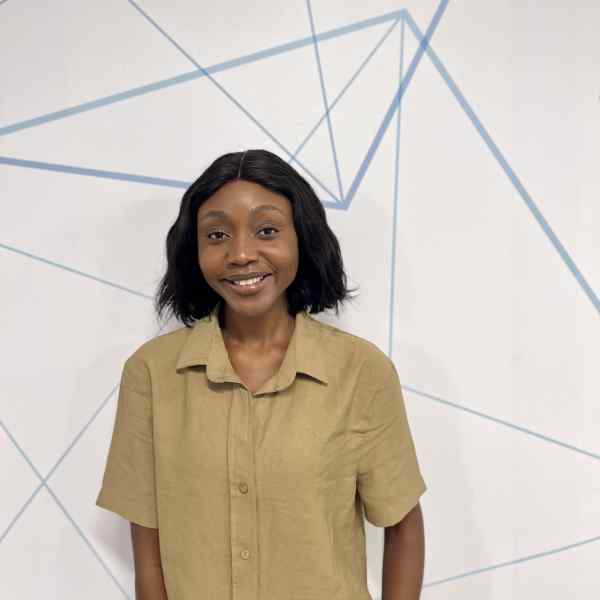
MSc Digital Health SystemsTuwilika Nafuka
I am a medical doctor from Namibia, a Chevening Scholar and Social Media Ambassador 2025/26, and the Founder of TupaBloom Care, a social enterprise advancing youth-centred sexual and reproductive health and digital health innovation in Namibia. I work at the intersection of clinical medicine, health policy, and digital innovation. Alongside my studies, I volunteer with the Africa CDC Youth in Digital Health Network (YiDHN), contributing to its policy, advocacy and research group, and serve as ONE UK Ambassador, advocating for global health equity and child survival.
What were your reasons for taking on a postgraduate degree?
I knew I was an innovator before I had the language for it. During COVID-19, I built a website that became a go-to resource for Namibians trying to make sense of the data being published daily, the case numbers were public, but they were not being explained in a way people could act on. Around the same time, I developed a personal health record app through a Startup Namibia hackathon. Both taught me the same lesson: I could build things people needed, but I was working from instinct rather than from any grounding in health informatics, data governance, or implementation science.
That gap is what sent me looking for formal training, and specifically to the UK. Scotland has a distinctive digital health landscape, with national data infrastructure and a strong record of using health data to drive service redesign. Understanding how health data underpins digital health innovation, and what it takes to govern it well, was central to why I came here.
How did you make the decision to study at Strathclyde?
I was drawn to the University of Strathclyde because of its forward-thinking, highly practical approach. The MSc in Digital Health Systems stood out because it offered the exact blueprint I needed to bridge healthcare, technology, and policy. It wasn't just about the theory of digital health, but about real-world implementation and tangible impact.
The people teaching it mattered just as much. When I looked into the programme, I found academics whose work sat exactly in the space I wanted to move into, Dr Lisa McCann, Professor Marilyn Lennon, and Dr Catherine Chavula among them. Knowing I would be learning from researchers actively shaping digital health, rather than only reading about it, made the decision straightforward.
What do you like about your course & Strathclyde?
I really enjoyed how immersive and collaborative the course was. We were constantly challenged to think about how digital tools are deployed in complex environments. The support from the academic team, particularly my programme director Dr Lisa McCann and my dissertation supervisor Dr Emma Nicol, has been phenomenal. What I valued most was that the learning did not stop at the lecture theatre. Strathclyde connected me to academics, NHS colleagues, and industry practitioners across Scotland, and I have built a network well beyond the university that will continue to shape my work long after I graduate.
What specialist knowledge & professional skills have you developed whilst studying the course?
The programme equipped me with technical literacy and a strategic mindset. I learned how to critically analyse health data, apply user-centred design to healthcare technology, and navigate the ethical and policy considerations surrounding digital health interventions. Working on health data governance in a Scottish context has been particularly formative, and I have applied that learning directly in my volunteer work with the advocacy and research group of the Africa CDC Youth in Digital Health Network, where I contribute to positioning youth perspectives within continental digital health governance discussions.
What are your ambitions for the future & how do you think your time at Strathclyde will help you achieve your goals?
My ambition is to become a leading contributor to Namibia's digital health landscape, ultimately in an advisory capacity to government on digital health strategy and governance. Strathclyde has given me the academic and technical foundation to back that ambition with evidence rather than instinct.
Two strands of my work carry this forward. Through TupaBloom Care, I lead BloomBox, a gamified, offline-first adolescent sexual and reproductive health intervention piloted in Windhoek schools with funding from the Africa CDC BingwaPLUS Y-Health Initiative, which I intend to scale nationally on my return. Alongside this, I use research as a lever for innovation across the continent, including an audit of digital health and AI companies across African markets that I have presented at conferences in the UK and Africa. Rigorous evidence is what moves digital health from pilot to policy, and that is where I want to sit.
How have you found your time living in Glasgow & what's your favourite thing about the city?
Glasgow has been incredibly welcoming. The phrase "People Make Glasgow" is absolutely true! My favourite thing about the city is the warmth, humour, and friendliness of the locals, combined with its vibrant cultural scene. Despite the cooler weather, the warmth of the community here genuinely makes you feel right at home. I plan to visit sometime soon.
Has anything surprised you about living & studying here?
As an international student, I was pleasantly surprised by the sheer level of support, from both the university and the broader community, to help us settle in and thrive. I was also surprised by how deeply integrated the university is with the city and local organisations, which provides great opportunities for networking, advocacy, and real-world engagement.