23 to 28 August 2026 3rd International Symposium on Deep Underground Science & Engineering
The impacts of a growing global population, climate change and technological transformation are driving the need for novel approaches to utilisation of the subsurface. Large subsurface infrastructure projects are becoming increasingly crucial to the energy, transport and water systems.
Examples include:
- Sweden’s HYBRIT large-scale underground rock cavern storage of hydrogen
- London's Crossrail connecting 30 stations in the UK’s capital city
- Norway's Lefdal Mine Datacenter
- South Korea’s high speed rail network, 82% of which is underground
- China’s 2.4GWh Huai’an salt cavern CAES project
- Glasgow's Shieldhall wastewater relief tunnel, which has reduced flooding and resulted in a cleaner River Clyde
Delivering such projects efficiently, safely, sustainably and in the way that best serves the needs of end-users requires integrating understanding of geology, rock mechanics, underground engineering and underground space utilisation. Research to support this must be interdisciplinary including studies of field analogues, in-situ measurement and experimentation, advanced numerical simulation and AI, as well as social science research into utilisation and safety.
Underground laboratories are playing an increasingly important role as platforms for innovative science and engineering. In the year of the 300th anniversary of the father of modern geology, James Hutton, the need to ensure geological heterogeneity, grounded in an understanding of deep time, is adequately linked to geological engineering is more vital than ever.
This international symposium will assemble international experts in all related disciplines for two-and-a-half days of inspiring presentations, in-depth discussion, and workshops.
Themes
Main themes include but are not limited to:
- fundamental geomechanics
- tunnelling and excavation
- coupled processes in rock masses
- subsurface energy storage
- carbon capture, utilisation and storage
- geothermal energy
- safety and hazard prevention
- AI in rock engineering
Registration fees
Early-bird (before 25 June 2026)
- Regular registration: £480
- Student registration: £280
After 25 June 2026
- Regular registration: £530
- Student registration: £330
Accompanying person: £200
Registration fees include access to the field trips, however, places are limited, and advance registration is required to secure a place.
Please note that student registration tickets do not include the Gala Dinner. A separate link for students to purchase a Gala Dinner ticket as an optional add-on will be available after 15 June 2026.
Symposium schedule
Keynote speakers to be confirmed – stay tuned for updates
| Date/time | Activity |
|---|---|
| 23 August | Registration |
| 24 August, 6pm to 8pm | Welcome reception with the Lord Provost of Glasgow |
| 25 August. 9am to 12 noon | Opening speech and keynotes |
| 25 August, 1:30pm to 5pm | Parallel sessions |
| 26 August, 9am to 12 noon | Keynotes & parallel sessions |
| 26 August 1:30pm to 5pm | Parallel sessions |
| 26 August, 7pm | Gala dinner |
| 27 August, 9am to 11:30pm | Keynotes & parallel sessions |
| 27 August, 11:30am to 12 noon | Closing ceremony and farewell |
| 28 August | 4D XCT training workshop (optional) |
The organising committee would like to express heartfelt appreciation to the Lord Provost and Glasgow City Council for graciously hosting the civic reception.
Field trips
Siccar Point
24 August
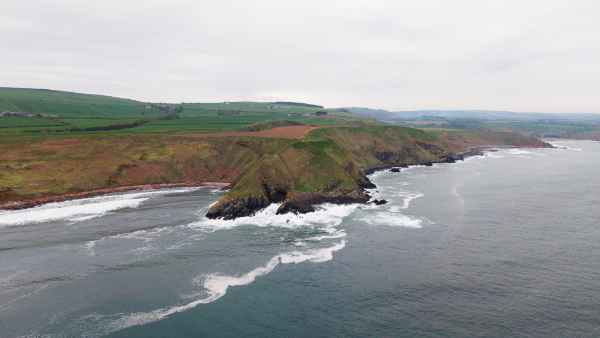
At top of the first 100 geological heritage sites defined by International Union of Geological Sciences (IUGS), Siccar Point is a world-class geosite. With clear field evidence of deep geological time and cyclic Earth processes, the site inspired the foundation of modern geology through James Hutton’s theory of deep geological time.
UK Geoenergy Observatory
27 August
The Glasgow Observatory is a research facility designed for investigating the shallow, low-temperature, mine-water heat and energy storage resources. The observatory site is typical of towns and cities with a post-industrial urban and coalfield legacy. Towns and cities are where the greatest demand for decarbonising heat lies.
Visa support
The University of Strathclyde will provide a formal invitation letter to successful registrants for visa purposes. For further information, please email civeng-underground2026@strath.ac.uk.
Accommodation
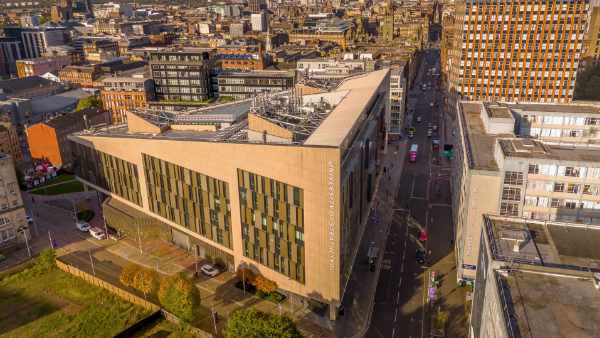
The University is located in central Glasgow, with a range of accommodation options nearby. See the Visit Glasgow website for details.
Special Issue in Deep Underground Science & Engineering
This special issue aims to highlight and summarise recent advances in understanding deep underground science and emerging technologies based on theoretical models, numerical simulations, laboratory experiments, and/or field observations.
Contributions will be selected based on submissions to the 3rd International Symposium on Deep Underground Science and Engineering, which will be held in Glasgow, UK on 24 to 27 August, 2026.
Contributors will be selected based on the top abstracts and presentations of the Symposium. Expected number of selected contributions to be published in the special issue is 10 to 20.
Tentative timeline
Open date for submission: Now
Deadline for manuscript submission: 1 December 2026
Revision Deadline: 1 March 2027
Contributed papers must be submitted via the Deep Underground Science and Engineering online submission system. Please select the article type “Geoenergy and Subsurface Engineering toward Net Zero: Recent Advances and Emerging Applications" when submitting the manuscript online.
Abstract submission details and formatting guidelines will be provided to participants upon registration.
Sponsorships
Sponsorships are welcomed from all related sectors who wish to exhibit their latest technologies or collaborate with peers in the emerging fields of underground engineering. We have set three levels of sponsorship including Gold, Silver and Bronze. Please contact us for more details.