Blog | Megan Scherrer | October 2026
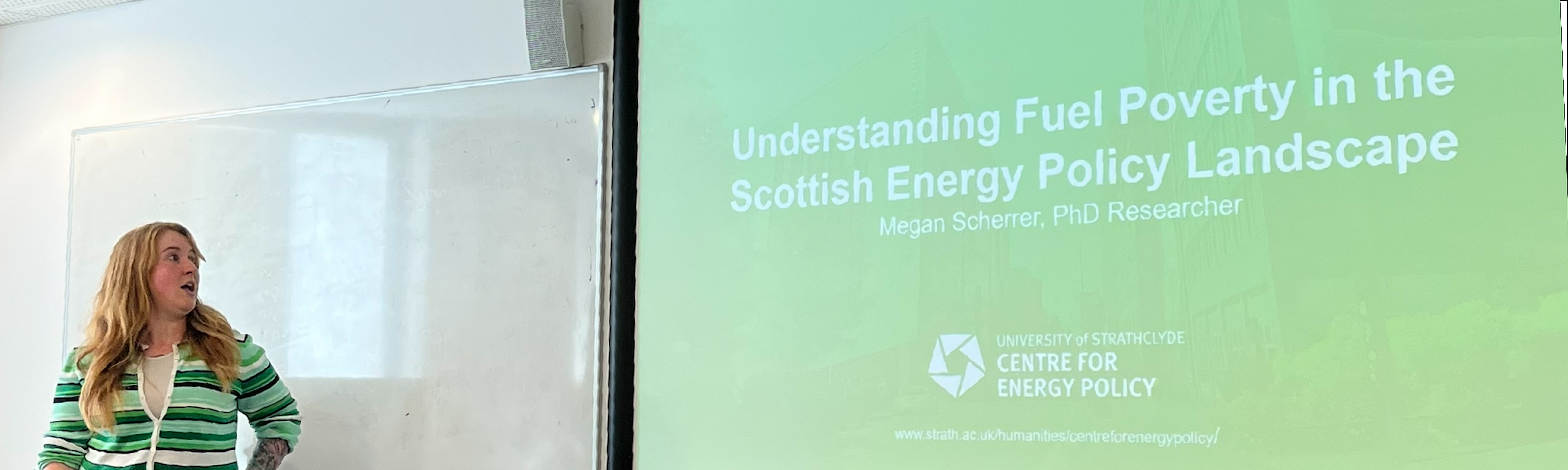
On 16th September, I had the opportunity to present my PhD research at the Strathclyde Institute for Sustainable Cities (SISC) seminar series. I had previously presented at a conference in Cork, but this was my first time leading and presenting at a seminar in this format in Glasgow. The seminar involved a 30-minute presentation followed by around 20 minutes of questions and answers. I was very nervous beforehand, but once I got started, I found my rhythm and the entire process was over before I could really register what was happening.
After the first few minutes, I could feel myself getting into the groove of the presentation. I was able to talk through the overarching narrative of my research and, most excitingly, some of my early research findings. There were definitely some things I ran out of time to cover, but overall, it was a good experience and I think I did alright!
What was the seminar about?
I presented my research which sits at the intersection of energy policy and fuel poverty policy in Scotland.
At this stage of my project, I have completed a document analysis of high-level policy documents, focusing on a number of archetypal policies. I have also conducted a thematic analysis of stakeholder interview data, speaking with stakeholders across academia, government, industry and the third sector about the challenges and aims of policy implementation. Through my analysis, I identified a variety of mechanisms through which policy addresses the different drivers of fuel poverty identified by the Scottish Government. I grouped policy into one of four main mechanisms:
- Energy supplier activities
- Fiscal interventions
- Pricing mechanisms
- Energy efficiency and heating decarbonisation policies
I then identified archetypal policies to represent these mechanisms. These are the Energy Company Obligation, the Energy Price Cap, the Pension Age Winter Heating Payment and the New Build Heat Standard, respectively. Identifying these archetypal policies allowed me to undertake a more in-depth analysis of how these policies, and the mechanisms they represent, work within Scotland's energy policy landscape, particularly in relation to how they address, or fail to address, the drivers of fuel poverty.
One of the things I find particularly interesting is that not all of these policies are explicitly fuel poverty policies. However, they all interact with, or have a significant impact on, fuel-poor households and communities.
I therefore analysed high-level government policy documents relating to these archetypal policies. The findings from that thematic analysis then became the basis for my stakeholder interviews. Through the interviews, I explored the challenges to implementing these policies from perspectives beyond government, as well as their implicit and explicit aims. The seminar was essentially a summary of all of these findings and detailed the final stages of my research.
What did I expect from this experience?
I expected to receive a variety of questions and to have at least a few attendees. I was pleasantly surprised by the number of people who attended, particularly online.
What was even more encouraging was that people were not only interested in the subject matter of my research but were also volunteering to participate and assist with other stages of my research – starting relevant conversations and providing valuable input.
Fielding questions at the end of the presentation was a great thought exercise. It helped me identify gaps in my own research and potential pathways worth investigating further as I conclude this stage of my research and enter my writing year.
Those conversations continued beyond the seminar and helped me broaden my own thinking about the subject.
What were the benefits?
The seminar was a great opportunity to gain experience and practise my public speaking skills.
It also gave me the chance to practise adapting my subject matter to my audience. I was speaking to people who may have been interested in the subject matter but may not have known all the ins and outs of the policies I was discussing.
Furthermore, fielding questions live and coming up with answers on the spot was another really useful experience. Even when I didn't have an answer and could only say, "I have to think about that further," I found the experience valuable.
Sometimes, recognising where you don't yet have an answer is just as useful as knowing where you do.
What did I learn?
Perhaps the biggest thing I took away from the experience is that people in Scotland are really engaged with this subject matter and genuinely interested in fuel poverty. I left the seminar feeling optimistic and refreshed as I enter the home stretch of my PhD writing year.
There is still plenty of work to do, and plenty of questions that I need to think about further, but having the opportunity to share my research, discuss it with others and hear different perspectives has reminded me why this research matters.
Overall, it was a really valuable experience, and one that I hope will help me as I move into the final stage of my PhD.
Photo: Ana Hernandez