Global Health Just Got a Plot Twist!
Author : Jackie Stewart
The current paradigm of health research in Africa, which is home to 20% of the World’s population and which faces 25% of the global burden of disease, is donor-based, which means investments often address international donors’ interests more than the affected population (Africa CDC, 2025). If this was contested before the COVID-19 pandemic, in 2020-21, Africa was left in no doubt that, when it came to global life or death decisions, the continent was left neglected, with its needs largely unmet (https://institute.global/insights/public-services/africa-without-vaccines-inequity-sets-world-course-great-divide). This was experienced most acutely with the vaccine rollout when, despite Africa being a key participant in research that enabled the development of the vaccine, the continent was the least prioritised by Global North decisionmakers resulting in it being referred to COVID-19 vaccine apartheid (Brown and Rosier, 2023).
A more recent example is Mpox, which has been a cause of morbidity and mortality in Africa for several decades with limited response from global superpowers to requests for research and development funding to understand this disease more thoroughly. Interestingly, though, it became a global priority for research and funding when soaring numbers of cases were reported in high income countries beyond the African region. By mid-2023 despite the United States having stockpiled the vaccine equating to 7 million doses it donated only 50 000 doses to Africa https://www.downtoearth.org.in/africa/what-is-the-politics-and-economics-of-mpox.
If one layers onto these foundational examples the current geopolitical climate of the erosion of multilateralism, the precarity of major international donors, and the ever-increasing levels of inequality, it is evident that a global recalibration of power is urgently needed which positions Africa at the centre of its own health research agenda.
In 2023, Africa Centre for Disease Control and Prevention (CDC) set about developing a health research prioritisation framework (https://africacdc.org/news-item/the-african-health-research-agenda-should-focus-on-delivering-more-health-outcomes/) and online tool, that aimed to guide all 55 African Union Member States, across the African continent, in a methodological and multi-stakeholder definition of national, regional and continental health research priorities. At this time, I was honoured to be invited to sit on Africa CDC’s Expert Committee to support the process from developing the framework and tool, to its rollout.
The African Health Research Prioritisation Framework and online tool (Africa CDC, 2025) is a groundbreaking approach that is enabling, for the first time, clarity not only around national health priorities but also, through aggregation, regional priorities. These insights will be indispensable in defining a new African Continental Health Research agenda.
In March 2025, the African Health Research Prioritisation process and tool was piloted in Togo and Ghana and subsequently rolled out in ~25 countries until early December 2025. I have co-led the national process, with Africa CDC, in The Gambia, (May), Malawi (September) and South Africa (November). The national workshops take place over 5-days with multiple stakeholders from Ministries of Health, national research institutions, universities, clinicians and third sector organisations.
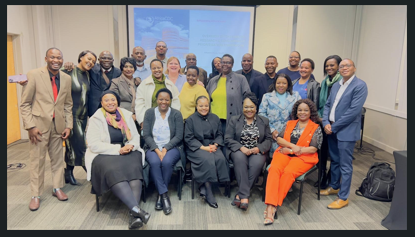
On Sunday 16 November 2025 I flew to Johannesburg, South Africa, and was met with an energy and vibrancy in the city that I had not felt for some time. It had been sparked by the upcoming G20 Summit that was due to start the following Saturday on 22 November. This energy and passion seemed to permeate our Health Research Prioritisation and Development workshop. Theodore Roosevelt famously said that ‘with great power comes great responsibility,’ the participants truly embraced that responsibility, fully recognising the significant impact their work would have for the country and continent.
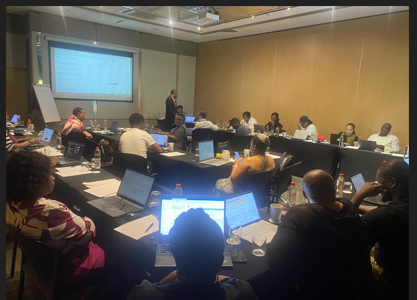
We divided the group into five sub-groups according to the tool’s thematic areas; communicable diseases, non-communicable diseases, mental health, neglected tropical diseases, and child & maternal health. Each sub-group discussed, debated and consensually agreed on the ratings of a situational analysis that would categorise each illness according to prevention, detection, case management, morbidity and mortality. I can honestly say that after 30 years of working in public health, I have never heard such intersectoral, multidisciplinary conversations that demonstrated curiosity, humility and a willingness to listen, contribute, and act with a dedicated focus on creating meaningful, real-world impact.
There were multiple iterations of the process of the small group discussions, presentations and opening the floor to the plenary for wider debate, back to small groups for amendments, until we were all consensually agreed on the ratings. This information was then entered into Africa CDC’s empirical tool for analysis, and it rewarded all our hard work by visually presenting to us South Africa’s health research priorities. This felt emotional for all of us in that room as it felt like we had all achieved something profoundly important in our country’s journey towards ownership of our health system. Where we are succeeding, where we are struggling, and given our limited resources, what we want to prioritise. This process not only benefits South Africa at a national level but also regionally and continentally.
We left with goodbye hugs, exchanging of email addresses, and promises to keep in touch and to keep the momentum going. We left confident and secure in the knowledge that this empirical research tool provides the continent with a tangible, real-world strategy to rebalance power and generate a paradigm shift in the global health ecosystem. A paradigm shift that will enable Africa to drive its own research agenda, so that funders and Global North researchers align with Africa’s priorities rather than imposing their own. #By Africa For Africa.
References
Africa Centres for Disease Control and Prevention. (2024) ‘The African Health Research Agenda Should Focus on Delivering More Health Outcomes’, Africa Centre for Disease Control and Prevention website. Available at https://africacdc.org/news-item/the-african-health-research-agenda-should-focus-on-delivering-more-health-outcomes/. (Accessed: December 2024).
Africa Centres for Disease Control and Prevention. (2025) AFRICAN HEALTH RESEARCH AND DEVELOPMENT AGENDA. PRIORISATION FRAMEWORK. Addis Ababa: Africa Centres for Disease Control and Prevention. Unpublished internal document.
Andersen, H & Mamo, L. (2021) ‘Africa Without Vaccines: Inequity Sets the World on Course for a Great Divide’, Tony Blair Institute for Global Change. Available at https://institute.global/insights/public-services/africa-without-vaccines-inequity-sets-world-course-great-divide (Accessed: November 2025).
Brown S and Rosier M. (2023) ‘COVID-19 vaccine apartheid and the failure of global cooperation’, British Journal of Politics and International Relations, 25(3):535-554. doi: 10.1177/13691481231178248.
Jishnu, L. (2024) ‘What is the politics and economics of mpox. Africa’s mpox epidemic stems from delayed responses, neglect of its health risks and the stark vaccine apartheid’, DownToEarth. Available at https://www.downtoearth.org.in/africa/what-is-the-politics-and-economics-of-mpox (Accessed: September 2024).
Nkwe, S. (2025) ‘Africa’s health systems are too dependent on foreign aid - here’s how to fix it’, News24. Available at https://www.news24.com/business/opinion/opinion-africas-health-systems-are-too-dependent-on-foreign-aid-heres-how-to-fix-it-20250316 (Accessed: 31 March 2025).