Small particles, big challengeHow research is tackling microplastics
11 March 2026
As evidence grows that microplastics behave more like global airborne pollution than local waste, Strathclyde research is helping make the problem measurable, manageable and actionable.
Microplastic pollution is one of the defining environmental challenges of our age. Tiny fragments – anything measuring 5mm or less – are everywhere: from the mountains of Tibet to our oceans – even blowing back onto land in sea spray. Perhaps most worryingly, research has shown microplastics have even entered our own bodies.
University of Strathclyde research has shown that microplastics can also be transported through the atmosphere. Sampling at a high-altitude observatory in the Pyrenees detected microplastic particles in the free troposphere, with modelling suggesting they may have travelled hundreds or even thousands of kilometres.
Microplastics: what are they, exactly?
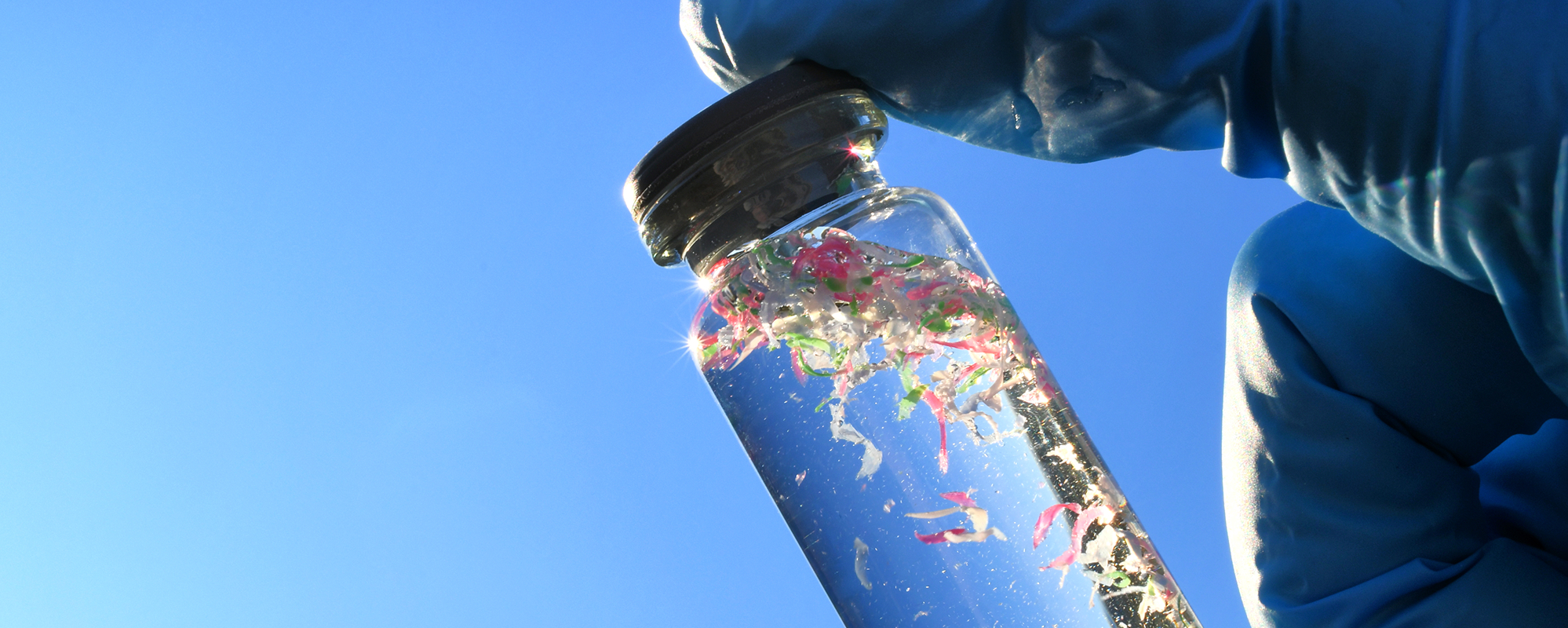
Microplastics are very small pieces of plastic. Because of their size, they can spread easily through water, air and soil, and are difficult to remove once released into the environment.
Most microplastics are less than 5 millimetres wide – smaller than a grain of rice. Some are so tiny they can’t be seen with the naked eye.
They come from a range of everyday sources. Some are released from synthetic clothing when it is washed, with fibres entering rivers and oceans through wastewater. Others form when larger plastic items, such as bottles or bags, slowly break down over time.
If microplastics behave more like airborne pollutants than local waste, the implications are clear: tackling them will require coordinated international monitoring and regulation, not just local or sector-specific interventions.
Microplastics challenge traditional ways of monitoring pollution, regulating industry, and even communicating environmental risk.
At Strathclyde, researchers are working across disciplines – from chemistry and engineering to social science – to build the evidence base, and the tools, needed by regulators, industry and communities to tackle the problem at multiple levels: measurement, prevention, remediation and public engagement.

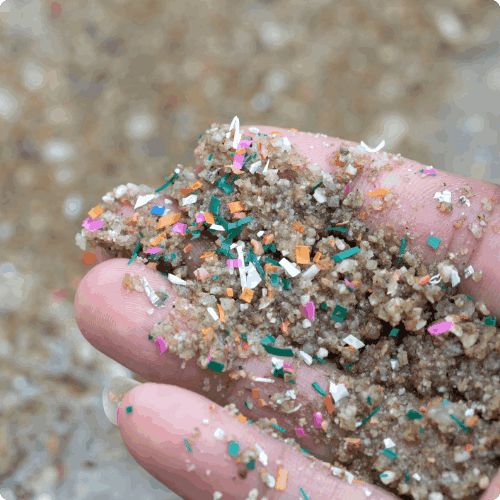
Nurdles – the pre-production raw material used to produce plastic – on a wall on a Fife beach
© Christine Switzer
Making the invisible measurable
One of the biggest barriers to action on microplastics is deceptively simple: how do you reliably find and measure something so small?
Different studies often use different laboratory methods to isolate them from sediments and soils and count them – making comparisons difficult.
Strathclyde research has addressed this by testing and comparing commonly used techniques for extracting microplastics from freshwater sediments. By refining and combining existing methods, the work moves the field closer to a shared approach.
For policy makers and regulators, this kind of work is important. Without agreed methods, it is impossible to answer basic questions: are pollution levels rising or falling? Are interventions working? Which environments are most at risk? Measurement, in this sense, is not just a technical exercise – it is the foundation on which future policy rests.
What do we know about the risks of microplastics?
Scientists have detected microplastic fibres and fragments in a range of human organs, tissues and bodily fluids. These plastic particles can enter the body through the air we breathe, the food and water we consume, or through direct contact with plastic products. While some particles are likely to pass through the body, others may persist and accumulate over time.
Research into the health effects of microplastics is still at an early stage. Scientists currently know more about the chemicals commonly associated with plastics, some of which are toxic and have been linked to hormone disruption, cancer and other health problems. Exactly how microplastics themselves affect human health is still being investigated and is expected to become clearer as research continues.
Want to test your knowledge? Take the Plastic Mythbusters quiz.
When solutions become sources
Another important study from Strathclyde scrutinised systems that are part of the solution to plastic waste.
A detailed pilot study of a UK recycling facility revealed that recycling processes themselves can release large quantities of microplastics, particularly via wash water. While filtration systems removed larger fragments effectively, vast numbers of smaller particles – often below five micrometres – escaped into discharged water.
While the study focused on just one recycling plan in one location, the results highlight the need for future research into the potential of recycling facilities as a source of microplastic pollution.
Recycling of plastics is essential and, for operators and technology developers, the message is practical rather than punitive – suggesting improved filtration, redesigned wash processes and better monitoring could reduce emissions without undermining recycling goals.
Tackling plastic pollution – and by extension microplastics – depends not only on technology and regulation, but on how initiatives align with people’s lived realities and daily choices.
From capture to destruction
What if we could actively remove and break microplastics down? Innovative work on light-activated photocatalytic materials by Dr Juliane Simmchen, in the Department of Pure & Applied Chemistry, explores this possibility. These tiny particles can propel themselves through water, attract microplastics, and trigger chemical reactions that degrade plastic polymers under light exposure. Rather than passively filtering pollution, they combine collection and destruction in a single system.
The research is still at laboratory scale but shows what next-generation remediation might look like. For water utilities, environmental engineers and technology developers, it points toward future tools that go beyond containment – addressing microplastics at their most problematic size range.
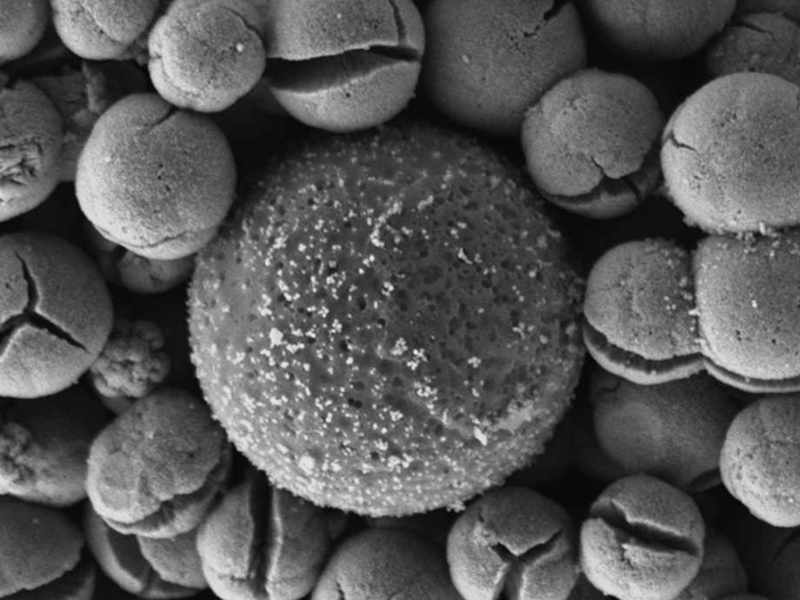
Eating away at the microplastic problem
Viewed through a microscope, this image shows a tiny piece of plastic effectively being devoured by Pac-Man-like 'TiO2 micromotors'.
These easy-to-make particles are known as 'active matter' – an emerging technology with huge possibilities from drug delivery to environmental clean-up.
Our current research is exploring their ability to collect and break down plastics in a marine environment, and therefore their potential to provide a scalable and inexpensive solution to ocean pollution.
Photo: © Juliane Simmchen
Prevention starts with people
Technological fixes alone, however, are not enough. Strathclyde research highlights a persistent gap between scientific understanding and public perception of microplastics.
Many people still associate plastic pollution with more visible litter, like bottles or carrier bags, not tiny pieces. At the same time, studies of "plastic-free community" initiatives show that local action can change behaviour, but only when interventions align with people's everyday realities.
A pilot study of a Plastic Free Community initiative in Anstruther, Fife examined how residents responded to community-led efforts to reduce single-use plastics, using surveys and interviews to assess behaviour change and motivation. It found that the initiative successfully raised awareness and encouraged practical actions such as avoiding single-use plastics and adopting reusable items, however, wider lifestyle changes were more limited.
Professor Lesley Henderson, an expert in science communication, was part of the team that created a 'Plastic MythBusters' quiz to help the public understand which popular statements about plastic pollution are true, which are uncertain or which are entirely lacking in any scientific basis. She says: “While community initiatives can prompt meaningful shifts in everyday behaviour, they are most effective when supported by enabling infrastructure, accessible alternatives and broader policy frameworks.
"Tackling plastic pollution – and by extension microplastics – depends not only on technology and regulation, but on how initiatives align with people's lived realities and daily choices."
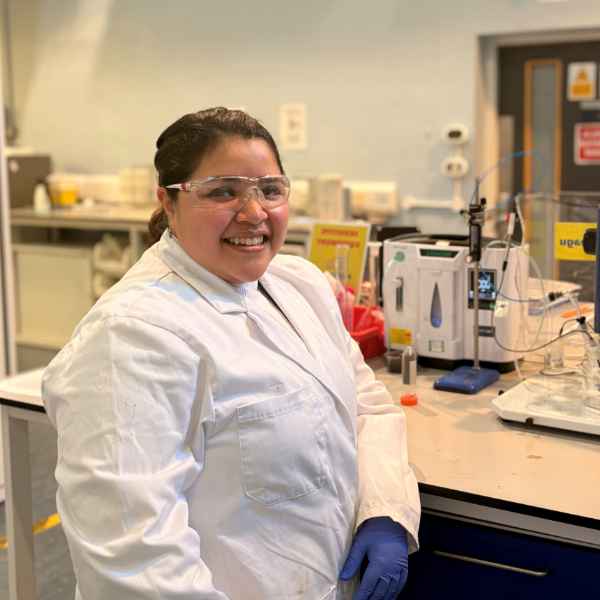
There’s no single fix for microplastics, but when quantification, chemistry, technology, regulation and behaviour start to align, that’s when progress becomes possible.
Future plastics
Researchers are also re-thinking what plastics are made of in the first place. Biodegradable and biobased polymers – plastics derived from renewable biological sources or engineered to break down more readily – offer potential ways to reduce the generation of persistent plastic fragments. Yet translating this promise into real-world impact remains a scientific, industrial and regulatory challenge.
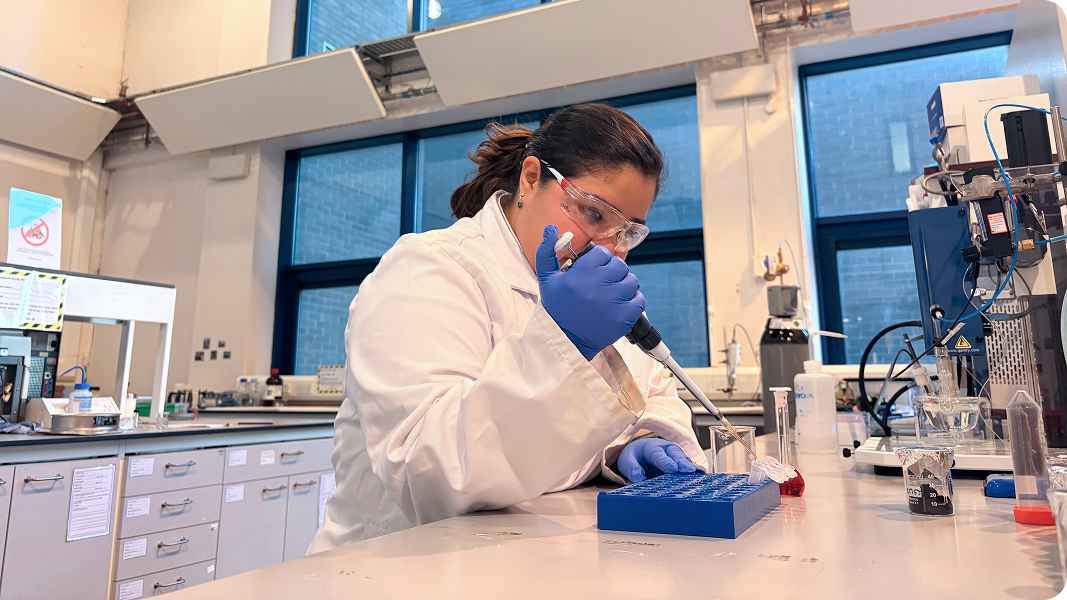
Dr Sara Velasquez, Chancellor's Fellow in Sustainable Materials, lead author of a literature review of such studies, says: "Biodegradable and biobased polymers have real potential to reduce the environmental burden of persistent plastic waste – but their benefits depend on feedstock choice, processing additives and techniques and effective end-of-life systems. Unlocking that potential means looking at the whole life cycle, not just the material itself."
A systems response to a systems problem
Together, these strands of research show that microplastics are a systems problem that demands systems solutions: standardised measurement to underpin regulation, smarter industrial design to prevent unintended releases, advanced materials to remove and degrade existing pollution, international thinking to reflect global transport, and social insight to ensure solutions are supported.
Rather than a single breakthrough, Strathclyde-linked research points to the value of a joined-up response to a complex, system-wide problem.
Microplastics may be small, but the response to the problem is increasingly growing in scale. Across laboratories, recycling plants, communities and policy discussions, researchers are turning an elusive pollutant into a measurable, manageable challenge. "There's no single fix for microplastics," says Dr Velasquez. "But when quantification, chemistry, technology, regulation and behaviour start to align, that’s when progress becomes possible."