A new high-resolution modelling tool is offering one of the clearest pictures yet of how climate change could affect a vital part of the marine food chain in Northwest European seas.
The machine learning model developed by researchers at the University of Strathclyde predicts how zooplankton – tiny drifting animals that underpin marine ecosystems – could respond to changing ocean conditions over the coming decades. By providing much more detailed regional projections than has previously been possible, the tool could help scientists better understand future risks to marine biodiversity, fisheries and ocean health.
Zooplankton are a vital food source for many fish species and play an important role in keeping aquatic ecosystems healthy by transferring energy through the food chain, controlling harmful algal blooms and recycling nutrients.
Ocean conditions
The researchers trained the model using decades of observations from the Continuous Plankton Recorder survey before combining it with regional climate projections to simulate future ocean conditions at a much finer scale than previous global models.
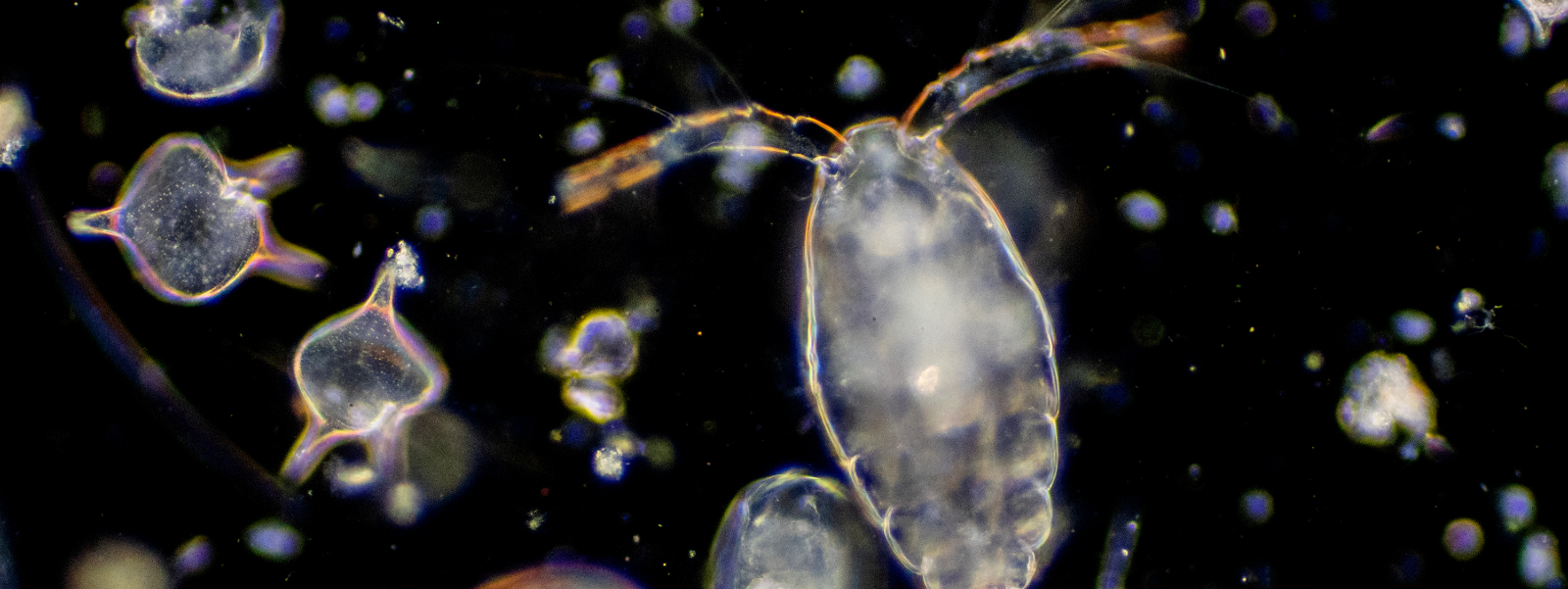
The study, published in Communications Earth & Environment, focused on copepods, one of the most abundant and ecologically important groups of zooplankton. These tiny crustaceans are a major food source for fish such as herring, which are themselves prey for seabirds, salmon and marine mammals.
To explore how marine ecosystems might respond under severe climate change, the researchers tested the model using a high greenhouse gas emissions scenario. Under these conditions, it projected declines in copepod abundance of between 58% and 72% by 2050, rising to between 84% and 93% by 2100.
Larger projections
The projections are considerably larger than those produced by lower-resolution global models, suggesting that Northwest European Shelf seas could be more vulnerable to climate change than previously recognised. The model also identified areas that may act as regional refuges where populations are less severely affected. Northwest European Shelf seas include the shallow waters surrounding Great Britain and Ireland, notably the North Sea, Celtic Sea, Irish Sea and English Channel.
The research suggests the projected declines are driven by a combination of rising sea temperatures, lower nutrient concentrations and changes in ocean circulation associated with a weakening Atlantic Meridional Overturning Circulation (AMOC).
The researchers emphasise that the study is not a prediction of what will happen. Instead, it uses a high-emissions scenario to understand how marine ecosystems could respond if greenhouse gas emissions remain high, providing evidence to support future planning and conservation.
Assessing impacts
Lead author Dr Emma Tyldesley, Research Associate in the Department of Mathematics and Statistics at the University of Strathclyde, said: "This new modelling approach offers a more detailed way of assessing climate impacts on marine ecosystems and could help us better understand future changes to fisheries, wildlife and ocean health that our marine ecosystems, fisheries and coastal communities depend on."
These zooplankton projections feed into wider studies on how climate change could affect marine ecosystems and resources. The work was funded by the Natural Environment Research Council ECOWind Ecological consequences of offshore wind (ECOWINGS) project, part of UK Research & Innovation, which is studying how climate change and offshore wind expansion may affect seabirds like kittiwakes in the North Sea.
The project involves the UK Centre for Ecology & Hydrology, National Oceanography Centre, Marine Biological Association, Biomathematics and Statistics Scotland, and Heriot-Watt University.
The zooplankton projections also contribute to the Missing Salmon Alliance and Atlantic Salmon Trust’s Likely Suspects Framework, where they will be used as an indicator of changes in marine feeding conditions for young wild Atlantic salmon.