

BSc (Hons) Pharmacology (International)
ApplyKey facts
-
Graduate outcomes: Strathclyde ranked joint 1st in Scotland
HESA Graduate Outcomes results 2026 1st in the UK for Pharmacology & Pharmacy & for Subjects Allied to Medicine
(Times/Sunday Times Good University Guide 2026)Top 25 in the world for Pharmacy & Pharmacology
(QS World University Rankings by subject 2026)Open to international applicants only
Study with us
This course combines core pharmacology with hands-on laboratory training and modern computational approaches used in drug discovery.
- develop in-demand computational skills, including programming, modelling and AI-based approaches used in modern pharmacology
- gain practical laboratory experience, working with experimental models and techniques used in pre-clinical research, alongside emerging pharmacological methodologies
- undertake an independent research project in your final year, applying your knowledge in laboratory, computational or industry-focused settings
- build essential scientific skills, including data analysis and visualisation, critical thinking, scientific communication and project management
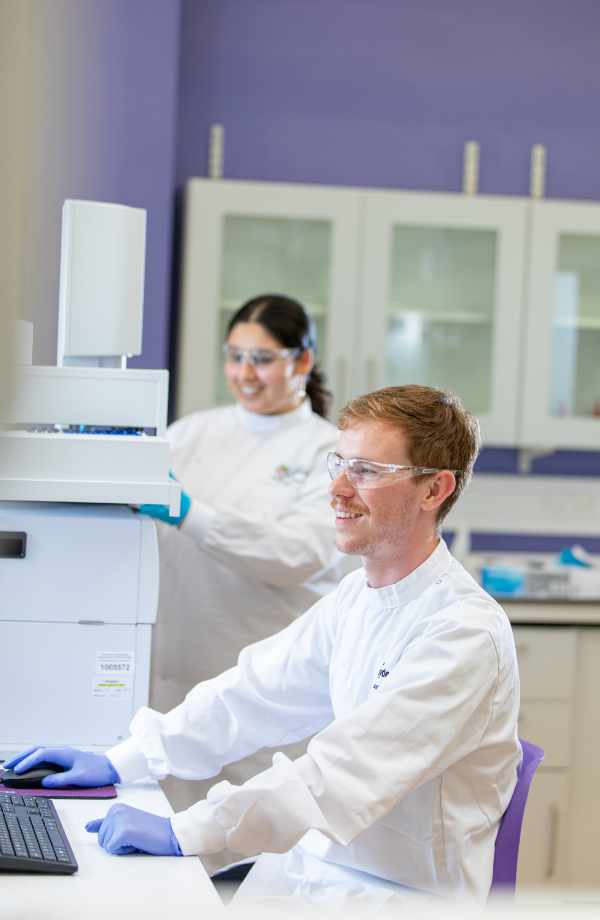
- learn in a research-active environment, with access to specialist laboratories and computational facilities within the Strathclyde Institute of Pharmacy & Biomedical Sciences
- study content aligned with industry and global healthcare needs, preparing you for careers in pharmaceutical research, medicines development and regulatory science
The Place of Useful Learning
UK University of the Year
Daily Mail University of the Year Awards 2026
Scottish University of the Year
The Sunday Times' Good University Guide 2026
Research University of the Year
Daily Mail University Guide 2027
Why this course?
This course prepares you for careers in drug discovery, pharmaceutical research, and the wider life sciences sector by combining core pharmacology with modern, in-demand skills.
You’ll develop a strong understanding of how drugs interact with biological systems, alongside practical experience in experimental and computational pharmacology.
Based within the Strathclyde Institute of Pharmacy & Biomedical Sciences (SIPBS) – one of the UK’s leading centres for pharmacological research – you'll learn from internationally recognised researchers working across areas including:
- molecular pharmacology
- drug delivery
- computational pharmacology
- pharmacotherapeutics
A distinctive feature of this course is its integration of computational pharmacology, where you'll develop skills in programming, modelling and AI approaches used in modern drug discovery.
A further strength of the course is its integration within Strathclyde’s wider biomedical sciences community. From Year 2, you’ll study alongside MSci Pharmacology and Joint Honours students, gaining experience of interdisciplinary learning that reflects how pharmacology is applied in research and healthcare.
Alongside a strong foundation, you’ll develop specialist skills in:
- computational pharmacology and data-driven approaches
- drug discovery and development
- experimental pharmacology techniques
- contemporary pharmacotherapy, including personalised medicine and digital health
By the time you graduate, you’ll have the scientific knowledge, practical skills and research experience needed for roles in pharmaceutical research, medicines development, regulatory science and healthcare innovation.

What you’ll study
You'll normally enter into Year 2.
Year 2
In Year 2, you’ll build a strong foundation in pharmacology by exploring how drugs interact with biological systems across four core disciplines:
- pharmacology
- biochemistry
- immunology
- microbiology
You’ll study these alongside students from across our biomedical sciences degrees, gaining a broad understanding of how these fields connect in real-world research and healthcare.
Practical laboratory work runs alongside your studies through the Being a Biomolecular Scientist 2 module, where you’ll begin to apply your knowledge. You’ll explore how pharmacology links across biological systems – from molecular mechanisms to immune and microbial responses – developing core principles that underpin modern drug discovery.
Years 3 & 4
Throughout Years 3 and 4, you’ll study alongside BSc (Hons) Joint Pharmacology and MSci Pharmacology students in shared lectures and laboratories.
Year 3
In Year 3, you’ll specialise in pharmacology and explore the full drug discovery and development pipeline — from how drugs interact with receptors to their effects within complex disease systems.
You'll also develop in-demand computational skills through a dedicated module, including:
- programming and data analysis
- pharmacokinetics and pharmacodynamics (PK/PD) modelling
- AI-based approaches used in modern drug research
Year 4
In your final year, you’ll apply your knowledge in advanced experimental and computational settings, preparing you for careers in pharmaceutical research and biotechnology.
You’ll gain hands-on experience in:
- receptor assays
- cell culture techniques
- experimental design and data analysis
- non-animal alternatives in pharmacology
You’ll also explore contemporary pharmacotherapy, including pharmacogenomics, personalised medicine and the growing role of digital health.
A major part of the year is your independent research project within the Strathclyde Institute of Pharmacy and Biomedical Sciences. You’ll plan, execute and present your own research, which may be:
- laboratory-based
- computational
- focused on commercial challenges in the pharmaceutical or biotechnology sectors
Chat to a student ambassador
Want to know more about what it’s like to be a Science student at the University of Strathclyde? A selection of our current students are here to help!
Our Unibuddy ambassadors can answer all your questions about courses and studying at Strathclyde and offer insight into their experiences of life in Glasgow and Scotland.
Our facilities
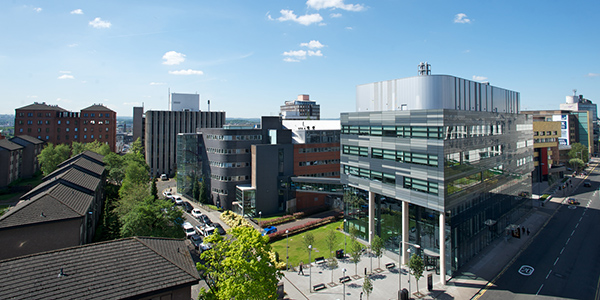
The Strathclyde Institute of Pharmacy & Biomedical Sciences, based in the purpose-built Hamnett Wing, offers extensive teaching and research labs, advanced analytical instrumentation, specialist tissue culture and molecular biology facilities, and shared computational resources for bioinformatics, cheminformatics and pharmacological modelling.
Semester 1 & 2
Being a Biomolecular Scientist 2 (40 credits)
A year-long practical module that develops laboratory, analytical and professional skills required by each discipline. You’ll gain hands-on experience in biochemistry, immunology, microbiology and pharmacology, supported by practical competency checks. Workshops cover statistics, ethics, data analysis and presentation skills, alongside student-led sessions exploring science in the media, technology and society.
Semester 1
Introduction to Biochemistry (20 credits)
This module covers the fundamentals of biochemistry and cell biology across five themes. You will study how genes are expressed and how that control fails in disease, and how human genetic variation is used in medicine and forensics. You will look at the structure and function of proteins, lipids and carbohydrates and how proteins work as enzymes, how cells obtain energy and how metabolic pathways are regulated in health and disease, and the pathways that control cell growth and death.
Introduction to Immunology (20 credits)
This module introduces the fundamental concepts of immunology. You will study the anatomy of the immune system and the cells within it, the difference between innate and adaptive immunity, and how immune cells recognise antigens. You will look at humoral and cell-mediated responses, how the body responds to bacteria, parasites and viruses, and how B and T cells are activated. The module also covers immune tolerance, and what happens when responses become harmful, in autoimmunity, immunodeficiency, allergy and hypersensitivity.
Semester 2
Introduction to Microbiology (20 credits)
This module introduces the fundamental concepts of microbiology and the ways microorganisms shape human, animal and planetary health. You will study how microbes are classified and how they differ from one another, their roles in health and disease, and how infection is controlled at both individual and population level. The module also covers the part microorganisms play in climate regulation and ecosystem function, how they adapt to hostile environments, and how they can be harnessed for biotechnology in medicine, industry and sustainable manufacturing.
Introduction to Pharmacology (20 credits)
This module introduces how drugs act on the body and what the body does to drugs. You will study the principles of drug and receptor interaction and four main targets drugs act on: receptors, enzymes, ion channels and transporter proteins. You will cover introductory principles of toxicology, including exposure, dose and mechanisms of toxicity; the pharmacology of the autonomic nervous system and the heart; and of the central nervous system. The module ends with pharmacokinetics, how drugs are absorbed, distributed, metabolised and eliminated, and the role of the pharmacologist in developing new medicines.
Compulsory modules
Semester 1 & 2
Being a Biomolecular Scientist 3 – 40 credits
The aims of this module are to:
- give you generic practical skills in biomolecular science
- further develop your practical skills in pharmacology
- enhance your report writing and presentation skills
Semester 1
Fundamental Pharmacology (20 credits)
This module covers how drugs how drugs produce effects in the body, from their interaction with biological targets to the responses they generate in cells, tissues and organ systems. You'll study how drug action is measured and quantified, how different signalling mechanisms shape a response, and how factors such as potency, efficacy and selectivity influence therapeutic and unwanted effects.
The module also introduces the major classes of drug targets, including receptors, enzymes, ion channels and transporters, together with examples of the medicines that act on them. Tutorials develop the scientific writing and data interpretation skills used throughout the rest of the degree.
Computational Pharmacology – 20 credits
The aims of this module are to help you develop and apply the principles of:
- quantitative pharmacology
- pharmacokinetic and pharmacodynamic modelling
- data science skills in pharmacology
- network and systems pharmacology
- artificial intelligence and machine learning in pharmacology
- reproducible and open science
Semester 2
Biomedical Pharmacology (20 credits)
This module covers the pathophysiology of major human diseases and the drugs used to treat them. You will study the mechanisms of the principal drug classes, how the underlying biology of a disease determines the molecular targets a treatment exploits, and how novel and targeted therapies compare with established ones. Workshops develop your ability to evaluate pharmacological evidence and reasoning in a clinical context.
Drug Discovery & Development – 20 credits
The aims of this module are to help you develop and apply the principles of:
- discovery and development processes for pharmacologists
- the drug discovery pipeline: target identification, target validation, hit identification, lead optimisation, candidate selection
- modern target discovery approaches: genomics, proteomics, phenotypic vs target-based screening and chemical biology approaches
- hit-to-lead and lead optimisation
- preclinical development
- pharmaceutical formulation and drug delivery
Semester 1 & 2
Being a Biomolecular Scientist 4 (40 credits)
A year-long research project under academic supervision. Projects fall into four categories: experimental research, data science, literature-based work, and industrial or societal projects. You'll work on your project through the year, analyse and interpret your results, present your findings, and write a thesis, including a statement of your project's impact and how it relates to wider societal, health and environmental challenges.
Semester 1
Advanced Pharmacology (20 credits)
This module covers active areas of pharmacological research, taught by academics within the department who research them. You'll study drug targets and therapeutic strategies across a range of disease areas, from receptor pharmacology and drug discovery through to animal models and clinical trials, including drugs in early development and concepts that may lead to new therapies.
Each topic is built around a recent scientific research paper or clinical trial: you read it in advance, then work through the critical appraisal of it in a workshop, developing the ability to critique published data and interpret primary literature.
Experimental Pharmacology – 20 credits
The aims of this module are to help you develop and apply the principles of:
- experimental design in pharmacology
- in silico models in pharmacology and deep learning models for target identification and hit prediction
- receptor pharmacology assays
- cell culture for pharmacology
- tissue and organ pharmacology
- in vivo pharmacology
- non-animal methods (NAMs) and human-relevant models
- data quality, rigour and reproducibility
- research integrity, image data integrity and good laboratory practice in pharmacological research
Semester 2
Clinical Pharmacology (20 credits)
This module explores how the fundamental principles of drug action are applied to patients, where treatment is rarely straightforward. Working within a systems pharmacology framework, you'll examine how factors such as age, disease and individual variation shape the way medicines behave in the body, and why the same drug can produce very different outcomes in different people.
Using the nervous system as the principal clinical context, the module draws on patient case material, current literature and prescribing data to develop the critical judgement expected of a pharmacology graduate in a healthcare-facing role.
Contemporary Pharmacotherapy – 20 credits
The aims of this module are to help you develop and apply the principles of:
- pharmacogenomics fundamentals
- translating pharmacogenomics into practice
- personalised and stratified medicine
- pharmacotherapy of major non-communicable diseases focusing on emerging global trends, mechanisms and stratification
- advanced and emerging therapeutics
- emerging concepts in digital health, technologies and therapeutics
- equity, access and the future of medicines
Learning & teaching
The programme combines lectures, small-group tutorials, problem-based workshops and practical laboratory and computational sessions, alongside journal clubs and an independent research project in your final year.
Teaching is delivered by academic staff from SIPBS, supported by postdoctoral researchers, technical specialists and guest lecturers. Based within one of the UK’s leading centres for pharmacological research, staff bring insight into current research and emerging approaches in the field.
In Year 3, dedicated skills workshops develop your research and professional skills, including data analysis and visualisation, scientific communication, critical appraisal and project management.
Assessment
Assessment includes written exams, coursework, laboratory and computational reports, presentations, critical appraisal exercises, case-based scenarios, group projects and a final-year research thesis.
The balance shifts from exam-led assessment in Years 2 and 3 to more project- and research-based assessment in Year 4.
Fees & funding
All fees quoted are for full-time courses and per academic year unless stated otherwise.
Fees may be subject to updates to maintain accuracy. Tuition fees will be notified in your offer letter.
All fees are in £ sterling, unless otherwise stated, and may be subject to revision.
Annual revision of fees
Students on programmes of study of more than one year (or studying standalone modules) should be aware that the majority of fees will increase annually. The University will take a range of factors into account, including, but not limited to, UK inflation, changes in delivery costs and changes in Scottish and/or UK Government funding. Changes in fees will be published on the University website in October each year for the following year of study. Any annual increase will not exceed 10%, and in practice this may be lower (for example,. a 6% increase was applied in 2027/28 academic year).
| International | £29,350 |
|---|---|
| Additional costs | You should budget for a laboratory coat, safety glasses, recommended textbooks (most core texts are available digitally via the University Library), and any optional conference attendance in Year 4. |
| University preparation programme fees | International students can find out more about the costs and payments of studying a university preparation programme at the University of Strathclyde International Study Centre. |
| Visa & immigration | International students may have associated visa and immigration costs. Please see student visa guidance for more information. |
Please note: All fees shown are annual and may be subject to an increase each year. Find out more about fees.
Careers
Pharmacology sits at the heart of one of the world’s fastest-growing industries. This course prepares you for roles across the global pharmaceutical, biotechnology and life sciences sectors.
You’ll graduate with a combination of laboratory experience, computational skills and a strong understanding of the drug development pipeline – a skill set increasingly valued as the industry adopts data-driven approaches to drug discovery.
Your experience with programming tools, PK/PD modelling and data analysis will give you an additional advantage in this rapidly evolving field.
Graduate careers
Our graduates go on to roles in:
- drug discovery and development within pharmaceutical and biotechnology companies
- clinical research and trials, working alongside healthcare professionals to bring new treatments to patients
- medicines regulation and policy, including roles within national and international agencies
- pharmacovigilance and drug safety, monitoring the use and effectiveness of medicines
- academic and scientific research, in laboratories or through postgraduate study
- healthcare consultancy, medical devices and scientific communications
Further study
Many graduates continue their studies at MSc or PhD level in pharmacology, pharmaceutical sciences or related disciplines, leading to careers in advanced research and specialist roles in industry.
Transferable skills
Throughout the course, you’ll develop skills that are valued across a wide range of careers, including:
- scientific problem-solving
- data analysis and interpretation
- project management
- communication and teamwork
Apply
This degree programme is only available to international students. UK students should apply to:
Start date: Sep 2027
Pharmacology (International) (2 year entry)
Glasgow is Scotland's biggest & most cosmopolitan city
Our campus is based right in the very heart of Glasgow. We're in the city centre, next to the Merchant City, both of which are great locations for sightseeing, shopping and socialising alongside your studies.