
From Homes to Libraries: Supporting Babies’ and Toddlers’ Digital Lives
The Strathclyde Institute of Education’s Dr Lorna Arnott reflects on the Toddlers, Tech and Talk Project.
Digital media are now woven into the everyday lives of even the youngest children. From birth, many children encounter smartphones, tablets, internet-connected TVs and smart toys as part of family routines. Our Toddlers, Tech and Talk research, conducted by me, Prof Rosie Flewitt, Prof Julia Gillen, Prof Janet Goodall, and Prof Karen Winters (as well as our fabulous RAs in each country – see the full team here) has consistently shown that the question is no longer about whether young children engage with technology, but how we can support that engagement in ways that nurture their learning, relationships and wellbeing.
Across our UK-wide study with children from birth to 3 years old, we took a post-digital perspective, recognising that technologies are inseparable from children’s physical or analogue words. Our findings challenge common assumptions that technology is solely used in passive or isolating ways, particularly with children under 3 years old where parents and carers are commonly close by, supervising and guiding the experience. Instead, we observed children dancing to music, mimicking conversations on phones, using video calls to sustain close relationships with family members across distances and translating screen-based narratives into tactile real-world play.
At the same time, parents’ perspectives are nuanced and thoughtful. Many recognise the positive potential of digital media to support learning, particularly in areas such as language, creativity and early numeracy. Yet they also express concerns about overuse, online safety and the quality of digital content. This balancing act between opportunity and risk is at the heart of contemporary family life.
To support families, the project has developed a series of practical, research-informed “top tips” to encourage safe, purposeful and playful technology use.
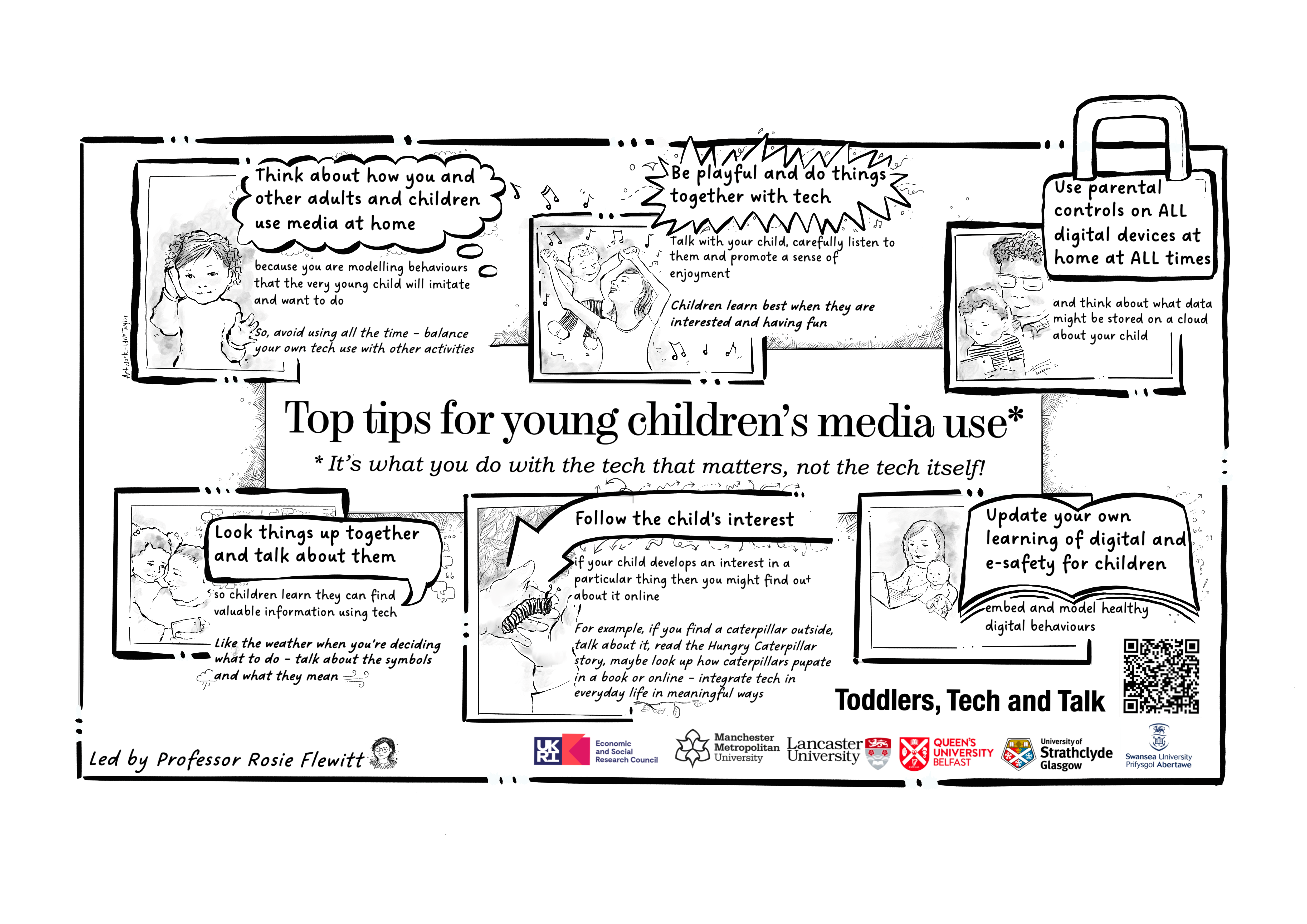
Top Tips Infographic from Toddlers, Tech and Talk
The CHILD and TECH infographic emphasises creating positive environments, helping children use media as a window on the world, including children in shared activities, learning about devices and safety, and developing routines around use.

CHILD and TECH Infographic from Toddlers Tech and Talk
Across all of our guidance, one message stands out clearly: it is what you do with technology that matters most. Joint engagement, such as talking, playing and exploring together, is key to turning everyday digital moments into rich learning opportunities.
Access to Technology
Our research also links closely to wider societal goals, including children’s health and wellbeing, quality education, and reducing inequalities. Families are keenly aware that access to technology, and the skills to use it meaningfully, is not evenly distributed, making supportive guidance even more vital.
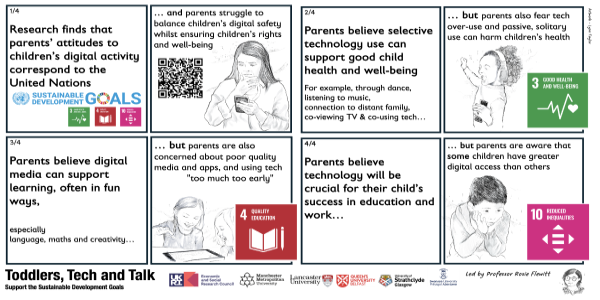
SDG Infographic from Toddlers, Tech and Talk
Building on this work, and with the support of Impact Accelerator Account funding, we are delighted to have recently launched a Toddlers, Tech and Talk Libraries Roadshow. Libraries are trusted, inclusive community spaces, uniquely positioned to bring families and researchers together. Through the roadshow, we are sharing our findings directly with communities, offering hands-on activities, and supporting conversations about young children’s digital lives. The event is delivered as a Theatre for Early Years-style performance, whereby an actor develops a play with music and dance targeted at babies and toddlers to translate the research into family-friendly activities to provoke thought and critical reflection about how parents plan for their child’s digital experiences. Importantly, the event is tailored towards engaging children directly in this thinking process. They are at the heart of this work. Therefore, guidance and disseminations of findings should not only be geared towards the parents/carers but directly to children themselves.
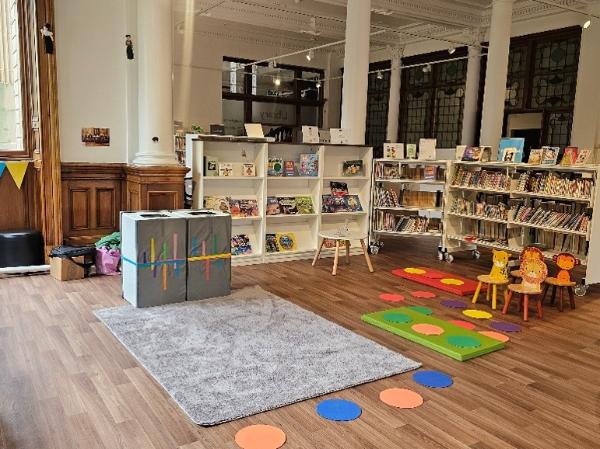
Example set up for the libraries roadshow experience.
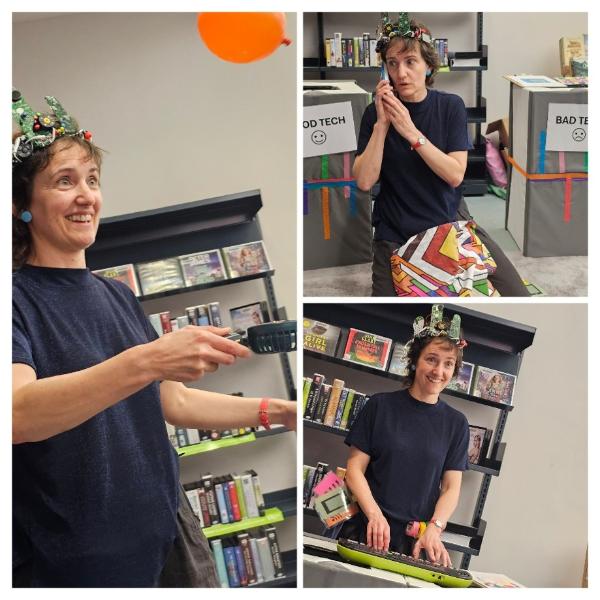
Dr Charlotte Allan delivering the Toddlers, Tech and Talk libraries roadshow
As part of the Roadshow, families can explore playful ways to use technology together, discover high-quality resources, and build confidence in supporting children’s digital learning and receive a Magic Bag of resources to take home.
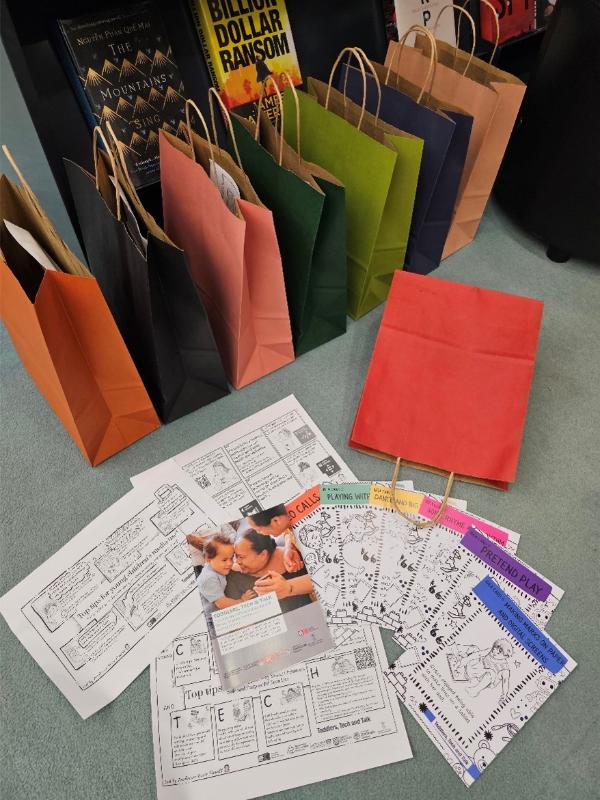
Impact Goodie Bags disseminated to parents at the Toddlers, Tech and Talk Libraries Roadshow
This new phase reflects one of the core principles of our project: knowledge should not sit in reports alone but be shared, discussed and made meaningful in everyday contexts. By meeting families where they are, both in their homes and now in their local libraries, we aim to support a more confident, balanced and informed approach to early childhood in a digital age.
Ultimately, technology is not something to fear, and in many cases prohibiting access is challenging and complex. Instead, with thoughtful guidance, shared experiences and meaningful interactions, technologies can become a powerful tool for connection, creativity and learning in the very earliest years of life, and children can learn to navigate the complex digital world to make informed and considered choices as they grow
––––
Join us at our event at the Science Centre, funded by Manchester Metropolitan University, on 10th September, where we take the Libraries Roadshow into a new venue, collaborating with Education Scotland to show families what digital play can look like in action.
Published 10/08/2026
Image - Toddlers, Tech and Talk project