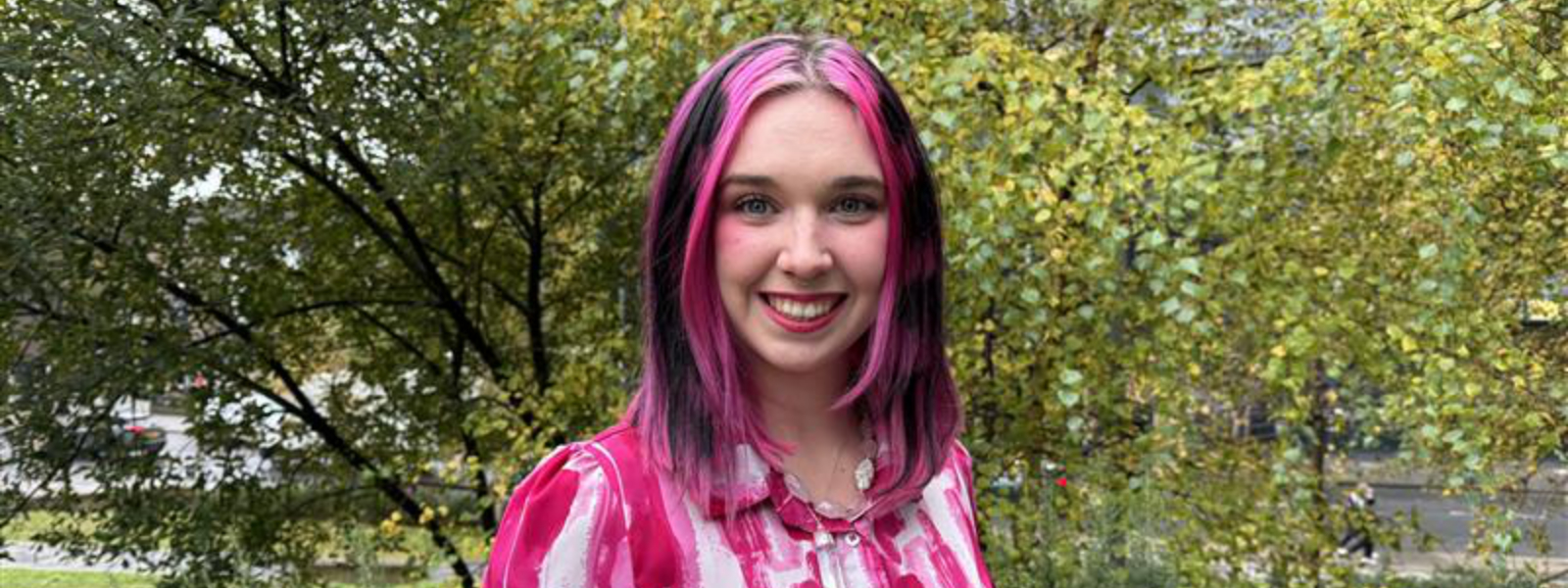
 Emily is a graduate from the BSc Psychology and Counselling course
Tell us a little bit about your background...
I left school at sixteen with five National 5s, knowing I needed a break from traditional education. During that time, I completed an apprenticeship in youth work, which reignited my passion for supporting others and helped me realise how much I valued connection and growth. From there, I went on to complete an HNC in Social Sciences, which opened the door for me to study Psychology and Counselling at university.
It’s now been ten years since I first decided I wanted to become a counsellor, and I’m closer than ever to that goal. I’m due to finish my Professional Diploma in Counselling in June 2026, and I completed my placement with the same organisation my own counsellor came from — a real full-circle moment for me.
Currently, I work one-to-one with young people, offering both resourced based therapeutic support in primary schools and more traditional person-centred counselling in secondary schools. This journey has been deeply meaningful, blending my early experiences, academic
What drew you towards undertaking this degree?
I attended my first counselling session at thirteen, and that experience truly changed my life. I knew I wanted to become a person-centred counsellor — someone who could offer others the same understanding and support that had meant so much to me.
Tell us about the format of the programme. What was a typical week like?
I came to see the programme as two worlds — psychology and counselling. Psychology explains; it helps us understand what we know so far about people and the world around us. It’s about doing — using the tools and insights developed by experts in the field. Counselling, on the other hand, explores; it’s an internal journey of being. The main tool is yourself — your awareness, presence, empathy, UPR and congruence.
Tell us a little bit about your dissertation topic...
I chose to explore spiritual awakenings in Scotland, and my dissertation quickly turned into a real passion project. It offered me the chance to connect with people and listen to deeply personal stories that society doesn’t always feel comfortable discussing. The experience was both eye-opening and meaningful, allowing me to combine academic research with genuine human connection.
What is the academic support at Strathclyde like?
There’s a genuine sense of care and compassion in the learning environment at Strathclyde. Even after graduating, that support hasn’t disappeared. As an ex-student now continuing my studies with Persona (Professional Diploma), I’ve found it reassuring that some of the lecturers have completed the same course. I even reached out to a previous lecturer for supervision during my placement, and it felt just as natural and supportive as it did when I was a student.
What are the facilities at Strathclyde like?
I mostly used the library to access resources and study. I loved that it was organised into floors based on the noise level - it provided social spaces for group work and quiet spaces for individuals . I also loved a visit to the union with my peers, it gave us a place to celebrate after exams and deadlines. These facilities created a healthy balance between work and play, both spaces held a sense of community and belonging for me.
What are your ambitions for the future?
To go into private practice and be my own boss.
What advice would you give to someone considering applying for this course?
If your intention is personal growth, to understand yourself, others and the world better, then this course supports your intentions.