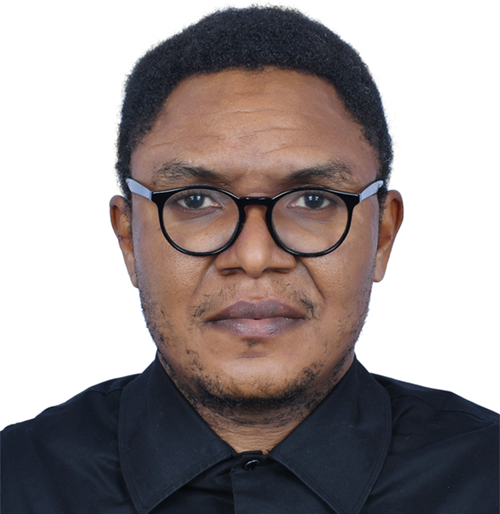
Tell us a bit about your background.
I am a Mechanical Engineering graduate from Nigeria and have spent more than 15 years working in health, safety and environmental management across major construction, infrastructure, aviation, energy and engineering projects, predominantly in the Middle East. I am currently based in Abu Dhabi, UAE, where I work in HSE on a major infrastructure development programme. Over the years, my professional interests have increasingly moved beyond operational safety towards understanding how organisations identify, assess and manage risk at a more strategic level.
Why did you choose the University of Strathclyde MSc in Safety & Risk Management?
I wanted a programme that would take me beyond traditional occupational safety practice and develop my understanding of risk from a broader organisational and strategic perspective. Strathclyde's MSc in Safety and Risk Management offered that combination. The flexibility of the programme was also important because it allowed me to continue developing professionally while remaining in full-time employment in the UAE.
How did you find balancing the commitments of work with those of the programme?
It was challenging, particularly while working full-time on demanding infrastructure projects. I quickly learned that waiting for a convenient time to study simply does not work because there will always be another professional or personal commitment. I therefore became much more deliberate about planning my time, breaking assignments into manageable milestones and maintaining consistency. It required discipline and occasionally some sacrifices but completing the programme alongside my professional responsibilities made the achievement particularly rewarding.
What advice would you give to someone considering studying Safety and Risk Management at Strathclyde?
Come into the programme prepared to think beyond compliance and conventional safety practice. Some of the greatest value comes from challenging your existing assumptions and learning to examine risk critically from different perspectives. I would also recommend establishing a realistic study routine early, engaging fully with the academic materials and tutors, and relating what you learn to situations from your own professional environment. That connection between theory and practice makes the learning much more meaningful.
How did you find the support available to you at the University (resources, tutors, teaching etc)?
My experience of the academic support was very positive. Despite studying remotely, I never felt that I had to navigate the programme entirely on my own. The tutors were accessible when guidance was required, and the University's online resources provided the academic material needed to support independent learning. I particularly valued the guidance received during my research project, where constructive feedback helped me refine my thinking and approach the research with greater academic rigour.
What learnings have you taken with you, from the programme into your role?
One of the most important changes has been in how I think about risk. The programme strengthened my ability to look beyond an immediate unsafe condition or individual behaviour and consider the wider organisational, human and systemic factors that influence outcomes. In my professional role, this has helped me approach investigations, assurance, contractor performance and risk-control decisions more critically. I now find myself asking not only what went wrong, but also what conditions within the system allowed it to happen and how those conditions can be improved.
Would you recommend the programme to other people…and why?
Yes, particularly to professionals who want to progress beyond the technical application of health and safety into risk management, leadership, governance and organisational decision-making. The programme does not simply provide another qualification. It encourages you to question, analyse and develop a more mature understanding of how risk is created and managed within complex organisations.
Any final points, or words of wisdom!
Do not underestimate what can be achieved through consistency. There will be periods when work, family and academic responsibilities compete heavily for your attention, particularly for those studying while working full-time. You do not necessarily need perfect circumstances; you need a clear reason for starting and the discipline to keep moving. For me, completing the MSc represents more than an academic milestone. It has changed the way I understand my profession and given me a stronger foundation for the next stage of my career.