Honorary DegreesProfessor Dame Sue Ion
Meet Sue
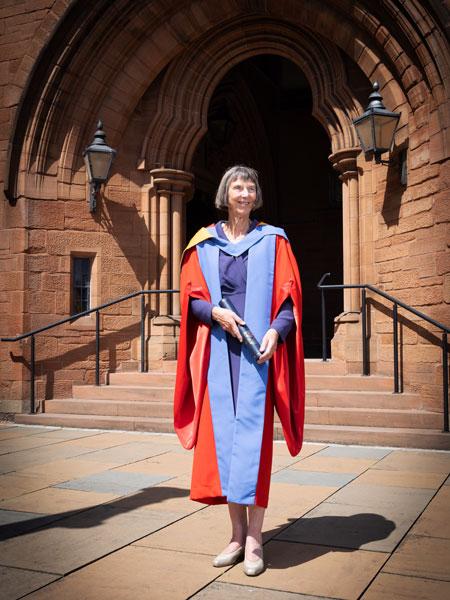
Dame Sue Ion is an internationally recognised nuclear engineer. She's been a life-long champion of nuclear energy and women in engineering and science for 40 years.
She is currently Honorary President of the UK National Skills Academy for Nuclear and member of the UK Nuclear Regulator's Independent Advisory Panel.
Dame Sue was Chief Technology Officer for British Nuclear Fuels Limited from 1992-2006. Since then, she has served on a number of advisory committees associated with the UK's energy requirements.
Distinguished career
Sue has had a distinguished career in the nuclear industry, where she has been an influential figure for over four decades.
Her journey began with a strong academic foundation in materials science at Imperial College London, where she was awarded the Matthey Prize for the best PhD in her cohort, focusing on nuclear fuel cladding. This academic excellence set the stage for a career marked by significant contributions to both science and industry.
Shaping government policy
As Executive Director of Technology at British Nuclear Fuels Ltd from 1992 until 2006, Sue led over 1,000 scientists and engineers, managing an annual budget of £100 million.
During her tenure, she fostered robust UK and international academic research collaborations and played a pivotal role in shaping government policy on nuclear energy. Her leadership extended beyond the UK, as she served as the UK’s representative on the IAEA Standing Advisory Group on Nuclear Energy and chaired numerous high-profile committees, including the EU Euratom Science and Technology Committee and the Nuclear Innovation and Research Advisory Board.
Outstanding service
Sue is the first woman to receive the prestigious President's Medal from the Royal Academy of Engineering - an honour that highlights her outstanding service to the nuclear industry and her contributions to engineering as a whole. She has also been conferred an Honorary Fellowship by the Institute of Physics, placing her among the ranks of luminaries such as Professor Stephen Hawking and Professor Peter Higgs.
In addition to her technical expertise, Sue is a passionate advocate for science education and public understanding of nuclear energy. She has actively engaged in public discourse, from speaking at international conferences to appearing on media platforms like the BBC’s Woman’s Hour Power List. Her commitment to nurturing the next generation of engineers is evident in her work with educational institutions and her efforts to promote STEM subjects among young people.
Her achievements and contributions to science, engineering, and public policy underscore her suitability for this honorary degree. Sue's career not only reflects her personal excellence but also her unwavering dedication to advancing nuclear science and technology on an international scale.
Watch
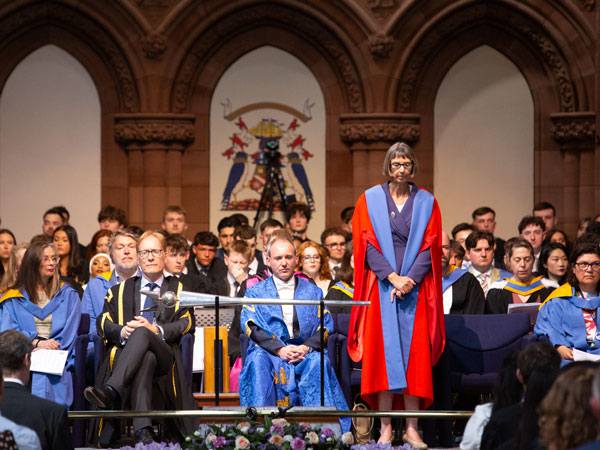
Watch Sue as she delivers her speech and hear what she had to say to our students at their graduation ceremony.
We caught up with Sue ahead of receiving her Honorary Degree.
Congratulations! How do you feel about receiving your Honorary Degree from the University of Strathclyde today?
As one of the foremost universities in the UK with a strong technological focus in areas of vital importance to the UK, I am delighted to have been honoured with the award of an Honorary Degree.
What’s the most important life lesson you’ve learned that helped you get to where you are today?
One of the most important lessons learned is always to be true to yourself and be adaptable and flexible to changes in potential career pathways. You never know what will be open to you as your embark on your career journey.
I moved from originally covering nuclear fuel manufacture to eventually overseeing everything from reactor design, to waste management and fuel recycling, and onward to being an advisor to the highest levels of Government - who'd have thought that when I was an early-career researcher!
If I'm allowed a second lesson, it is to help talent rise in whatever organisation you join through mentoring and encouragement. Giving opportunities to talented people who will one day replace you is one of the best things you can do.
What advice do you have for our graduates?
The best advice I can give is grasp every opportunity, even if at first it might be out of your comfort zone. Also if you are unhappy in whatever situation you are in, work to shout out about it, and if need be ask for help.
What puts a smile on your face?
Seeing young enthusiastic scientists and engineers showcasing the amazing projects they are contributing to if I get the opportunity to tour their labs. Also ,on a personal level, walking the hills and being grateful for the amazing scenery and the ability to enjoy it.
What’s the most important thing you do daily for yourself?
Going outside into the fresh air and enjoying the natural world gifted to us.