

MSc/PgDip Quantum Technologies
ApplyKey facts
- Start date: September
- Accreditation: Institute of Physics
- Study mode and duration: MSc: 12 months full-time, 24 months part-time
PgDip: 9 months full-time, 21 months part-time Ranked: Top 5 in the UK for Physics by the Daily Mail University Guide Subject Tables 2026
Part-time study: available
Study with us
- You will develop theoretical and practical skills in fundamentals of quantum physics and their applications to quantum technologies
- You will put this knowledge into use in a cutting-edge experimental, theoretical or computational research project in a topic of your interest within the broad quantum technology research portfolio of the department
- It will prepare you for further postgraduate study and industrial R&D in quantum technologies
The Place of Useful Learning
UK University of the Year
Daily Mail University of the Year Awards 2026
Scottish University of the Year
The Sunday Times' Good University Guide 2026
Research University of the Year
Daily Mail University Guide 2027
Why this course?
The so-called Second Quantum Revolution is driving new approaches to sensing, computation, communication and security by harnessing and controlling quantum behaviour. With major global investment accelerating both research and real‑world adoption, quantum technologies are set to transform industry.
The UK is at the forefront of this field, investing over £1 billion since 2014 through the National Quantum Technologies Programme, with a further £2 billion committed via the National Quantum Strategy. This sustained support is helping move quantum technologies from research to large‑scale deployment.
At Strathclyde, the Department of Physics plays a leading role in this ecosystem. We contribute to multiple UK Quantum Technology Hubs, collaborate widely with industry, and lead the EPSRC Centre for Doctoral Training in Applied Quantum Technologies.
Our research spans quantum algorithms, hardware development, and real‑world applications. We work closely with national high‑performance computing infrastructure and industry partners, while advancing experimental platforms such as neutral‑atom quantum processors and simulators.
This MSc equips you with the knowledge and technical skills to contribute to this rapidly evolving field – focusing on how to control quantum systems to unlock new technologies in both research and industry.
Accreditation
The programme is accredited by the Institute of Physics (IOP) as the professional body for physics in the UK and Ireland.

What you’ll study
In Semester 1, you’ll build core academic and technical skills through a transferable skills module, alongside advanced theoretical quantum physics and photonics to develop both your mathematical and experimental foundations.
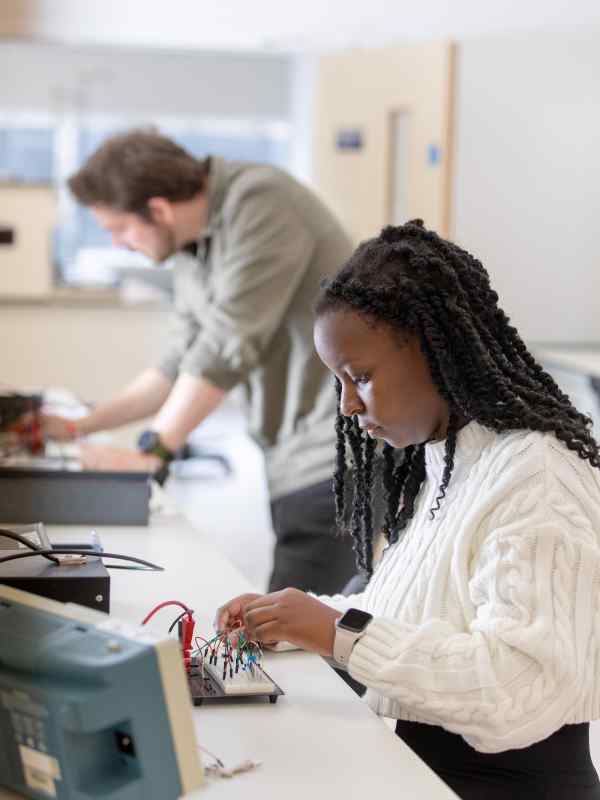
In Semester 2, you’ll study experimental and theoretical quantum technologies and advanced quantum optics. You can then tailor your learning by focusing on areas such as atomic physics and trapping technologies, nanoscience and characterisation, or gaining further hands‑on laboratory experience.
Over the summer, you’ll complete an open‑ended research project.
Research project
You’ll undertake a substantial independent research project, either within one of our research labs or through an academic or industrial placement.
We’ll support you in exploring placement options beyond Strathclyde, including opportunities with industry partners across Scotland and the wider UK. While placements are competitive and not guaranteed, eligible students will be supported in securing relevant opportunities. Financial support varies but will cover at least any additional costs incurred.
Student competitions
The Department of Physics MSc Excellence Prize
This will be awarded to a meritorious student of at least distinction level on any MSc course offered by the Department. It will be awarded to the student who achieves the highest credit-weighted average over the whole course portfolio.
The Department of Physics MSc Prize
This will be awarded to a meritorious student of at least distinction level on any MSc course offered by the Department. It will be awarded to the student who achieves the highest mark for the MSc Project.
Research groups
The Ultra-cold Matter & Quantum Technologies (UMQT) group
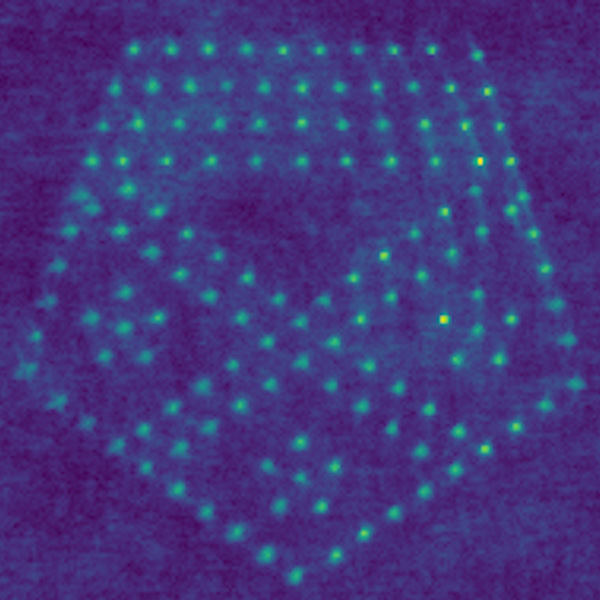
Runs bosonic and fermionic quantum gas microscopes with single-site resolution for quantum simulation of advanced materials. Activities in magnetometry, atom interferometry and atomic clocks are supported by state-of-the-art laser and optical systems, test and measurement equipment and micro fabrication facilities. It is closely linked to National Physics Laboratory (NPL) Scotland, building up a unique timing infrastructure including a clock, that is never out by more than 10 nsec from Universal Time.
UMQT hosts also the UK’s first large-scale neutral atom quantum computing platform, developed through the EPSRC Prosperity Partnership programme. This experiment utilises individually trapped neutral atoms as quantum-bits (qubits) to store and process information, engineering long-range interactions via excitation to highly excited Rydberg states.
The Quantum & Light-Matter Interaction Theory (Q-LiMIT) groups
The groups are utilising local and national high-performance computing clusters for fundamental and applied quantum simulation and information.
Academics of Q-LiMIT have expertise in design, modelling, analysis, and the development of quantum space missions. It works closely with UK & international partners to perform in-orbit demonstrations of satellite quantum payloads, including SpooQy-1, ReFQ/QEYSSat, and the UK Quantum Communications Hub CubeSat mission. The department has links with large and small space companies, the Satellite Applications Catapult, and has funding from the UK Space Agency and ESA to develop advanced space quantum technologies.
Semiconductor Quantum Electronics (SEQUEL)
The team focuses on semiconductor nanoscale systems for applications in quantum computing and quantum electrical metrology. Our state-of-the-art facilities allow us to manufacture and characterise quantum systems at millikelvin temperature. We work with several companies that are keen to commercialise quantum systems and render their benefits available to the wider society. These include British Telecom, Hitachi, Quantum Motion Technologies and the UK National Physical Laboratory (NPL).
The Institute of Photonics (IoP)
The institute leads the development of advanced lasers for quantum technologies and integrated photonics platforms for quantum technologies.
Our group develops next‑generation quantum sensing and timing devices, combining advanced laser systems with novel fabrication techniques to create compact, field‑ready technologies. Applications include atomic magnetometers for environmental and biomedical use, and ultra-precise atomic clocks using laser-cooled atoms. Opportunities for Masters projects are available across all areas.
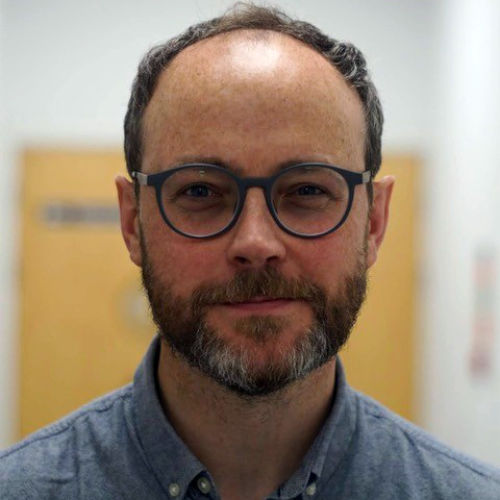
Head of the Ultracold Matter & Quantum Technologies Group
Facilities
This course is delivered by the Department of Physics, supported by significant recent investment in teaching and research facilities.
We've invested £4 million in new quantum technology laboratories and fully refurbished our teaching labs. Additional funding from the UK Quantum Technology Hubs has enabled the development of advanced experimental kits for training and demonstration in quantum science, photonics and nanoscience. A further £15 million refurbishment of the John Anderson Building has enhanced sustainability and reduced our carbon footprint.
You’ll benefit from access to:
- state‑of‑the‑art laboratories for quantum optics, quantum computing and quantum simulation, including platforms based on ultracold atoms, thermal atoms and semiconductor devices
- high‑performance and parallel computing facilities, including ARCHIE‑WeSt, supporting theoretical and computational research
- advanced laser laboratories and cleanroom facilities at the Institute of Photonics for developing and characterising photonic devices
Take a tour of our research labs
Take a tour of one of our physics quantum research labs on YouTube and get a flavour of what it’s like to study with us.

As part of the programme, I have developed knowledge of photonics and quantum computing, alongside skills such as data analysis.
MSc in Quantum Technologies student
My ambitions are to work in Quantum computing industry, as a researcher/developer. Through Strathclyde, I have gained a deeper understanding of the processes and methodologies behind the whole industry, and I feel I will be better equipped for entering it and later, a PhD in the same field.
- Siddharth Rangnekar, MSc Advanced Physics graduate (with project in quantum computation)
Chat to a student ambassador
Want to know more about what it’s like to be a Science student at the University of Strathclyde? A selection of our current students are here to help!
Our Unibuddy ambassadors can answer all your questions about courses and studying at Strathclyde and offer insight into their experiences of life in Glasgow and Scotland.
Our Experimental Quantum Optics and Photonics (EQOP) Group is leading in the development of the next generation of sensing and timing devices based on some of the subtle effects of quantum physics. By bringing together specialised laser systems and novel fabrication techniques for e.g. vacuum systems or atomic vapour cells we are developing compact and portable systems and demonstrating their operation in a field environment. An example of this is magnetic field sensing, where laser-driven atomic magnetometers are developed for applications ranging from geomagnetic surveying and space weather monitoring to biomedical imaging. Another example is accurate atomic clocks based on laser cooled atoms and a unique design of miniaturized magneto-optical traps driven by a single beam. Great opportunities for Master projects are in all areas.
- Prof Erling Riis, Head of Experimental Quantum Optics and Photonics Group
The QuForce project on cloning-based attacks on B84 mentored by Dr Daniel Oi enabled me to have a broad understanding of the quantum cryptography landscape and techniques on solving problems using quantum computers. In addition, running the circuits on a real quantum hardware allowed me to have a better understanding of the approaches to counter the effects of noise in quantum computation.
- Nizar Lethif, MSc Advanced Physics graduate with research project and additional extra-cirricular project in quantum computation
Course content
For full-time study, you'll be required to study three compulsory modules in Semester 1, and two compulsory modules and one optional module in Semester 2. This optional module allows you to further explore one field that is of particular interest to you.
To select the Advanced Computational Physics optional module you'll be required to evidence that you have sufficient computational background.
If you want to study the course part-time, you can choose one or two modules per semester.
Please note: not all optional modules listed are guaranteed to run each academic year, and timetabling constraints may limit availability for some students.
Compulsory modules
Physics Skills (20 credits)
You will gain necessary skills in IT (Python), working with literature, data analysis, and written and oral communication to support a great learning experience in your programme.
Topics in Quantum Physics (20 credits)
You will learn advanced quantum physics concepts: mixed states and density matrix, perturbation and scattering theory, quantization of the electromagnetic field, many particle systems and the Dirac equation.
Topics in Photonics: Laser & Nonlinear Optics (20 credits)
You will study laser physics, laser optics and nonlinear optics as required for the work in many photonic labs and to enable quantum technologies based on photons, cold atoms and solid-state devices.
Compulsory modules
Advanced Topics in Quantum Physics – Quantum Technologies (20 credits)
You'll study basic concepts, theoretical ideas and experimental implementations of quantum information, communication, computation, and open quantum systems. All theoretical concepts will be illustrated by presentation of state-of-the art experiments and a detailed description of the relevant experimental platforms.
Contents includes:
- cryptography
- non-locality
- basics of quantum algorithms (Deutsch-Jozsa, Simon, Grover, and Shor’s factorisation)
- basics of quantum information theory (decoherence, quantum error correction, quantum entanglement, quantum metrology)
- experimental platforms for quantum computing and quantum communication (Ion traps, superconducting qubits and circuits, photonic platforms, ultracold atoms)
Advanced Topics in Quantum Optics (20 credits)
In this course, students will develop a theoretical understanding of quantised electromagnetic fields, non-classical states of light, and the dynamics of light–matter interactions. Topics include field quantisation, quasi-probability distributions, squeezed states of light, Rabi oscillations, optical Bloch equations, spontaneous emission, and dressed-state descriptions of atom-photon systems. The course then introduces fully quantum models of light–matter interaction, including the Jaynes–Cummings and Rabi models, as well as dipole–dipole interactions. Advanced topics cover open quantum systems and master equation techniques, three-level atomic systems, superradiance, and collective quantum effects. Throughout the course, students will encounter concepts that underpin contemporary research in quantum science and technology.
Optional modules
Advanced Nanoscience 2: Solid State Nanoscience (20 credits)
You'll learn about defects in semiconductors and their properties, characterization properties and the impact of defects on device performance. You will learn about quantum dots, excitons, and their inclusion in microcavities, magneto-optical properties of semiconductors and spectroscopic and other techniques for characterization. Finally, the module covers example for semiconductor qubits, single-photon spectroscopy, coherent control techniques and macroscopic quantum states based on exciton-polaritons.
Advanced Nanoscience 1: Imaging & Microscopy (20 credits)
You will study spectroscopy, imaging and microscopy techniques associated with modern nanoscience such as:
- Fluorescence methods
- Single molecule imaging and microscopic techniques
- Atomic force microscopy (AFM)
- Electron microscopy
These characterisation concepts are also essential for quantum technologies.
Experimental Laboratories (20 credits)
You will carry out open-ended practical work in the laboratory conveying the basic skills of instrument handling, data management, record keeping, and you’ll develop report-writing and oral presentation skills. You will get training in using Python for data analysis and undertake advanced experiments relevant to your specialisation.
Topics in Atomic, Molecular and Nuclear Physics (20 credits)
You will learn about fundamentals of atomic physics, including the hydrogen atom, optical selection rules, fine-structure and hyperfine-structure; Zeeman effect; two-electron atoms (Helium) and singlet-triplet states, LS and JJ coupling in multi-electron atoms, DC and AC Stark shift, atom-light interactions and Doppler free spectroscopy. You will study applications of atomic physics for quantum technologies: atomic clocks, laser cooling, ion traps, magnetic and optical trapping, quantum degenerate gases and atom interferometry, laser frequency calibration and combs. An introduction to Molecular Physics includes diatomic molecules and their rotational and vibrational modes and the relevance of symmetries and selection rules. Note, this might not be available together with the Experimental Laboratories or High Performance Computing.
Advanced Computational Physics (20 credits)
In this module, you'll gain experience in methods that can solve realistic physical problems efficiently on modern massively parallel computers. Contents include:
- introduction to problems requiring stochastic solutions
- re-cap of good practice in scientific computing, high performance computing and introduction to research software engineering concepts including some advanced features of the Python language and object oriented programming
- randomness and pseudo-random numbers for uniform and non-uniform distributions
- relevant high performance computing concepts, parallel programming models and in particular message passing interfaces (MPI)
- deterministic and Monte Carlo integration in high dimensional spaces including random walks and some of their applications and importance sampling and variance reduction
- kinetic Monte Carlo methods and modelling rate determined processes
- Monte Carlo evaluation of Green’s functions for differential equations
- the Metropolis algorithm and applications to problems including the classical Ising model
- variational and diffusion Monte Carlo applied to solve quantum mechanical problems
Compulsory
Project (60 credits)
You will gain experience of research techniques by performing an open-ended cutting-edge research project that runs over summer after the taught component of the MSc. You will have the opportunity for research in experimental, theoretical or computational quantum technologies within the research portfolio of the department depending on your interest and ambition. Students with the corresponding ambition and relevant qualification will be supported to find an alternative placement in chemistry or an industrial placement but this depends on availability. The project is normally carried out in the research laboratories under the individual supervision of an experienced researcher.
Learning & teaching
Our teaching is based on lectures, tutorials, workshops, laboratory experiments and research projects. We have a weekly Information and Support Session where the whole cohort meets with the MSc coordinator to discuss experiences, develop skills and have the opportunity to get to know students and staff across the Department.
Assessment
The assessment of most taught modules is based on a written examination and continuous coursework (about 20%), and, in some modules, an oral examination. The final project is assessed predominantly by a report supplemented by a talk, an oral examination (viva) and an assessment of the performance and engagement during the project by the supervisor.
Entry requirements
| Academic requirements | Minimum second-class (2.2) Honours degree, or overseas equivalent, in Physics (including Mathematics and Physics, Theoretical Physics). Applicants from an engineering discipline, computer science or engineering physics must have had sufficient exposure to courses in quantum mechanics. Contact us about your application and the possibility of conversion courses. Don’t meet the academic entry requirements? We offer the Pre-Masters Preparation Course at the University of Strathclyde International Study Centre, for international students (non-UK/Ireland). |
|---|---|
| English language requirements | You must have an English language minimum score of IELTS 6.0 (with no component below 5.5). We offer comprehensive English language courses for students whose IELTS scores are below 6.0. As a university, we now accept many more English language tests other than IELTS for overseas applicants, for example, TOEFL and PTE Cambridge. View the full list of accepted English language tests here. |
Fees & funding
Fees may be subject to updates to maintain accuracy. Tuition fees will be notified in your offer letter.
All fees are in £ sterling, unless otherwise stated, and may be subject to revision.
Annual revision of fees
Students on programmes of study of more than one year (or studying standalone modules) should be aware that the majority of fees will increase annually. The University will take a range of factors into account, including, but not limited to, UK inflation, changes in delivery costs and changes in Scottish and/or UK Government funding. Changes in fees will be published on the University website in October each year for the following year of study. Any annual increase will not exceed 10%, and in practice this may be lower (for example,. a 6% increase was applied in 2027/28 academic year).
| Scotland | £13,300 |
|---|---|
| England, Wales & Northern Ireland | £13,300 |
| Republic of Ireland |
If you are an Irish citizen and have been ordinary resident in the Republic of Ireland for the three years prior to the relevant date, and will be coming to Scotland for Educational purposes only, you will meet the criteria of England, Wales & Northern Ireland fee status. For more information and advice on tuition fee status, you can visit the UKCISA - International student advice and guidance - Scotland: fee status webpage. Find out more about the University of Strathclyde's fee assessments process. |
| International | £32,100 |
| Available scholarships | Take a look at our scholarships search for funding opportunities. |
| Additional costs | International students may have associated visa and immigration costs. Please see student visa guidance for more information. |
Please note: the fees shown are annual and may be subject to an increase each year. Find out more about fees.
Careers
This degree will allow you to thrive in the growing field of quantum technologies, an area which is rapidly evolving in academic research and industrial uptake. Many graduates proceed to study a PhD. As with every Masters degree in Physics, this MSc also prepares you for a wide and versatile range of careers in science and engineering, as well as other areas of management, such as financial services.
Strathclyde Physics graduates are working across the world in a number of different roles including:
- Quantum Physicist and Quantum Engineer
- Senior Engineer
- Professor
- Systems Engineer
- Consultant
- Patent Attorneys
- Software Engineer
- Entrepreneur
- Training Provider for Quantum Workforce
- Spacecraft Project Manager
- Defence Scientist
- Procurement Manager
International students
We've a thriving international community with students coming here to study from over 140 countries across the world. Find out all you need to know about studying in Glasgow at Strathclyde and hear from students about their experiences.

Apply
Part time study and Pg Diploma options are available. Please contact science-masters@strath.ac.uk for more information.
Start date: Sep 2027
Quantum Technologies
Contact us
Have you considered?
We've a range of courses similar to this one which may also be of interest.