

MSci Biochemistry
ApplyKey facts
- UCAS Code: C720
-
Graduate outcomes: Strathclyde ranked joint 1st in Scotland
HESA Graduate Outcomes results 2026 - Accreditation: Royal Society of Biology
- Study mode and duration: 5 years, full-time
1st in UK for Pharmacology & Pharmacy / 2nd in UK for Subjects Allied to Medicine (Times and Sunday Times Good University Guide 2026)
Top 25 in the world for Pharmacy & Pharmacology (QS World University Rankings by subject 2026)Flexible degree: apply once and choose from 11 named degree routes at the end of Year 2
Integrated Masters: research-led fifth year of study
Study with us
Explore the molecular and cellular processes that underpin life, from how cells generate and use energy to the roles of genes, proteins and metabolism in health and disease. This integrated Master's degree combines broad bioscience knowledge with specialist biochemistry study, practical laboratory experience and an extended research project to prepare you for scientific research or further study.
- study biochemistry, immunology, microbiology and pharmacology in your first two years before specialising in biochemistry
- gain hands-on laboratory and research experience throughout your degree, culminating in an extended biochemistry research project in Year 5
- learn from researchers in Strathclyde Institute of Pharmacy & Biomedical Sciences (SIPBS), a leading centre for research into new medicines, better medicines and the effective use of medicines
- benefit from teaching informed by strong links with industry, the NHS and international research partners
- graduate with the advanced research skills and specialist knowledge valued by PhD programmes and careers in scientific research
The Place of Useful Learning
UK University of the Year
Daily Mail University of the Year Awards 2026
Scottish University of the Year
The Sunday Times' Good University Guide 2026
Research University of the Year
Daily Mail University Guide 2027
Why this course?
Biochemistry helps us understand life at the molecular level, exploring how the molecules inside cells drive the processes that keep us healthy and how these processes can be disrupted in disease.
On this five-year Integrated Masters degree, you'll study the structure and function of the key molecules of life, from proteins, genes and enzymes to the metabolic pathways that store and release energy. You'll examine how changes in these processes contribute to disease and how biochemical knowledge is used to develop new diagnostics and treatments.
In Years 1 and 2, you'll study biochemistry alongside immunology, microbiology and pharmacology. This curriculum is shared across our biomolecular sciences degrees, giving you the flexibility to explore different areas of bioscience before choosing your specialism at the end of Year 2.
If you chose to continue the MSci Biochemistry route, in Years 3 and 4, you'll focus on the subject in greater depth, studying molecular biology, protein structure and function, metabolism, and the molecular basis of disease. You'll also develop your practical and analytical skills through laboratory work and an independent research project.
In Year 5, you'll undertake an extended biochemistry research project, working on a substantial scientific investigation and applying advanced experimental and analytical approaches. This research-led year provides the kind of in-depth experience valued by PhD programmes and careers in scientific research, as well as roles in the pharmaceutical and biotechnology industries.

Years 1 and 2 are shared across all routes, giving you the flexibility to choose your degree pathway at the end of Year 2.
MSci Degrees
- MSci Biochemistry (this programme)
- MSci Immunology
- MSci Microbiology
- MSci Pharmacology
BSc Joint Honours Degrees
- BSc Hons Biochemistry & Immunology
- BSc Hons Biochemistry & Microbiology
- BSc Hons Biochemistry & Pharmacology
- BSc Hons Immunology & Microbiology
- BSc Hons Immunology & Pharmacology
- BSc Hons Microbiology & Pharmacology
BSc Honours Degrees
Summer research & study abroad
Many students spend the summer before their final year working full-time on a research project in one of our university laboratories, alongside the research group.
These are usually funded by a professional society or a charity. Our students have held studentships from the Biochemical Society, the Microbiology Society, the British Pharmacological Society, Medical Research Scotland and the Carnegie Trust.
You can also apply to study abroad, or to take part in a laboratory-based research exchange.
What you’ll study
Year 1
You'll study cells and their molecules, organisms and disease, and bio-organic chemistry, alongside a practical module running across both semesters.
Laboratory work starts early in the course, supported by workshops, lectures and tutorials in statistics, scientific writing and presentation.
You'll also choose 20 credits of elective modules from across the University.
Year 2
You'll be introduced to biochemistry, immunology, microbiology and pharmacology, with practical work across all four subjects.
Studying all four before you specialise helps you understand how different areas of science tackle the same biological and medical challenges.
At the end of Year 2, you'll confirm the degree route you want to follow. You can continue to Biochemistry & Immunology, choose another Joint Honours combination, transfer to Biomedical Science or, if eligible, move to an integrated MSci route.
Years 3 & 4
If you continue on the MSci Biochemistry route, you'll study the subject in greater depth alongside one additional discipline chosen from immunology, microbiology or pharmacology.
You'll explore the core science and applications of both subjects, including molecular biology, protein structure and function, metabolism, and the molecular basis of disease.
In Year 4, you'll also complete an independent research project relevant to your degree.
Honours research project
Your Honours research project is the centrepiece of the degree. It's a substantial supervised research project, written up as a thesis and presented to staff and fellow students.
You'll rank the projects that interest you and be matched to one. Projects may involve laboratory research in one of our research groups, systematic reviews and meta-analyses of published evidence, analysis of large datasets, or science communication and knowledge exchange.
Each project starts with a defined question or problem. Depending on the project, you might generate new data, analyse existing data, combine evidence from published studies, or apply scientific knowledge to a defined audience or challenge. You'll interpret and evaluate your findings and draw conclusions from your work.
MSci research project
In Year 5, you'll undertake an extended 20-week laboratory-based biochemistry research project, gaining the kind of in-depth research experience valued by PhD programmes and research-focused careers.
The longer project allows you to take greater responsibility for planning and conducting research, generating and analysing data, and communicating your findings in a research thesis.
You'll also critically evaluate current scientific literature and research methodologies while developing Masters-level professional and employability skills.

Our facilities
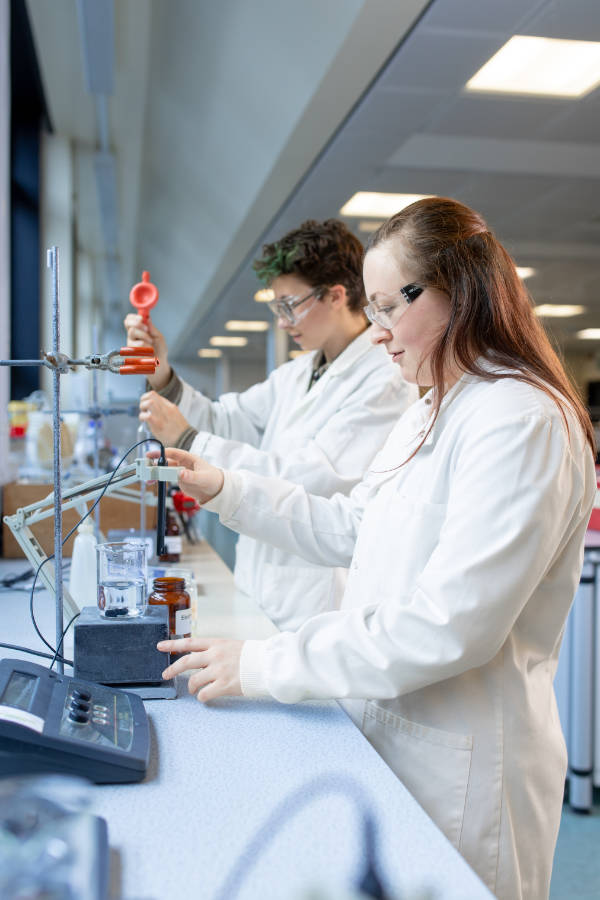
Practical work runs throughout the degree. You'll learn in our teaching laboratories from Year 1, with your laboratory competency assessed and signed off as you progress. This gives you hands-on experience across the biosciences before you specialise.
Teaching is supported by laboratory demonstrators, including academic and technical staff.
If you undertake a laboratory-based final-year project, you'll join one of our research groups, working alongside research students and staff.

Our department holds a Silver Athena Swan award, recognising our commitment to gender equality and creating an inclusive environment where all students can thrive.
Chat to a student ambassador
Want to know more about what it’s like to be a Science student at the University of Strathclyde? A selection of our current students are here to help!
Our Unibuddy ambassadors can answer all your questions about courses and studying at Strathclyde and offer insight into their experiences of life in Glasgow and Scotland.
Being a Biomolecular Scientist 1 (40 credits)
A two-semester practical module that underpins the content of the lecture modules Cells & their Molecules and Organisms & Disease in Semesters 1 and 2 by practical experience, lectures and workshops.
In laboratory sessions you'll learn generic laboratory skills to help build core skills in biological chemistry (biochemistry, immunology, pharmacology), microscopy, microbiology and physiology.
Workshops and lectures also cover the statistics and calculations that underpin biomedical research, and you'll learn to write abstracts and design a research poster using your own findings.
Cells & their Molecules (20 credits)
This module introduces the cell as the basic unit of life. It covers the structure and function of cells, both generic and specialised, and the molecules inside them that drive their activity and their dysfunction. You will study how DNA carries coding information, how cells generate and distribute energy, how protein regulation governs cellular activity, how signals pass from the membrane to the nucleus when a cell responds to an external stimulus, and how the control of cell division underpins health and disease.
Organisms & Disease (20 credits)
This module introduces the biology of whole organisms. It covers evolution and the diversity of life, how organisms develop from a single fertilised cell, and how they interact with and respond to their environment. You will study the main types of infectious agent, how they invade the body and how the immune system responds, and the organisation of mammalian organ systems and how their dysfunction leads to disease.
Bio-Organic Chemistry (20 credits)
This module will strengthen the awareness of nucleic acids, proteins, carbohydrates and natural products at the molecular level, with special emphasis on demonstrating how fundamentals of organic chemistry lead to a precise understanding of the origins of biomolecular shapes, interactivity and mechanism. By the end of the module, it is intended that, for example, students will be able to associate names of amino acids with their molecular structures, functional group chemistry and stereochemical impact on protein shape.
Elective modules
You'll also choose 20 credits of elective study. Electives are available from across the University, but these are recommended:
Use & Abuse of Drugs in Society (10 credits)
This module introduces pharmacology through the drugs people actually take. It covers medicines used in cardiovascular disease, diabetes, obesity, inflammatory disease, peptic ulcer, pain, cancer and mental health, and the mechanisms by which each produces its effect, alongside complementary, herbal and traditional medicines.
You'll also study the health risks of commonly abused drugs such as tobacco, alcohol, heroin, cocaine and hallucinogens, the controversies surrounding drug testing in animals and humans, and the use of banned substances in sport.
Pharmaceutical Sciences & Drug Development (10 credits)
After completion of the module you will be able to:
- understand basic physiology and how drugs work affect this.
- understand fundamental aspects of pharmacology and how drugs are tested in experimental models and man.
- have a knowledge of drug discovery from a historical and modern perspective.
- understand how drug delivery and distribution affects the effectiveness of drugs.
- have a knowledge that drug development is not always associated with treatment of disease
Being a Biomolecular Scientist 2 (40 credits)
A year-long practical module that develops laboratory, analytical and professional skills required by each discipline. You’ll gain hands-on experience in biochemistry, immunology, microbiology and pharmacology, supported by practical competency checks. Workshops cover statistics, ethics, data analysis and presentation skills, alongside student-led sessions exploring science in the media, technology and society.
Introduction to Biochemistry (20 credits)
This module covers the fundamentals of biochemistry and cell biology across five themes. You will study how genes are expressed and how that control fails in disease, and how human genetic variation is used in medicine and forensics. You will look at the structure and function of proteins, lipids and carbohydrates and how proteins work as enzymes, how cells obtain energy and how metabolic pathways are regulated in health and disease, and the pathways that control cell growth and death.
Introduction to Immunology (20 credits)
This module introduces the fundamental concepts of immunology. You will study the anatomy of the immune system and the cells within it, the difference between innate and adaptive immunity, and how immune cells recognise antigens. You will look at humoral and cell-mediated responses, how the body responds to bacteria, parasites and viruses, and how B and T cells are activated. The module also covers immune tolerance, and what happens when responses become harmful, in autoimmunity, immunodeficiency, allergy and hypersensitivity.
Introduction to Microbiology (20 credits)
This module introduces the fundamental concepts of microbiology and the ways microorganisms shape human, animal and planetary health. You will study how microbes are classified and how they differ from one another, their roles in health and disease, and how infection is controlled at both individual and population level. The module also covers the part microorganisms play in climate regulation and ecosystem function, how they adapt to hostile environments, and how they can be harnessed for biotechnology in medicine, industry and sustainable manufacturing.
Introduction to Pharmacology (20 credits)
This module introduces how drugs act on the body and what the body does to drugs. You will study the principles of drug and receptor interaction and four main targets drugs act on: receptors, enzymes, ion channels and transporter proteins. You will cover introductory principles of toxicology, including exposure, dose and mechanisms of toxicity; the pharmacology of the autonomic nervous system and the heart; and of the central nervous system. The module ends with pharmacokinetics, how drugs are absorbed, distributed, metabolised and eliminated, and the role of the pharmacologist in developing new medicines.
Being a Biomolecular Scientist 3 (40 credits)
A year-long practical module that develops your technique in the subjects you've chosen. You'll take the laboratory blocks matching your degree (biochemistry, biomedical science, immunology, microbiology or pharmacology) across twenty three-hour sessions, each with a competency check. Workshops prepare you for the laboratory work and take you through the analysis afterwards, alongside sessions on skills that apply across every discipline.
Fundamental Biochemistry (20 credits)
This module covers the major macromolecules of the cell, with an emphasis on proteins. You'll study how proteins are purified, detected and analysed, how they fold, how they are modified and broken down, and how they work as enzymes, including catalysis, kinetics and regulation. The module also covers protein structure analysis and the relationship between a protein's structure and its function, protein-protein interactions and their interaction with DNA, lipids and carbohydrates.
Biomedical Biochemistry (20 credits)
This module covers the biochemical processes that underlie disease. You'll study the cellular signalling pathways that convert a stimulus into a cellular response, and how proteins, membranes and organelles are trafficked and secreted. The module covers molecular processes that underpin health and disease, including ageing and cellular toxicity, and the genomic basis of human disorders and how genetic testing is used. You'll also learn about the part biochemistry plays in drug discovery and development, and the effects of drugs and pollutants in the environment.
In addition to the modules above, you'll also choose two further Year 3 modules, both from the same discipline (immunology, microbiology, or pharmacology).
Being a Biomolecular Scientist 4 (40 credits)
A year-long research project under academic supervision. Projects fall into four categories: experimental research, data science, literature-based work, and industrial or societal projects. You'll work on your project through the year, analyse and interpret your results, present your findings, and write a thesis, including a statement of your project's impact and how it relates to wider societal, health and environmental challenges.
Advanced Biochemistry (20 credits)
This module covers an understanding of the molecular and biochemical basis of selected human diseases.
Through the application of emerging experimental techniques, you'll develop an understanding of the biological mechanisms underlying disease. You'll examine how discoveries in disease biology can drive innovations in diagnosis, treatment, and patient care. You'll study the pathophysiological mechanisms underlying major human diseases, including metabolic and endocrine disorders, neurodegenerative diseases, and cancer.
Clinical Biochemistry (20 credits)
This module covers aspects of major organ/disease systems, with examples such as pregnancy, calcium/bone, diabetes, liver, poisoned patient, kidney, lipids, thyroid, heart and cancer within a clinical biochemistry context. Aspects of nutrition are also covered focusing on vitamins/micronutrients, obesity, and the monitoring of enteral/parenteral feeding. This module also covers point-of-care devices as an alternative to large laboratory analytical devices.
In addition to the modules above, you'll also choose two further Year 4 modules, both from the same additional discipline you studied in Year 3 (Immunology, Microbiology, or Pharmacology).
Biochemistry Project & Thesis (80 credits)
An extended research project in biochemistry, carried out in one of our research groups from September to April. You'll plan and run the project using advanced practical techniques, then write a thesis setting your findings against current knowledge and explaining what they add. You'll also present the work to an audience of staff and researchers.
Research Topics in Biochemistry (40 credits)
This module develops your ability to read and critically evaluate the primary literature in biochemistry, and to understand the research approaches and techniques currently in use. You'll summarise and present research data to an audience.
Learning & teaching
You'll be taught through a mix of lectures, laboratories, workshops, tutorials and group work by active researchers across biochemistry, immunology, microbiology and pharmacology.
Throughout your studies, you'll develop practical laboratory, data analysis and scientific communication skills, and have opportunities to hear from visiting researchers, clinicians and industry professionals through guest lectures, careers events and research seminars.
As you progress, you take more control of your own work, ending with a fifth-year research project of your own.
Assessment
Assessment is varied and reflects the skills you'll develop throughout the course. Alongside exams, you may complete laboratory reports, data analysis exercises, presentations, practical assessments and project-based assignments, giving you different ways to demonstrate your knowledge and scientific skills.
You'll develop laboratory skills through practical work, with competency in laboratory methods assessed as you progress. This helps build the practical experience needed for later study and research.
You'll know the assessment criteria before you begin and receive feedback to help you improve future work. If you need adjustments to how you're assessed, these can be arranged through the Disability & Wellbeing Service and applied across your modules.
MSci Biochemistry entry requirements
Entry requirements for our MSci Biochemistry degree are as follows.
Required subjects are shown in brackets.
| Highers |
Year 1 entry: AAAB/AABBC (Biology/Human Biology B, Chemistry B, Maths and English National 5 B) AABB /AABCC (Biology/Human Biology B, Chemistry B, Maths and English National 5 B) |
|---|---|
| Advanced Highers | Year 2 entry: AB (Chemistry and Biology/ Human Biology, one at A, the other at B, plus year 1 above) |
| A Levels | Standard entry requirements*: Year 1 entry: BBB (Chemistry and Biology/Human Biology, GCSE Maths 6/B, GCSE English Language 6/B or English Literature 6/B) Year 2 entry: ABB (Chemistry and Biology/Human Biology, GCSE Maths 6/B, GCSE English Language 6/B or English Literature 6/B) |
| International Baccalaureate | Standard entry requirements*: Year 1 entry: 32 (Chemistry HL5, Biology HL5. Maths SL5 and English SL5) (Chemistry and Biology, one at HL6, the other at HL5. Maths SL5 and English SL5) |
| HNC/HND | Year 1 entry: HNC, Graded Unit A/HND, Graded Units BB |
| International students | View the entry requirements for your country. |
| Deferred entry | Accepted |
*Standard entry requirements
Offers are made in accordance with specified entry requirements although admission to undergraduate programmes is considered on a competitive basis and entry requirements stated are normally the minimum level required for entry.
Whilst offers are made primarily on the basis of an applicant meeting or exceeding the stated entry criteria, admission to the University is granted on the basis of merit, and the potential to succeed. As such, a range of information is considered in determining suitability.
In exceptional cases, where an applicant does not meet the competitive entry standard, evidence may be sought in the personal statement or reference to account for performance that was affected by exceptional circumstances, and which in the view of the judgement of the selector would give confidence that the applicant is capable of completing the programme of study successfully.
**Minimum entry requirements
Contextual Admissions for Widening Access
We want to increase opportunities for people from every background.
Strathclyde selects our students based on merit, potential, and the ability to benefit from the education we offer. We look for more than just your grades. We consider the circumstances of your education and will make lower offers to certain applicants as a result.
University preparation programme for international students
We offer international students (non-UK/Ireland) who do not meet the academic entry requirements for an undergraduate degree at Strathclyde the option of completing an Undergraduate Foundation Programme in Business and Social Sciences at the University of Strathclyde International Study Centre.
Upon successful completion, you can progress to your chosen degree at the University of Strathclyde.
Fees & funding
All fees quoted are for full-time courses and per academic year unless stated otherwise.
Fees may be subject to updates to maintain accuracy. Tuition fees will be notified in your offer letter.
All fees are in £ sterling, unless otherwise stated, and may be subject to revision.
Annual revision of fees
Students on programmes of study of more than one year (or studying standalone modules) should be aware that the majority of fees will increase annually. The University will take a range of factors into account, including, but not limited to, UK inflation, changes in delivery costs and changes in Scottish and/or UK Government funding. Changes in fees will be published on the University website in October each year for the following year of study. Any annual increase will not exceed 10%, and in practice this may be lower (for example,. a 6% increase was applied in 2027/28 academic year).
| Scotland | To be confirmed. Fees for students domiciled in Scotland are subject to confirmation by the Scottish Funding Council. Scottish undergraduate students undertaking an exchange for a semester/year will continue to pay their normal tuition fees at Strathclyde and will not be charged fees by the overseas institution. |
|---|---|
| England, Wales & Northern Ireland | £9,790 Fees for students domiciled in the Rest of the UK are subject to Parliamentary approval. |
| Republic of Ireland |
If you are an Irish citizen and have been ordinary resident in the Republic of Ireland for the three years prior to the relevant date, and will be coming to Scotland for Educational purposes only, you will meet the criteria of England, Wales & Northern Ireland fee status. For more information and advice on tuition fee status, you can visit the UKCISA - International student advice and guidance - Scotland: fee status webpage. Find out more about the University of Strathclyde's fee assessments process. |
| International | £29,350 |
| University preparation programme fees | International students can find out more about the costs and payments of studying a university preparation programme at the University of Strathclyde International Study Centre. |
| Additional costs | Lab coats and safety goggles, approximately £25. International students International students may have associated visa and immigration costs. Please see student visa guidance for more information. |
| Available scholarships | Take a look at our scholarships search for funding opportunities. |
Please note: all fees shown are annual and may be subject to an increase each year. Find out more about fees.
Fees & funding
All fees quoted are for full-time courses and per academic year unless stated otherwise.
Fees may be subject to updates to maintain accuracy. Tuition fees will be notified in your offer letter.
All fees are in £ sterling, unless otherwise stated, and may be subject to revision.
Annual revision of fees
Students on programmes of study of more than one year (or studying standalone modules) should be aware that the majority of fees will increase annually. The University will take a range of factors into account, including, but not limited to, UK inflation, changes in delivery costs and changes in Scottish and/or UK Government funding. Changes in fees will be published on the University website in October each year for the following year of study. Any annual increase will not exceed 10%, and in practice this may be lower (for example,. a 6% increase was applied in 2027/28 academic year).
| Scotland | To be confirmed. Fees for students domiciled in Scotland are subject to confirmation by the Scottish Funding Council. Scottish undergraduate students undertaking an exchange for a semester/year will continue to pay their normal tuition fees at Strathclyde and will not be charged fees by the overseas institution. |
|---|---|
| England, Wales & Northern Ireland | To be confirmed. Fees for students domiciled in the Rest of the UK are subject to Parliamentary approval. |
| Republic of Ireland |
If you are an Irish citizen and have been ordinary resident in the Republic of Ireland for the three years prior to the relevant date, and will be coming to Scotland for Educational purposes only, you will meet the criteria of England, Wales & Northern Ireland fee status. For more information and advice on tuition fee status, you can visit the UKCISA - International student advice and guidance - Scotland: fee status webpage. Find out more about the University of Strathclyde's fee assessments process. |
| International | £31,100 |
| University preparation programme fees | International students can find out more about the costs and payments of studying a university preparation programme at the University of Strathclyde International Study Centre. |
| Additional costs | Lab coats and safety goggles, approximately £25. International students International students may have associated visa and immigration costs. Please see student visa guidance for more information. |
| Available scholarships | Take a look at our scholarships search for funding opportunities. |
Please note: all fees shown are annual and may be subject to an increase each year. Find out more about fees.
How can I fund my studies?
Students from Scotland
Fees for students who meet the relevant residence requirements in Scotland, you may be able to apply to the Student Award Agency Scotland (SAAS) to have your tuition fees paid by the Scottish government. Scottish students may also be eligible for a bursary and loan to help cover living costs while at University.
For more information on funding your studies have a look at our University Funding page.
Students from England, Wales & Northern Ireland
We have a generous package of bursaries on offer for students from England, Northern Ireland and Wales:
You don’t need to make a separate application for these. When your place is confirmed at Strathclyde, we’ll assess your eligibility. Take a look at our scholarships search for funding opportunities.
International Students
We have a number of scholarships available to international students. Take a look at our scholarship search to find out more.
Careers
With an MSci Biochemistry degree, you could pursue careers in molecular biology, protein biochemistry, cancer research, clinical biochemistry, and the pharmaceutical and biotechnology industries.
Designed with a research career in mind, the integrated Master's year gives you experience close to that of a working scientist, taking responsibility for planning research, analysing data and communicating findings through an extended project.
This in-depth research training prepares you for scientific research, industrial R&D and PhD study.
Our graduates work in pharmaceutical and biotech companies, hospitals and public service laboratories, universities and research institutes, the scientific civil service, and teaching. Many also continue into postgraduate study.
Alongside specialist scientific knowledge, you'll develop analytical, problem-solving and communication skills valued across a wide range of professions, including finance, management, marketing and business.
Personal development adviser
From your first week, you'll have a Personal development adviser – an academic who supports you throughout your undergraduate studies. You'll meet regularly to discuss your academic progress, feedback and future career options.

Following graduation, I have been lucky enough to begin a career at Medpace, a drug & biological contract research organisation, working in data management. My degree has given me a strong scientific foundation, extensive data co-ordination/analysis experience and the confidence to tackle new challenges independently.
Apply
Start date:
Biochemistry (1 year entry)
Start date:
Biochemistry (2 year entry)
Start date: Sep 2027
Biochemistry (1 year entry)
Start date: Sep 2027
Biochemistry (2 year entry)
Glasgow is Scotland's biggest & most cosmopolitan city
Our campus is based right in the very heart of Glasgow. We're in the city centre, next to the Merchant City, both of which are great locations for sightseeing, shopping and socialising alongside your studies.
Discover Uni
Discover Uni includes official statistics about higher education courses taken from national surveys and data collected from universities and colleges about all their students.