
MSc Media & Communication
ApplyKey facts
- Start date: September
- Application deadline: Application deadlines for international students for September 2026 entry
- Study mode and duration: 12 months full-time: 24 months part-time
Work placement: optional project with external client
Study with us
- two routes of study available, enabling you to tailor the programme to your academic interests and career objectives
- develop expertise in strategic communications to support a career in corporate communications, public relations, or academic research in these areas
- learn to apply media and communication theories across international contexts and media platforms
- provides media and communication professionals with an informed and critical perspective on the future of communications; future researchers and academics will gain advanced skills in media and communications
- opportunity to work with external clients
The Place of Useful Learning
UK University of the Year
Daily Mail University of the Year Awards 2026
Scottish University of the Year
The Sunday Times' Good University Guide 2026
Research University of the Year
Daily Mail University Guide 2027
Why this course?
This MSc offers an interdisciplinary approach to the study of media and communication, drawing on expertise across the social sciences. The programme enables you to develop critical and analytical skills relevant to contemporary media environments and policy contexts.


Study routes
There are two routes of study available for this course. Students on both routes benefit from shared core teaching, academic supervision and dissertation requirements, ensuring a coherent MSc experience while allowing for structured specialisation.
MSc Media & Communication
This route provides a broad and flexible introduction to contemporary media and communication studies. You will develop critical understanding of media, culture, communication practices and policy, and select optional modules that reflect your individual interests.
The route is suitable if you are seeking careers across media, communications, policy and related professional fields.
MSc Media & Communication (Research Methods)
The Research Methods pathway is particularly suitable if you are considering progression to postgraduate research (PhD) study or research-focused careers. It provides methodological training at a level appropriate for PGR entry and supports preparation for competitive research funding applications.
By combining core media and communication teaching with substantial quantitative and qualitative methods training, the pathway equips graduates with skills applicable across academia, public policy, the third sector and wider social-science research settings.
What you'll study
MSc Media & Communication
- semester 1: two core Media & Communication modules and one option module
- semester 2: two core Media & Communication modules and one option module or external client option
- semester 3: a 60 credit dissertation
MSc Media & Communication (Research Methods)
- semester 1: two core Media & Communication modules and one Research Methods option
- semester 2: one core Media & Communication module, one Research Methods option and one departmental option
- semester 3: a 60-credit dissertation
All taught modules carry 20 credits, following the same structure as the standard MSc route.
Course content
Please note that the below is an indicative list of classes. These are subject to change.
Compulsory modules
On both routes you take the following modules:
Communication & Media Theory in an International Context
You'll study the dominant media and communication theories, and their application across a number of international contexts and media platforms. You'll examine the trends and texts over a number of media contexts and genres, including popular cultural platforms and the coverage of politics, as well as dealing with the implications of international media on the mediation and public understanding of conflict and terrorism.
Research Skills in Media & Communication
You'll gain an understanding of the principles of research and academic writing in media and communication, developing of academic and professional research and proposal-writing skills in preparation for your dissertation.
Media & Communication Dissertation
Your dissertation will provide you with the opportunity to undertake a piece of independent research, which is of professional or academic relevance to you.
This will be assessed on the basis of a dissertation of approximately 15,000 words. The work enables and requires you to draw on the skills and insights acquired during the Masters programme.
On the standard Media & Communications route you will take:
From Broadcast to Participation: a History of Mediation
You'll examine the development and influence of specific media forms, both in the associated conventions and forms and in the relationship between media and the social and political realms. You'll also gain an understanding of the rise of participatory and social media, and of the relationship between interpersonal media, mass media and social media.
Strategic Communication
This module will afford you an advanced insight into the principles, tactics and ethical responsibilities of strategic communication. Using appropriate case studies, the module will critically evaluate the necessary communication concepts, the position of stakeholders and strategic narratives, as well as the ethics of strategic communication in working with notions of corporate responsibility and social development.
On the Research Methods route you will take:
Media Analytics (compulsory for Research Methods route only)
Optional modules
On the Research Methods route, you will choose two from:
Feminist Knowledge, Feminist Research
This module introduces key feminist theories of knowledge and research methodologies. You examine how feminist knowledge is produced within and beyond the academy, and explore the principles, practices, and ethics shaping feminist research. The module includes a visit to Glasgow Women’s Library, offering hands-on engagement with feminist archives and community-based knowledge-making. It also prepares you for the Gender Studies Research Placement.
The Contexts of Criminal Justice Research
The aim of this module is to provide you with a critical understanding of the core contexts, critical arguments, theories and debates in penal policy and criminal justice practice. It's designed to provide you with relevant knowledge, understanding and skills to critically engage with theory, research and contemporary debates about penal responses to people who offend, and with critical debates in contemporary policies and practices, as well as introducing more radical approaches to penal change.
Qualitative Research Methods
This module will introduce you to the literature on qualitative research design and provide you will an understanding of different qualitative research methods, and their limitations. It will support you to apply essential knowledge and skills in conducting independent qualitative research.
Quantitative Methods - Survey Methods
This module introduces students to the fundamental theories and principles of probability, statistical inference, hypothesis testing, and analysis techniques such as linear regression. Furthermore, it equips students with the practical skills and techniques required to conduct their own statistical analyses. After taking the module students will be able to critically evaluate academic studies as well as non-academic reports that use statistical methods and conduct their own research using various types of data.
Individual Project with Client
This module enables students to undertake a substantial media and communications project with an external client, selected by the student in agreement with the University. Students submit their project for assessment, along with a reflective report.
On the standard Media & Communications route you will choose from:
Media Analytics
The aim of this class is to provide fundamental data analytics skills to postgraduate students in the media and communication subject area. The class focuses on embracing new analytical capabilities provided by developments in the field of information communication and technology. The Media Analytics module will provide a much-needed set of analytical skills, enabling students to adapt to recent trends in the media and communication landscape.
Creating Media Content
This module introduces the core principles of news gathering, reporting, feature writing and communications, with a focus on their application in contemporary digital journalism.
You'll develop the practical techniques required to produce compelling digital content across multiple media platforms, and gain the skills needed to meet the professional expectations of converged, cross platform news environments.
Digital Media Ethics
This module is designed to give students an understanding of key ethical issues, practices and norms of the digital media environment.
Due to the rapid changes in the digital environment, journalism and wider information media systems have become key sites where normative questions arise about the ethics of these systems, processes and technologies. This includes the interrogation of the tensions between old and new values and traditions in a globally-networked system that has a bearing on individual and collective experience and identity.
This module is for students who wish to learn how to apply theoretical frameworks to complex topics in the digital media environment.
Project with External Client
Departmental option modules
Students on the Research Methods route choose one from:
Strategic Communication
This class will acquaint you with the field of strategic communication and the major theories of persuasion. It will explore the process of communicating purposefully from its different stages and thus help you form a well-rounded theoretical understanding of its many facets and complexities. The class will also combine theory and practice by asking you to apply the acquired theoretical perspectives onto professional scenarios.
Media & Health
This conceptual class explores many of the contradictions and consequences of how health is presented in the media.
The media’s role is to provide both information and entertainment, so we also examine entertainment media and its influence on health education, social norms, and stigmatisation.
After this class, students will understand better how illness and health are presented by the media, what contributes to such representations, and how that affects public attitudes and behaviours.
They will also begin to notice some of the health myths sold through the media and become a more discerning media consumers overall.
They will discover the disciplines of public health, health communication and risk communication and their many complexities.
Last, but not least, students will become better journalists or writers, not just about health, but about people.
International Media Law
This module will teach students the specific industry legal framework which applies in digital journalism. It will enable students to understand international media law and the application of international media law to digital journalism globally.
Learning & teaching
You'll experience a variety of learning methods, including supervised production exercises. The core classes are based on a blend of lectures, seminar discussion and student-led teaching. Modes of delivery may vary in the option components of the course according to the classes you select.
Guest lectures
The course will feature a variety of guest lectures, and you'll have the opportunity to attend seminars from prominent scholars and practitioners.
Assessment
The course will be assessed by a combination of written assignments, group and individual presentations, case studies and media production.
Interested in postgraduate study?
At the Faculty of Humanities and Social Sciences, our friendly and knowledgeable team will be available to provide you with all the information you need to kick-start your postgraduate journey at the University of Strathclyde. Register for upcoming events below:
Entry requirements
| Academic requirements | First-class or Second-class Honours degree, or international equivalent in Media and Cultural Studies, English Studies, or a related discipline. Other qualifications may be considered. An undergraduate degree in media or communication is not a prerequisite for this programme and we would be delighted to welcome applications from a variety of backgrounds. Entry may also be possible through relevant professional experience. Applicants who do not meet the degree requirement but have substantial experience in areas such as international relations, public administration or community development may be considered. Don’t meet the academic entry requirements? We offer the Pre-Masters Preparation Course at the University of Strathclyde International Study Centre, for international students (non-UK/Ireland). |
|---|---|
| English language requirements | Please check our English requirements before making your application. |
Chat to a student ambassador
If you want to know more about what it’s like to be a Humanities & Social Sciences student at the University of Strathclyde, a selection of our current students are here to help!
Our Unibuddy ambassadors can answer all the questions you might have about courses and studying at Strathclyde, along with offering insight into their experiences of life in Glasgow and Scotland.
Fees & funding
All fees quoted are for full-time courses and per academic year unless stated otherwise.
Fees may be subject to updates to maintain accuracy. Tuition fees will be notified in your offer letter.
All fees are in £ sterling, unless otherwise stated, and may be subject to revision.
Annual revision of fees
Students on programmes of study of more than one year (or studying standalone modules) should be aware that the majority of fees will increase annually. The University will take a range of factors into account, including, but not limited to, UK inflation, changes in delivery costs and changes in Scottish and/or UK Government funding. Changes in fees will be published on the University website in October each year for the following year of study. Any annual increase will not exceed 10%, and in practice this may be lower (for example,. a 6% increase was applied in 2027/28 academic year).
| Republic of Ireland |
If you are an Irish citizen and have been ordinary resident in the Republic of Ireland for the three years prior to the relevant date, and will be coming to Scotland for Educational purposes only, you will meet the criteria of England, Wales & Northern Ireland fee status. For more information and advice on tuition fee status, you can visit the UKCISA - International student advice and guidance - Scotland: fee status webpage. Find out more about the University of Strathclyde's fee assessments process. |
|---|---|
| Scotland, England, Wales & Northern Ireland | Full-time: £10,700 *Please note: Year 2 fee will be subject to an increase |
| International | £24,950 |
| Available scholarships | Take a look at our scholarships search for funding opportunities. |
| Visa and immigration | International students may have associated visa and immigration costs. Please see student visa guidance for more information. |
Please note: The fees shown are annual and may be subject to an increase each year. Find out more about fees.
How can I fund my course?
Scottish postgraduate students
Scottish postgraduate students may be able to apply for support from the Student Awards Agency Scotland (SAAS). The support is in the form of a tuition fee loan and for eligible students, a living cost loan. Find out more about the support and how to apply.
Don’t forget to check our scholarship search for more help with fees and funding.
Students coming from England
Students ordinarily resident in England may be to apply for postgraduate support from Student Finance England. The support is a loan of up to £10,280 which can be used for both tuition fees and living costs. Find out more about the support and how to apply.
Don’t forget to check our scholarship search for more help with fees and funding.
Students coming from Wales
Students ordinarily resident in Wales may be to apply for postgraduate support from Student Finance Wales. The support is a loan of up to £10,280 which can be used for both tuition fees and living costs. Find out more about the support and how to apply.
Don’t forget to check our scholarship search for more help with fees and funding.
Students coming from Northern Ireland
Postgraduate students who are ordinarily resident in Northern Ireland may be able to apply for support from Student Finance Northern Ireland. The support is a tuition fee loan of up to £5,500. Find out more about the support and how to apply.
Don’t forget to check our scholarship search for more help with fees and funding.
International students
We've a large range of scholarships available to help you fund your studies. Check our scholarship search for more help with fees and funding.
Faculty of Humanities & Social Sciences Scholarships
EU Engagement Scholarships are available to EU applicants who would have previously been eligible for Home (Scottish/EU) fee status.

Media and communication technologies shape how we organise our societies and how we deal with one another. More than this, communication influences our sense of what it is to be human. If the world is to be a better, more intelligent and more ethical place, the need for successful, persuasive and ethical communication becomes ever keener.
Programme leader
Jingsong Xie
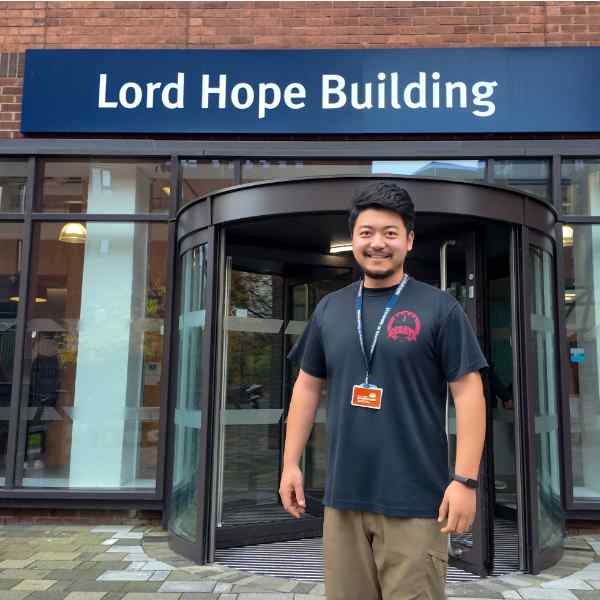
I am grateful for this programme. This year I have not only gained a framework of knowledge and academic resources in the field of media and communication that exceed my expectations, but it has also fuelled my motivation to delve into the field at a higher level.
Xingyu Zhao
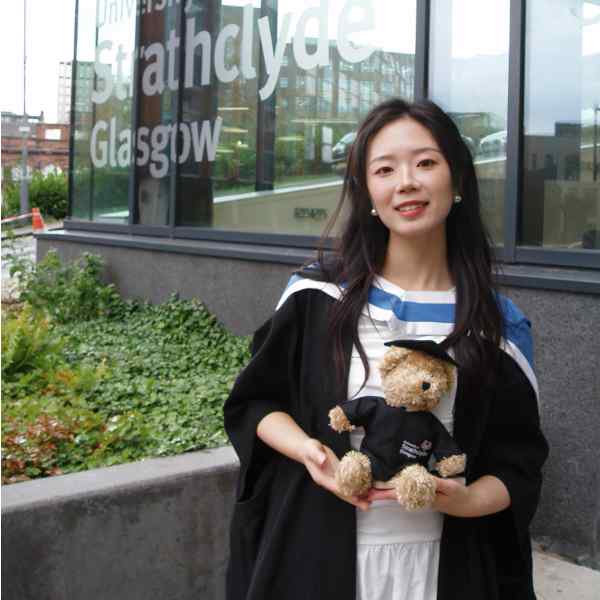
I participated in an online language class designed specifically for international students, which was incredibly helpful as I was just beginning to tackle academic writing in English. Furthermore, the university’s library and study rooms provided great spaces for independent study, group meetings, and relaxation

Vanya Georgieva
For me, it was particularly rewarding to combine my two degrees in a way that they complement each other. This interdisciplinary approach has broadened my career prospects while maintaining a connection between the fields of Politics & Media
Glasgow is Scotland's biggest & most cosmopolitan city
Our campus is based right in the very heart of Glasgow. We're in the city centre, next to the Merchant City, both of which are great locations for sightseeing, shopping and socialising alongside your studies.
Careers
The MSc in Media & Communication is designed to enhance employment prospects in media, as well as in communication industries such as public relations and corporate communications.
The strategic communication component of the programme will also increase the employability of graduates within the communication sections of other industry sectors, particularly within companies dealing with English-speaking markets
International students
We've a thriving international community with students coming here to study from over 140 countries across the world. Find out all you need to know about studying in Glasgow at Strathclyde and hear from students about their experiences.
Start date: Sep 2027
Media and Communication
Start date: Sep 2027
Media and Communication
Contact us
Prospective student enquiries
Contact a member of our team on LiveChat between 10am and 4pm (GMT)
Telephone: +44 (0) 141 444 8600
Have you considered?
We've a range of postgraduate taught and Masters courses similar to this one which may also be of interest.