AI@CIS_StrathclydeMeet the team

Andrew Abel
Andrew’s research focuses on machine learning with speech and emotion, and ensuring we have an understanding of how these systems perform. He is a co-founder of the Strathclyde Centre for Doctoral training in human-centred AI for inclusive education and society (https://haiti.cis.strath.ac.uk), and currently supervises several PhD students, focusing on classroom engagement, emotion recognition, and multimodal and Lombard speech recognition and analysis. He is also a research panel member for MND Scotland, and has worked with a range of companies on practical AI applications. Andrew received his Ph.D from the University of Stirling in Scotland in 2013, and was previously a lecturer at Xi'an Jiaotong Liverpool University in China.
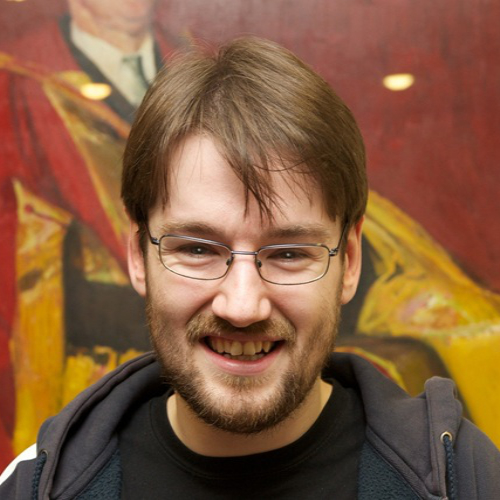
Dr Damien Anderson
Damien is a Teaching Fellow and the programme director for the MSc in Software Development at Strathclyde. His research sits in the intersection of artificial intelligence, video games, and computing education. He is an advocate for the application of games and interactive systems as both a subject for study in its own right, and a mechanism for improving and understanding how AI behaves.
His past research has looked at developing Ensemble Decision Systems for playing video games, which combine several decision making approaches into a single agent to complement their performance. He has also worked in the areas of deceptive games and autonomous networks and has a continuing interest in exploring both.
Alongside these interests he is also exploring the area of gamification in computer science education and how to use game environments as a route to public understanding of AI.

Dr Vinod Kumar Chauhan
Dr Vinod Kumar Chauhan is a Chancellor’s Fellow in AI (Lecturer/Assistant Professor) and leads the Causal AI and Healthcare Lab. He has over a decade of experience in fundamental and applied AI research, including postdoctoral research at the University of Oxford and the University of Cambridge, and collaborations with clinicians and industry leaders such as Boeing and Rolls-Royce. His research focuses on Causal AI and Agentic AI, with a particular interest in developing AI systems for personalised decision-making, including personalised treatments. His broader vision is to translate fundamental AI advances into real-world impact through collaboration with clinical, industrial and health service partners. Please contact me directly for collaboration or PhD supervision opportunities (vinod.chauhan@strath.ac.uk). Further details are available.

Dr Didier Devaurs
Didier is a lecturer in Biomolecular AI with a diverse background in computer science, mathematics, biology, and chemistry. Before starting his PhD in artificial intelligence, he worked as a mathematics teacher in secondary education, a research engineer in industry, and a teaching/research assistant in academia. His past scientific research mainly involved computationally modelling, simulating and analysing complex physical systems in robotics and biology. He now pursues interdisciplinary research in biomedical computing and structural bioinformatics. For example, one of his ongoing projects involves using machine learning techniques to explore the mutational space of proteins and predict the effects of genetic mutations in people.

Feng Dong
Feng works in the area of human centric AI to investigate collaborative decision making between AI and humans. The focus is to make AI more understandable and explainable through inferring causality and compositionality, and to look into new approaches in human and AI interactions. The main application domain is AI for healthcare.

Dr Mohamed Elawady
Dr Mohamed Elawady is a Teaching Fellow in AI at the University of Strathclyde, specializing in computer vision and deep learning. His research tackles critical challenges in healthcare, sustainability, urban management, occupational safety and digital media integrity.
He has co-led projects on reducing food waste in medical facilities, detecting workplace hazards, and analysing smart city infrastructure, working closely with academic and industry partners across Europe. His medical imaging research focuses on early cancer detection using ultrasound, while his recent work explores trusted media distribution and computational art analysis. He holds a PhD in Computer Vision from the University of Lyon and an Erasmus Mundus European MSc in Computer Vision and Robotics
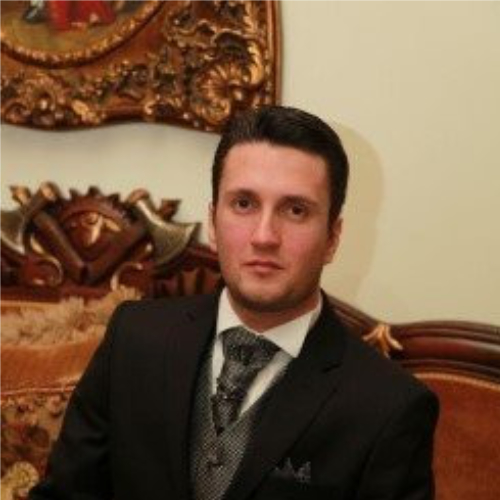
Dr Joseph El Gemayel
Joseph’s research interests focus on building Autonomous Adaptive and Self-Learners Multi-Agent Systems and in the development and the use of Artificial Intelligence techniques with special focus on game-based learning and applications for education.

Prof Anil Fernando
Professor Anil Fernando is a leading researcher in Video Coding, AI, Machine Learning, Multimedia Systems, Semantic Communications, 6G, and intelligent networking at the University of Strathclyde. He leads the Multimedia Communication Research Group and has supervised over 135 PhD graduates, demonstrating strong doctoral leadership and global collaboration.
With more than 550 publications, his work spans AI-native multimedia, immersive media, edge intelligence, quantum communications, and healthcare monitoring. In 2026, he coordinates the €1.9 million Horizon Europe SATERN project on semantic communications for advanced video and dementia patient monitoring, alongside a £660K UKRI project on dark data extraction from images. Over the last two decades, he has contributed to EU projects worth over £75 million. He has successfully commercialised several research outputs and is currently commercialising his semantic video communications technology.
Professor Fernando has authored two books on video compression: one on conventional and hybrid systems, and another on neural and AI-native compression. His achievements in research leadership, PhD supervision, international partnerships, major funded projects, and commercialisation have established him as a globally recognised authority in video communications, AI-driven multimedia, semantic communications, and next-generation technologies.
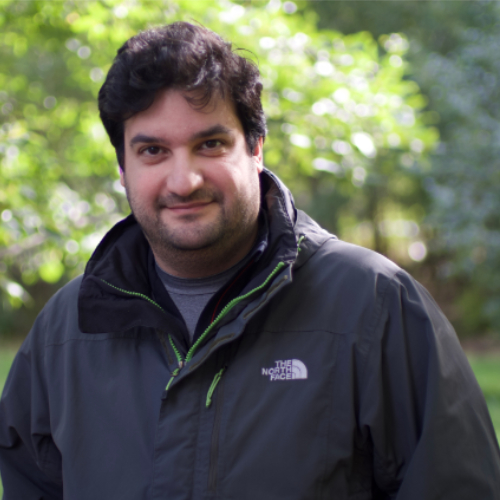
Dr Yashar Moshfeghi
Yashar’s research focuses on human-centred artificial intelligence, particularly human behaviour and intent prediction, cognitive-state modelling, AI-assisted decision-making, responsible AI, and human–AI collaboration. His work combines machine learning, information retrieval, and cognitive and behavioural modelling to understand how people interact with intelligent technologies and how AI can better account for human behaviour and cognition. His research has applications across healthcare, aviation, defence and education.
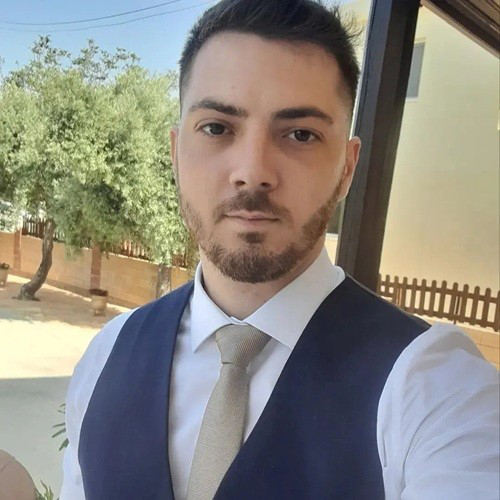
Andreas Neofytou
Andreas is a Teaching Assistant in the Department of Computer and Information Sciences at the University of Strathclyde. His research lies at the intersection of machine learning, artificial intelligence and decision-making under uncertainty, with particular interests in reinforcement learning, Bayesian methods and robust decision-making. His work explores how machine learning can be combined with optimisation to bridge predictive and prescriptive analytics, thereby supporting data-driven decision-making in complex environments. His broader interests include applied artificial intelligence, data science and machine learning for real-world decision problems.

Marc Roper
Marc’s research interests lie in the application of AI strategies and machine learning techniques to software engineering problems; for example, using search-based techniques to generate program test data, applying clustering and semi-supervised learning to automatically detect software system failures, or employing evolutionary algorithms to introduce and enable autonomous behaviour in complex system such as mobile networks controllers. Additionally, he has experience and interests in using machine learning in a variety of contexts such as forecasting buyer behaviour, predicting building energy performance, detecting counterfeit items on e-commerce sites, and predicting health outcomes. He is particularly interested in the practical application of these techniques and many of his projects have been carried out in conjunction with partners from industry and commerce.
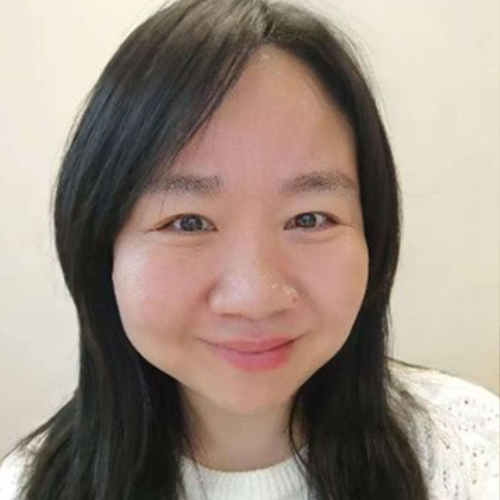
Dr Yingying Zhao
Yingying’s research lies at the intersection of human-centred AI, human-computer interaction (HCI), and machine learning. Her work investigates how cognitive, affective, and behavioural states shape human-AI interaction. By leveraging multimodal sensing and longitudinal data to model behavioural and health trajectories, she develops interpretable, causally informed AI and human-in-the-loop decision-support systems. Her current research integrates intention analysis with large language models (LLMs) to create intelligent interactive systems for education, wellbeing, and healthcare.
Former Members

Michael Cashmore
Michael’s research centres on using AI Planning for the control of Autonomous Systems that act robustly and safely in dynamic and uncertain environments. He has experience building architectures for deliberative control of robot systems, and in modelling mixed discrete-continuous problems with non-linear dynamics with constraint programming techniques. His current interests lie in building autonomous systems that can act within a team of mixed AI agents and humans, communicating and reacting to teammates, and collaborating towards a shared goal.

Prof Crawford Revie
Much of Crawford’s research takes place at the intersection of informatics and the life sciences; in particular he has worked extensively with data-driven models of disease and host-parasite dynamics in both human and animal populations. He has interests in novel methods to collect, manage and make statistical inferences from large and heterogeneous data sets. The application of such methods for passive (or syndromic) surveillance of disease is an on-going area of research interest.