
Wellbeing matters Emotional & mental wellbeing
Staff mental health training
Staff Wellbeing, Mental Health and Suicide Awareness Training
The course will enable you to develop your understanding of what mental health is and how you can positively influence your own and others mental health. You will also learn how to have healthy conversations about mental health, how to support people experiencing mental ill health and how you can help to prevent suicide.
Mental Health Training for Managers: Starting the conversation
This module is for managers, supervisors, and team leaders and is designed to help you support the mental health of your team and encourage a "culture of care" at Strathclyde with regard to mental health and wellbeing. It aims to upskill and support you to have open and caring conversations with your team around wellbeing, mental health and suicide
Employee assistance programme
The University provides an employee assistance programme (EAP), giving you access to free and confidential counselling.
Counselling sessions
To access six counselling session through the HELP EAP service, you can call +44 (0)800 032 9849 anytime free of charge and in complete confidence. This gives you access to a specialist team of experienced, qualified counsellors who can help with a wide range of concerns such as relationship difficulties, anxiety and emotional problems, work-related issues, bereavement, family difficulties, stress and debt.
Employees can trust that our EAP provider treats all information confidentially. The EAP is provided by an external organisation who are bound by the professional code of ethics of the British Association for Counselling & Psychotherapy and the Employee Assistance Professionals Association.
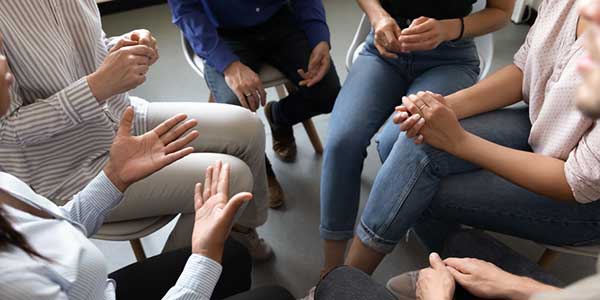
Staff Bereavement Support
Losing someone we care about can be one of the most difficult experiences we ever face. Whether it is a close friend, a family member, or a member of our university community, grief can affect each of us in very different ways. Death and bereavement are a natural part of life, yet they are often difficult to talk about. When a loss happens, the impact can feel overwhelming, and the emotions that follow can be very personal.
At times like these, it can help to know that support is available. Below you will find a range of services and resources that may offer guidance, practical help, or a listening ear for staff and departments affected by bereavement.
Below you will find a range of resources available to support staff and departments following a death.
- Employee Assistance Programme– Online support available through the University’s Employee Assistance Programme.
- Employee Assistance Programme Telephone Counselling – Free, confidential support available 24 hours a day, 365 days a year. Call 0800 032 9849.
- Cruse Bereavement Support– Support for employers, staff and colleagues experiencing bereavement. Call their helpline on 0808 802 6161.
- The Nook – A free drop-in service offering counselling and support. Brunswick House, 51 Wilson Street, Glasgow, G1 1UZ.
- Occupational Health – Available for support and advice. Second Floor, Livingston Tower. Call 0141 548 4824 or email occupationalhealth@strath.ac.uk
- Human Resources – Your HR Partner can provide guidance and support for staff and teams affected by bereavement.
- Samaritans Step by Step Service – Support and guidance for managers to help them support colleagues following a bereavement.
- Child Death Helpline – Support for anyone affected by the death of a child. Call 0800 282 986.
- Winston’s Wish– Practical support for bereaved children and their families. Call 0808 8020 021.
- Mind– Information and advice on coping with grief and supporting your mental health.
- Sue Ryder– Online bereavement support and self-help resources.
- National Records of Scotland (NRS) – Information on registering a death in Scotland and the practical steps that may need to be taken.

The Nook, from SAMH
All Strathclyde staff are able to use The Nook from SAMH, which offers drop-in mental health support in a safe, stigma-free and non-clinical environment – without the need for referral, appointment, or waitlist.
The Nook can provide support to colleagues experiencing mild to moderate mental health problems impacting day-to-day living, as well as to people supporting others, whether that’s friends, family or work colleagues.
They offer 1-1 support, wellbeing activities, and self-help sessions. All services are free to access.
Although it is a drop-in service, you are able to book in advance, using SAMH Connect. To attend activities, please register via Eventbrite.
You can find The Nook at Brunswick House, 51 Wilson Street, G1 1UZ, 7 days a week. It's only a 5-minute walk from the main University campus.
Online Cognitive Behavioural Therapy (CBT)
Sign up and you can complete Cognitive Behavioural Therapy modules at your own pace.
Compassionate Language around Suicide
The topic of suicide can be challenging for some people to talk about and this in turn can be a barrier in terms of people seeking help. Wherever possible we must encourage open and honest conversations about suicide that promote healing and recovery. Follow this link below to read some tips and guidance in terms of using compassionate language around suicide.
Internal resources
Occupational Health Service
Managers or staff can self-refer for early and specialist intervention, e.g. physiotherapy, return to work assistance and healthy lifestyle assessments
Faith & Spiritual Wellbeing Support via Chaplaincy
Full interfaith chaplaincy team:
- quiet spaces for meditation, reflection and mindfulness
- can provide pastoral care linked to bereavement and other issues
- LGBTQI+ chaplains
Carers support group / network
A support group for staff members who have, intend to have, or have had caring responsibilities. (Staff login required)
Wellbeing training
Various wellbeing training courses facilitated by our Organisational & Staff Development Unit (OSDU) team.
LGBTQI staff network
The StrathPride Network is open to LGBTQI+ staff, postgraduate researchers, and our allies. A colleague network providing a safe space, support and discussion.
Disabled & Neurodiverse Staff Network
The Disabled and Neurodiverse Staff Network is for staff who identify as, or feel they may potentially be, disabled or neurodiverse, have experienced health-related issues, or who have experienced mental health issues.
External resource
NHS Wellbeing Glasgow – Free Resources
A range of free self-help courses and support linked to issues like anxiety, sleep issues, panic attacks, stress and many more. An easy-to-use A to Z self-help guide.
Understanding Period Pain
An external guide on what to expect and when to seek medical guidance linked to period pain.