Menstruation, Perimenopause and Menopause Support for Students

At the University of Strathclyde, we recognise that menstruation, perimenopause and menopause can have a significant impact on students’ health, wellbeing and academic experience. We are committed to promoting equality of opportunity, dignity and inclusion, and to ensuring students are supported early, sensitively and effectively so they can progress with their studies in an appropriate way.

This page provides an overview of the support available and should be read alongside the University’s:

These guidance documents underpin our approach and should be read in conjunction with the University’s Equality, Diversity and Inclusion Policy.
 

Our approach and commitments

Across both menstruation and perimenopause/menopause, Strathclyde is committed to:

  • Supporting students to be open about symptoms in a way that feels safe and respectful
  • Ensuring staff respond appropriately, sensitively and confidentially
  • Raising awareness of menstrual, perimenopausal and menopausal health
  • Providing access to reasonable adjustments, academic flexibility where appropriate, and practical support such as free period products and flooding kits
  • Fostering a supportive, well informed University environment
  • Tackling behaviours or attitudes that undermine dignity, respect, safety or wellbeing.


Inclusive and intersectional support

Menstruation, perimenopause and menopause affect people in different ways.

  • It is not only women who menstruate or experience perimenopause/menopause; some trans men and women, non binary and intersex people may also be affected.
  • We recognise that intersectional factors such as disability, neurodivergence, care experience, socio economic background, culture, religion, age or medical treatment can shape someone’s experience and potentially compound disadvantage.

For example:

  • Neurodivergent students may experience heightened pain or sensory difficulties
  • Disabled students may experience more severe or complex symptoms
  • Students on low incomes may experience period product insecurity
  • Some students may experience early, premature, or surgical menopause.

We aim to acknowledge, understand and support these differing experiences.


Further information

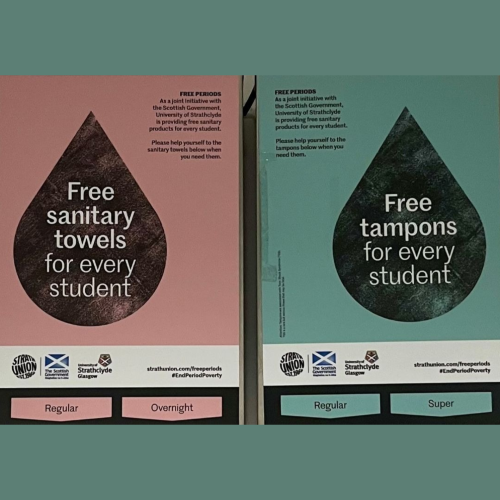
Free single use period products (including regular and super pads and tampons) are available for use by anyone with a menstrual cycle in a range of toilets across campus.

In addition:

  • Support packs, including a change of clothing, are available for students who experience flooding or heavy bleeding (we aim to launch these in early 2027)
  • Details of locations offering support packs will be updated accordingly. 

These measures form part of the University’s commitment to menstrual dignity and reducing barriers to learning.

Students may find that symptoms are alleviated by supportive lifestyle practices such as:

Strathclyde Sport can offer advice and support in relation to physical activity and wellbeing.

We also encourage students to seek medical advice through their GP or NHS services, particularly if symptoms are severe, ongoing, or worsening.

Menstrual, perimenopausal and menopausal symptoms vary widely between individuals. Some students may experience little or no impact, while others may experience symptoms such as:

  • Pain, fatigue, migraines or joint pain
  • Sleep disturbance or low energy
  • Changes in mood, anxiety or low mood
  • Cognitive difficulties (sometimes referred to as “brain fog”) such as memory lapses or reduced concentration
  • Worsening of existing physical or mental health conditions.

These symptoms can affect attendance, concentration, assessment performance, participation, or confidence in disclosing difficulties.

We recognise these impacts and encourage students to seek support without fear of stigma or being minimised.

Depending on your circumstances, support may include:

Disability & Wellbeing support

Menstrual and perimenopausal/menopausal symptoms can meet the definition of a disability under the Equality Act. You can contact the Disability & Wellbeing Service for a one to one needs assessment and to discuss reasonable adjustments or ongoing support.

Where symptoms impact your ability to attend, perform or complete assessments, you may be able to: 

We understand that it is not always easy to access medical evidence in relation to menstruation or menopause. If you are unsure what evidence is acceptable or are finding this difficult, support is available.

If you feel you have been treated inappropriately or unfairly in relation to menstruation or perimenopause/menopause, you can seek support or raise concerns through:

Our aim is to ensure that no student is disadvantaged in their studies because of menstruation, perimenopause or menopause, and that support is accessible, respectful and student centred.

Free period product dispensers for students

Free period products for students