Coordinated with the Colloquia at the Department of Physics and Astronomy of the University of Glasgow. (They may have donuts but we have free chocolate covered biscuits and coffee!)
Colloquia Schedule 2026-2027
* Note: Outside of regular schedule.
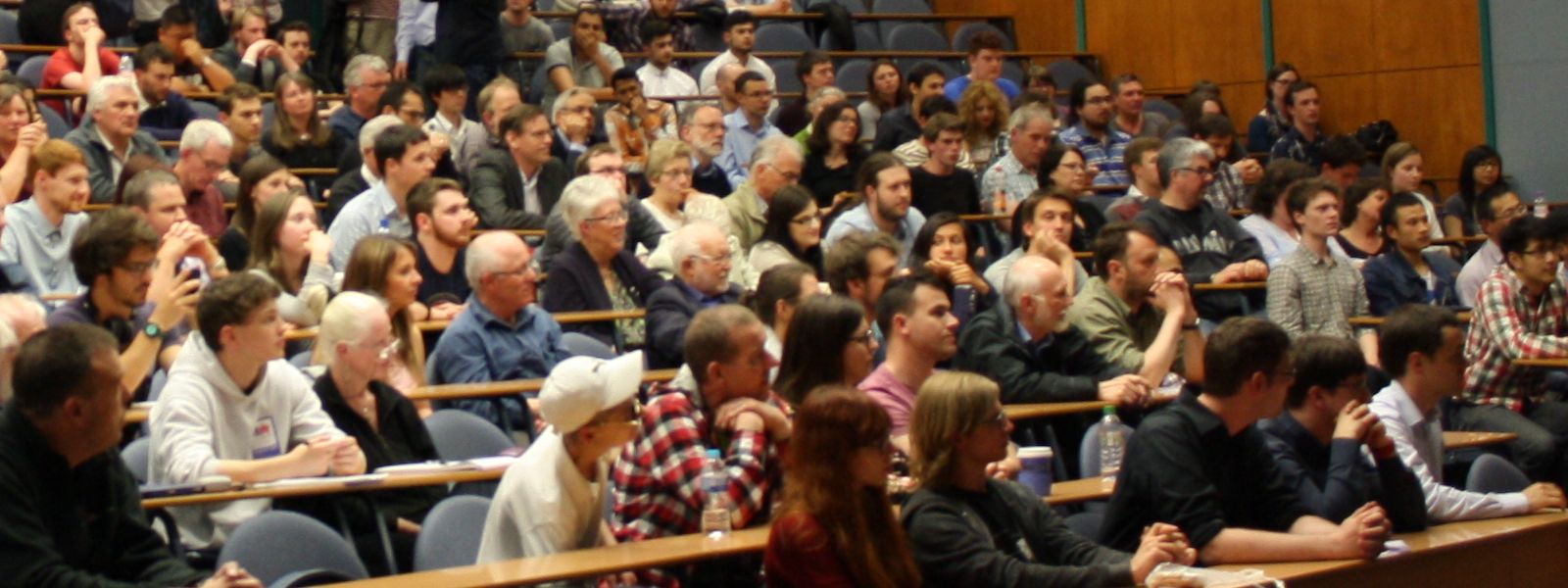
Coordinated with the Colloquia at the Department of Physics and Astronomy of the University of Glasgow. (They may have donuts but we have free chocolate covered biscuits and coffee!)
* Note: Outside of regular schedule.
Ivan Deutsch (University of New Mexico) 9th September 2026, 3PM, JA506
The race to build a fault tolerant quantum computer is in fully swing. But in which physical system should we encode quantum information? In classical computers the winner was clear – transistors in silicon in the integrated circuit architecture. For quantum computers the story is still being written. Research and development proceeds along multiple directions. Superconductivity circuits and atomic ion traps have long been the leading contenders. Recently, a dark horse candidate has emerged as a powerful competitor – neutral atoms trapped in laser light. Like their charged-ion cousins, neutral atoms are Nature’s qubits – they are identical, well-controlled by electromagnetic fields, and can be prepared in nearly pure quantum states with the tools developed for laser cooling and coherent spectroscopy. They are the foundation of the world’s most quantum coherent device – the atomic clock. In this colloquium I will describe the physics of quantum computing with optically-trapped neutral atoms and the cutting edge this up-and-coming architecture.
Raoul Trines (Central Laser Facility) 7th October 2026, Rm TBA
Michael Fox (Head of Physics Teaching Labs, Imperial College, London) - 4th November 2026, 3pm, JA314
In this talk I will give an overview of the experimental physics programme for undergraduate physics students at Imperial College London before explaining how a handful of simple changes we have made in the last years have made a dramatic improvement to the student and staff experience of the second-year lab course. These changes include updating how reports are graded to align with what we want students to learn; how we assess student lab notebooks and professional skills in the lab; and how the staff and graduate teaching assistants in the lab are trained. What I will present is a case study rather than a research report, as we cannot separate the effect of individual changes on overall outcomes or student sentiment. Nevertheless, I hope to provide the audience with some examples that may be of practical use when considering how to design or alter their own courses.
Brian Patton (University of Strathclyde) - 18th November 2026, 3pm, JA314
The nitrogen-vacancy (NV) defect in diamond is an optically-active colour centre that shows much promise for all-optical sensing. Its ground state is a spin-triplet that has been investigated as a potential qubit. The interaction of the system with the environment also allows detection of magnetic fields and, through the frequency shift of a microwave-frequency spin-resonance, temperature. In a similar way, nearby nuclear or electronic spins can act as sources of magnetic noise, decreasing the spin lifetime of the system and thereby allowing it to act as a chemical sensor.
In addition, even when embedded in nanodiamond (typically diamond particles smaller than a few hundred nanometres), the NV centre retains the ability to be used as an effective sensor. Diamond is biologically inert, yet can be functionalised through surface chemistry modifications to target structures of interest within cells. Nanodiamond therefore offers an exciting route to all-optical, sub-cellular detection of biological activity.
Many biological processes of interest to a wide range of researchers involve local thermal effects (both endothermic and exothermic); sub-cellular temperature sensing offers a powerful way to infer the activity of cells undergoing numerous processes. However, measurement of cell temperature with the required accuracy to monitor dynamic cellular processes in living cells is an unsolved problem; NV centres offer themselves as a uniquely promising technology solution to this problem. Furthermore, when performing thermometry with NV centres, there are effective ways to decouple the sensor from sources of noise within the system of interest. Excitingly, this approach also enables correlated thermometry / magnetometry with the same setup and samples.
In order to take advantage of the small size of the nanodiamond, we also use superresolution techniques to increase the precision with which we can determine the location of the nanodiamond. As the particles are embedded in living tissue, it helps to use adaptive optics methods to correct for the optical aberrations introduced by the tissue and which, uncorrected, would degrade the quality of the imaging.
We want the techniques we develop to be widely used: A key approach here is the development of “sufficient” setups that are lower cost, but not low performance, and that can be easily customised to the specific needs of end users and operated without needing high-level optical engineering expertise.
Finally, while much of our work has focussed on biological applications of NV-based sensing, the same techniques can be applied to general magnetic field sensing. Since the orientation of the NV sensor within bulk diamond can be accurately known, it is a relatively simple step to extend the detection techniques so that the full vector magnetic field can be characterised with high sensitivity. This is a new area of research for us, and I will show preliminary results that show our progress in this field.
Slav Ivanov (University of Strathclyde) - 2nd December 2026, 3pm, JA314
The groundbreaking transformer neural network architecture in artificial intelligence behind the “T” in ChatGPT, and its subsequent widespread adoption across a range of large language models (LLMs) is having a significant impact on science, industry and society. The role of LLMs in applying the scientific method, from hypothesis generation through to carrying out experiments and data analysis, can lead to discovery. Their ability to process large amounts of text and data, propose novel ideas, and undertake data-analysis makes them powerful tools for scientific creativity and enhancing productivity. This can be achieved by equipping large state-of-the-art models capable of chain-of-thought-reasoning, or locally-hosted smaller models, with task-specific tools and granting them access to large corpora of scientific literature. The domain-agnostic nature of this approach, known as agentic workflow, enables straightforward adoption across different disciplines and problem settings. Here we present an application of an LLM agent in the design of transient plasma-photonic structures, which are ultra-compact plasma-based plasma optical elements that will enable development next-generation high-power lasers, where the agent autonomously drives a modified Bayesian optimisation loop, interprets the numerical simulation data, and cites information from relevant research articles with the goal of proposing new experimental configurations.