The Light-Matter Interactions Research Area is unique in that we are not bound to a single topic. Rather, we embrace the full spectrum of research into the interactions of matter and light. Our aim is to facilitate the exchange of expertise and ideas between researchers from different disciplines who might otherwise never meet. Below is a small selection of the wide-ranging work under our umbrella.
PhysicsLight-Matter Interactions
Light and Atoms
Free atoms have the same properties wherever in the Universe you find them. Atoms also interact with light very selectively - your laser frequency has to be right to parts-per-billion (or better) to 'talk' to the atoms at all. These two properties can be utilised for a wide range of applications to measure things like time, acceleration, rotation and temperature very accurately. Measurements are often helped by cooling atoms down to interact with the lasers longer, and we regularly use light to make atoms many millions of times colder than room temperature [Arnold].
Chirality
The word "chirality" was introduced into science by Lord Kelvin to describe geometries with distinct left- and right-handed forms. Fascinating examples can be found throughout the Universe, from the mysterious left-handed bias shown by the weak interaction to the right-handed shells of (most) garden snails.
Of great practical importance is chirality at the molecular scale. The two mirror-image forms or enantiomers of a chiral molecule look similar but can nevertheless have completely different biological actions, making it vitally important to distinguish between them in the pharmaceutical, agrichemical, flavour, fragrance, cosmetic and many other industries. The left-handed enantiomer of the chiral molecule ethambutol, for example, is an effective treatment for tuberculosis whereas the right-handed enantiomer can instead cause colour blindness. Clearly, we don't want to confuse the two!
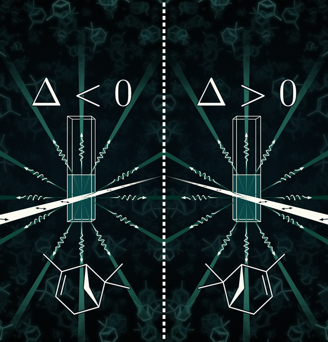
Fig. 1. Rayleigh optical activity is the differential Rayleigh scattering of left- and right-handed circularly polarised light, exhibited naturally by chiral samples [McArthur2025].
Many of the tools in widespread use for chiral molecular preparation and analysis are centuries old and have long ago reached the limits of their capabilities. We are developing innovative new chiral light-matter interactions with the potential to address unmet needs across the chiral molecular pipeline; from the use of robust chiral optical forces inspired by a sea creature to separate isotopically chiral enantiomers without chemistry to the introduction of Rayleigh optical activity as a simple new tool for the assignment of absolute configuration and determination of enantiomeric excess (Fig. 1). We have also enjoyed pursuing a handful of chiral curios over the years, such as the chiral arrangement of Stegosaurus plates and the chiral thermal torques experienced by warm biscuits in space. For more information about our research as well as some accessible videos touching upon different aspects of chirality, please visit our website ytilarihc.com (chirality spelled backwards) [Cameron, McArthur, Yao].
Collective Effects
One of the simplest systems to study collective effects due to coherent light interactions with a nonlinear medium is the single feedback mirror scheme introduced by W. J. Firth in 1990 at Strathclyde (Fig. 1). We consider atomic vapour media at either hot (300 K), cold (300 mK) or ultra-cold (Bose-Einstein condensates) temperatures [Ackemann, Robb, Oppo]. A laser pump passes through a cloud of atoms and then is reflected by a mirror M back into the cloud.
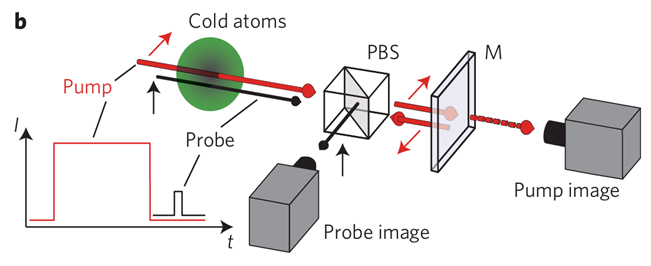
Fig. 1. Schematic of the single feedback experiment [Firth2007].
In the direction perpendicular to the propagation of the laser, one observes self-organization of light (left) and atoms (right) into hexagonal patterns (Fig. 2). The mechanism at the base of this collective effect is the atom-atom interaction induced by the fed back light that has been affected by the optical Talbot effect.
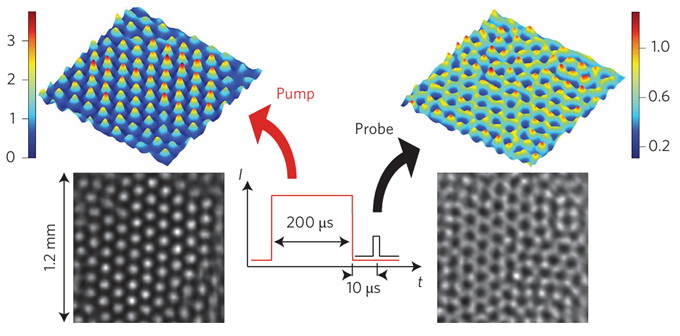
Fig. 2. Experimental results of self-structuring of light (left) and atoms (right) [Labeyrie2014].
Similar results have been predicted for ultra-cold quantum gases.
Present research focuses on the formation of solitons, droplets and the identification of phase transitions, and magnetic ordering and structure formation phenomena - similar to those observed in condensed-matter physics. We are interested in the exploration of atomic coherences instead of populations and density for self-organisation.
The theory and simulations are developed in close collaborations with experimental groups at the Université Côte d'Azur in Nice (France) and Elmar Haller and Thorsten Ackemann’s teams at Strathclyde. [Haller]
Nanophotonics
We use the geometry of Hilbert spaces to characterize the interaction between internal and scattered fields at the surfaces of nanoparticles. This approach allows us to define generalized Mie modes for nanostructures. Like conventional Mie modes for spheres, these modes form pairs of internal and scattered fields whose amplitudes are independent of those of the other pairs [Papoff, McArthur].
A key advantage of this framework is that it provides exact mathematical conditions for both resonances and Bound States in the Continuum (BICs). Resonances correspond to mode pairs with the strongest possible coupling, while BICs correspond to pairs with zero coupling, where the internal mode becomes trapped inside the particle.
This, in turn, allows us to locate and track both resonances and BICs using topological methods based on a generalized Berry phase. The video shows the evolution of BIC modes as the geometry of the nanoparticle is varied, opening a route towards systematic BIC optimization.
This could be particularly important for designing nanolasers based on modes operating close to a BIC, where the resulting high-Q resonances can enable strong light–matter interaction in extremely small volumes.
Electron Beams and Semiconductors
Electron beams can be used to interrogate the structure, defects and light emission from semiconductor materials used in the manufacture of LEDs and solar cells.
At Strathclyde, and across the world, we develop and apply the scanning electron microscopy techniques of electron backscatter diffraction (EBSD) and electron channeling contrast imaging to map crystal structure, misorientation, strain and defects in materials and correlates these measurements with cathodoluminescence mapping to provide complementary information on light emission [Trager-Cowan].
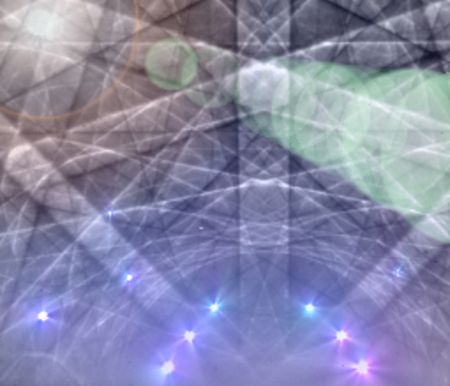
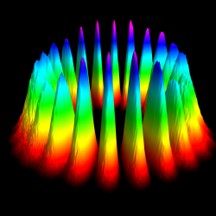
When electrons interact with materials, beautiful patterns may be produced. Our image is an artistic view of a pattern produced from a silicon crystal when incident electrons reflected from the surface of a Si sample and those backscattered from the bulk of the sample interact.
Fully-Structured Light
Research in the Fully-Structured Light (FOAM) Group explores fundamental and applied aspects of light-matter interactions, investigating how tailored optical fields can be used to control the behaviour of atoms, molecules, and quantum systems.
By harnessing structured and "twisted" light that carries orbital angular momentum (OAM), this work seeks to understand and manipulate optical forces, light-matter coupling, and quantum dynamics in systems ranging from thermal to ultracold atomic gases [Yao].
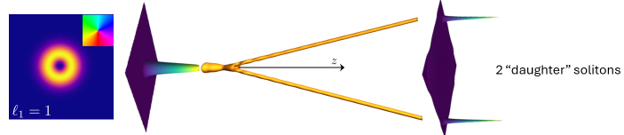
Combining fundamental physics with innovative applications, the research is advancing new approaches in quantum technologies, precision measurement, optical manipulation, quantum communication, and next-generation photonic devices.
Laser-Plasma Interactions
At Strathclyde we investigate the interaction of ultra-intense laser fields with matter, with a primary focus on the physics of laser–plasma interactions and the generation of high-energy particle and radiation beams. Using state-of-the-art high-power laser systems, we explore how extreme electromagnetic fields drive nonlinear processes in plasmas, enabling the coupling of light into energetic ions, electrons and secondary radiation sources [McKenna].
A central theme of our work is understanding and controlling the mechanisms of laser-driven particle acceleration. We study a range of interaction regimes—including target normal sheath acceleration (TNSA), radiation pressure acceleration (RPA), and relativistic transparency-driven processes—where the dominant physics depends sensitively on laser and target parameters.
Alongside experimental investigations at the Scottish Centre for the Application of Plasma-based Accelerators (SCAPA) and a range of national (Central Laser Facility, Rutherford Appleton Laboratory) and international high power laser facilities, we develop advanced diagnostics and modelling approaches, including the use of machine learning techniques for multi-parameter optimisation and data-driven interpretation of complex laser–plasma experiments. This work underpins applications spanning compact particle accelerators, high-energy-density physics, radiobiology, and next-generation photon and ion sources, contributing to the broader field of extreme light–matter interaction science.
Plasma-based Accelerators
The Scottish Centre for the Application of Plasma-based Accelerators (SCAPA) was set up with support from the University, the Scottish Universities Physics Alliance (SUPA), the Scottish Funding Council and the EPSRC. It is run as a university user facility with access fees – those for academic users are set in accordance with UK Government Transparent Approach to Costing (TRAC) guidelines – and is dedicated to providing high energy particle beams and high brightness radiation pulses for users drawn from a wide range of scientific, medical and engineering disciplines. A pair of Ti:sapphire femtosecond laser systems (40 TW peak power at 10 Hz pulse repetition rate, and 350 TW at 5 Hz, respectively) drive a suite of laser-plasma accelerator beamlines that are housed in three large radiation shielded areas. SCAPA is the largest UK university-based laser facility which has a key role alongside the national-scale laboratories in providing laser beams with intensities in excess of 1021 W/cm2, and radiation sources for use by domestic and international academic and industrial users.
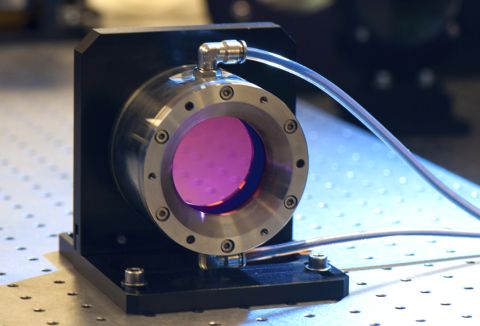
SCAPA was built on the highly successful ALPHA-X project (2002-2016) led by Prof. Dino Jaroszynski (now Director of SCAPA), which was at the forefront of R&D on producing high quality laser-plasma accelerator electron beams and enhancing their stability, range and reliability. This underpins a growing applications landscape, which has enabled SCAPA to become the UK’s first dedicated user facility for the application of such accelerators. The lasers are also available for shock, damage and propagation studies. Additional facilities at SCAPA include a 13 mJ, 40 fs, 1 kHz repetition rate Ti:sapphire laser system for plasma media and diagnostics development, a Zygo interferometer for optics characterisation, and radiochemistry and radiobiology laboratories that enable chemical and biological material handling.
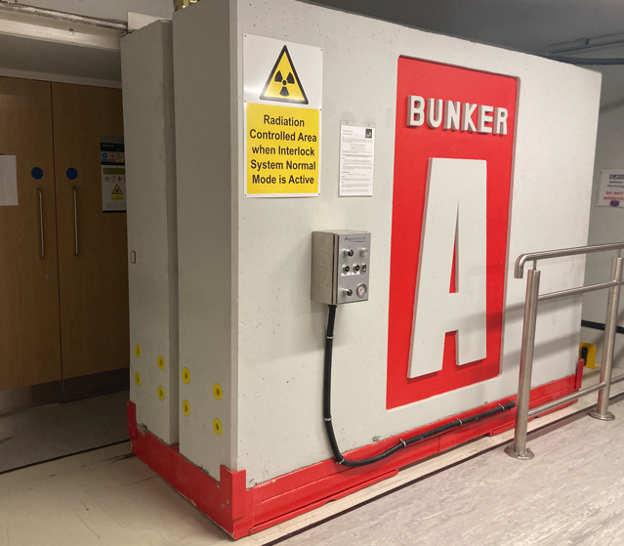
SCAPA is open to user engagement across all areas of research, including development of primary or secondary sources, proof-of-principle demonstrations or industrial application of the sources. Long term accelerator beamline operation is now sufficiently stable to perform laser-driven medical radioisotope generation, high-resolution X-ray computed tomography imaging and radiotherapy studies. High repetition rate regimes, such as the laser-driven proton beamline operating at 1 Hz, facilitate machine learning techniques to further enhance the performance and usability of the source. SCAPA is a key international resource for the exploitation of these unique radiation sources driven by femtosecond laser pulses [Wiggins].
List of Academics
- Dr Aidan S Arnold
- Prof Thorsten Ackemann
- Dr Robert P Cameron
- Dr Bernhard Ersfeld
- Prof Paul F Griffin
- Dr Ben Hourahine
- Prof Dino Jaroszynski
- Prof John Jeffers
- Dr Peter Kirton
- Dr Duncan McArthur
- Prof Paul McKenna
- Prof Brian W J McNeil
- Dr Adam Noble
- Prof Gian-Luca Oppo
- Dr Francesco Papoff
- Dr Brian Patton
- Dr Gordon R M Robb
- Dr Carol Trager-Cowan
- Dr Mark Wiggins
- Dr Alison M Yao